Waking at two in the morning to shake a numb hand is the story we hear most often in clinic. Carpal tunnel release lifts pressure off the median nerve at the wrist so sleep and sensation can settle.
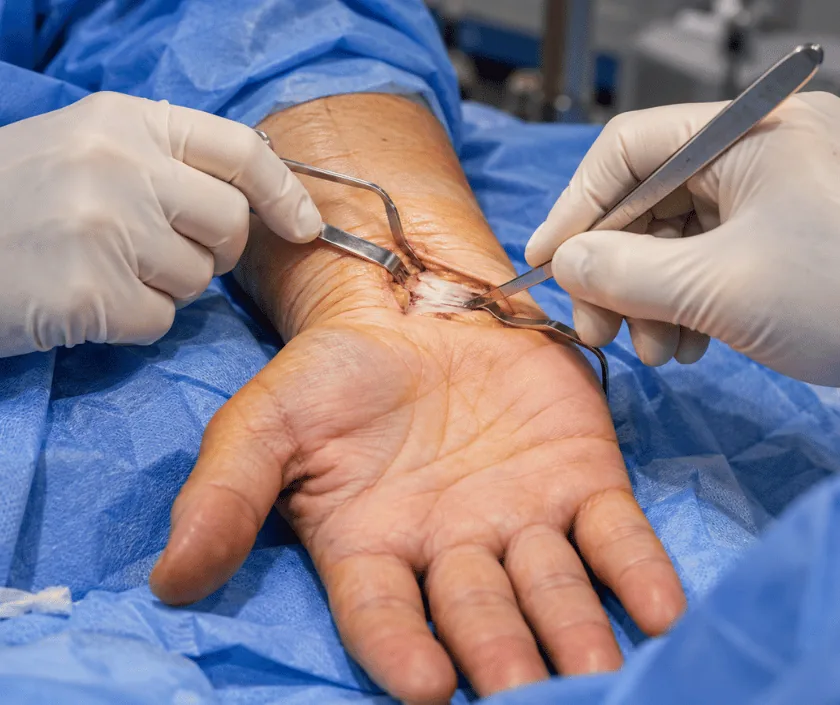
Carpal tunnel release is one of the commonest hand operations, and it eases pressure on the median nerve at the wrist. Most people find that night waking, tingling and hand pain settle soon after surgery. Numbness present for a long time may improve only partly, because a nerve compressed for years recovers slowly and sometimes incompletely.
Nine flexor tendons and the median nerve share a tunnel at the front of the wrist, floored by the wrist bones and roofed by a tough band called the transverse carpal ligament. When the lining around those tendons swells, pressure inside rises and the nerve is squeezed. Tingling, night waking and clumsiness follow, typically in the thumb, index and middle fingers.
Night splints, activity changes and a steroid injection settle many hands, particularly when symptoms are recent. Surgery is discussed when relief does not last, when numbness becomes constant, or when the muscle at the base of the thumb starts to waste. Release is short. Through a small incision in the palm, the ligament forming the roof is divided under direct vision, and the tunnel immediately becomes larger.
The nerve itself is not cut or stitched. Skin is closed, a soft dressing goes on, and you are asked to move the fingers fully from the same evening. Keeping the tendons gliding is what prevents stiffness while the palm settles.
Release suits people whose symptoms keep returning or whose nerve is showing signs of strain. Timing matters here more than in most hand operations.
Sensation, thumb power and provocation tests are checked, and nerve conduction studies are often arranged. Your surgeon explains what the nerve is likely to recover, particularly when numbness has been constant for years.
Release is usually done with local anaesthetic injected into the wrist and palm, so you stay awake and go home the same day. Sedation or an arm block is used where you would prefer it.
A short incision in the palm exposes the transverse carpal ligament, the roof of the tunnel. Dividing that band under direct vision enlarges the space at once and lifts pressure off the median nerve.
Your nerve is inspected along its course and any thickened lining is dealt with. Skin is closed with fine stitches and covered by a soft dressing that still lets the fingers move freely.
Night symptoms often ease from the first or second night. Keep the hand raised, make a full fist and straighten the fingers every hour, and keep the dressing dry.
Stitches usually come out at the wound check. Light tasks are encouraged, although gripping a broom or a steering wheel firmly can still feel sore across the palm.
Tenderness on either side of the scar when you lean on the hand is common and settles for most people. Grip strength returns steadily as therapy adds resistance.
Sensation keeps recovering slowly. Recovery can vary, and where numbness had been constant for years some loss may remain despite a sound release.
Carpal tunnel release is among the most common hand operations and most people improve. Night symptoms and tingling usually settle first, sometimes within days. Numbness that has been constant for years may recover only partly, because a nerve squeezed that long heals slowly and occasionally incompletely. Grip can feel weak for a while, and the area beside the scar often stays tender when leaned on. Recovery can vary.
This is a small, well established operation, and knowing the usual concerns makes the first weeks easier.
Movement is the treatment here, and a stiff hand causes far more trouble than the wound itself.
Waiting while numbness becomes constant can cost sensation that never fully returns. Timing is judged on symptoms and nerve tests, not on how long somebody has coped.
Cold hands, colour change and cramp suggest circulation. Nerve compression wakes you with pins and needles on the thumb side of the hand, which shaking briefly relieves.
A bulky plaster holds the fingers still and encourages stiffness. Soft dressings are usual, and moving the fingers fully from day one is part of the treatment.
True compression coming back after a complete release is uncommon. Ongoing numbness more often reflects nerve damage that had already happened before surgery.
Elegance Clinic in Surat treats carpal tunnel syndrome by examining the whole arm and neck before blaming the wrist. Dr. Ashutosh Shah is clear about what surgery is likely to change and what it may not.

Carpal tunnel release is a short day care operation, so it sits at the lower end of hand surgery costs. The figure changes with the anaesthesia chosen, whether both hands are treated in one sitting, and whether nerve studies, dressings and review visits are included in the package. At Elegance Clinic a written estimate is prepared after examination.
Many insurers cover this procedure when nerve studies support the diagnosis, although day care limits and waiting periods differ between policies. Bring your papers to the consultation so the office can check what applies to you.
These are the questions that come up most often in consultation. If yours is not here, send it on WhatsApp and the team will reply, usually the same day.
Ask your question →Cost depends on the anaesthesia used, whether one or both hands are treated together, and what the package includes. A written estimate follows your examination. Many insurers cover the procedure when nerve studies support the diagnosis, subject to policy terms.
It is one of the most frequently performed hand operations and is usually done awake, under local anaesthetic. Wound infection, scar tenderness and temporary grip weakness are the usual concerns. Injury to a nerve branch is rare, since the ligament is divided under direct vision.
Night tingling and waking often settle within the first week or two. Daytime numbness improves more gradually, over months in some people. Where sensation had been constantly reduced for years, part of that numbness may stay, and it is fair to expect that.
Desk work is often possible within days, using the hand lightly. Jobs involving gripping tools, lifting or leaning on the palm usually need a few weeks, because the scar area stays tender. Recovery can vary, so the advice is adjusted at review.
Generally no. Keeping the fingers moving matters more than resting them, so a soft dressing is used and full finger movement is encouraged from the first evening. A splint is only added if there is a particular reason.
Sometimes. Night splints, changes to how the hand is used and a steroid injection settle many recent cases. Surgery is discussed when relief keeps fading, numbness turns constant, or the thumb muscles begin to waste.
Sensation and thumb power are tested, the neck and elbow are checked as possible sources, and nerve studies may be arranged. Findings are explained plainly, including how much recovery is realistic, and a written estimate is given.
Seeing patients from across the city and beyond: read about the practice on the plastic surgeon in Surat page, or check what a written estimate covers on the costs and insurance page.
