Nerves travel to the hand through several narrow passages, each bounded by bone and tough ligament. Where a passage becomes tight, the nerve inside is squeezed and stops conducting properly. The result is tingling, numbness and eventually weakness in a pattern that maps exactly to whichever nerve is trapped.
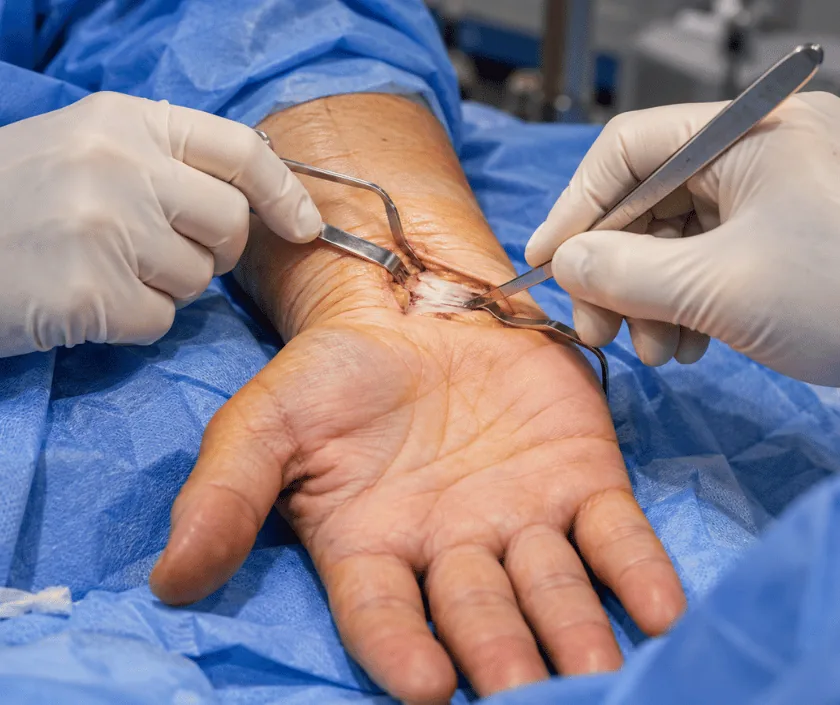
Which fingers are affected is therefore the most useful clue. Tingling in the thumb, index and middle fingers that wakes a person at night points to the wrist, while numbness along the little finger side with a sore elbow points higher up. Many cases settle with splints, a change in how a task is done, or treatment of an underlying condition such as thyroid disease. Where numbness becomes constant or muscle begins to waste, releasing the tight tunnel is usually advised before the damage becomes fixed. Acting at that stage gives the nerve the best chance of recovering fully.
Each site produces its own pattern of symptoms. Recognising the pattern usually matters more than any single test result.
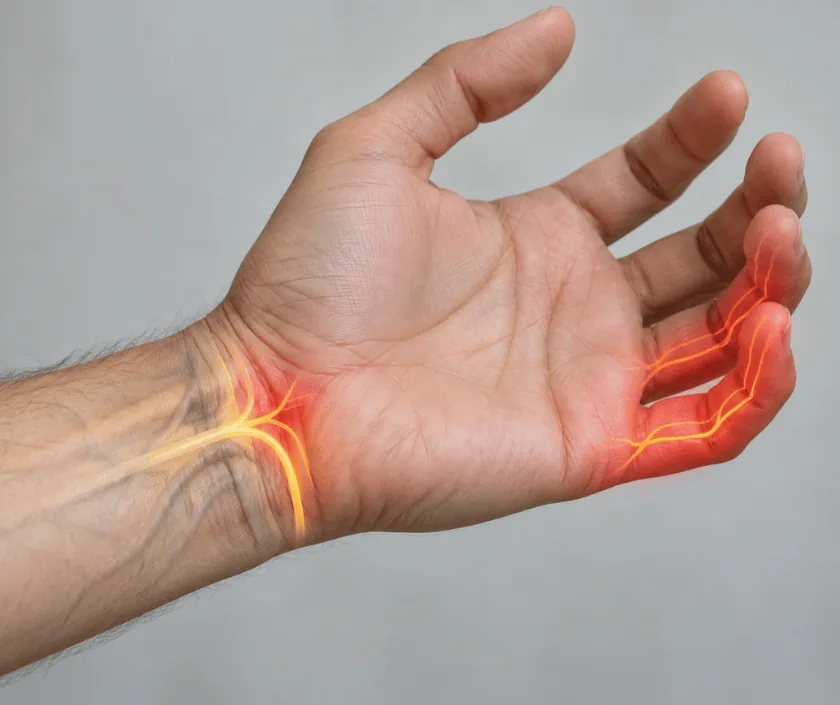
The wrist tends to curl during sleep, which raises pressure inside the carpal tunnel and wakes many people with tingling. A splint that holds the wrist straight overnight often eases things considerably and is usually the first step before any operation.
Diabetes, thyroid disease, pregnancy, rheumatoid arthritis and kidney disease all increase the risk of a trapped nerve. Treating the underlying condition sometimes settles the symptoms, and pregnancy related cases frequently improve on their own after delivery.
Nerve conduction tests measure how well signals cross the narrow point and can confirm which nerve is affected. Results guide the decision, though they do not replace examination. A normal study in someone with a classic pattern does not rule surgery out.
Night tingling often eases within days of surgery. Numbness that has been constant for a long time recovers more slowly and may not fully return. Grip strength dips for some weeks while the palm settles, then builds back gradually.
Nerve compression is usually a slow problem, but certain signs suggest the nerve is being damaged now.
These questions come up before deciding between splinting, injection and surgery.
Ask your question →A release done as a day case under local anaesthesia sits at the lower end of hand surgery costs. Nerve studies, dressings and follow up add to the total. Where both hands are treated, the figure differs from twice a single side.
Release is a short and well established procedure, most often done with the hand numbed and the patient awake. Recognised risks are scar tenderness, infection, and rarely injury to a small nerve branch. Serious problems are uncommon in routine cases.
Light use of the hand resumes within days, with the wound kept dry for around two weeks. Tenderness in the palm can last a couple of months. Heavy gripping work usually waits four to six weeks, though this varies with the job.
Night tingling settles quickly for most people after a release. Long standing constant numbness improves more slowly and may not resolve entirely, because the nerve fibres take time to recover. Earlier treatment generally gives a better outcome than late treatment.
Not always. Mild and intermittent symptoms often respond to a night splint, changes in how a task is done, and treatment of any underlying condition. Surgery is advised when numbness is constant, when muscle is wasting, or when simpler measures have failed.
Return of symptoms is uncommon once the tunnel has been fully opened. Where symptoms persist, the usual explanations are a second site of compression, a wrong diagnosis, or nerve damage that was already advanced before the operation.
The pattern of numbness is mapped, muscle strength is tested and specific provoking manoeuvres are used. Nerve studies are arranged when the picture is unclear. Splinting, injection and surgery are then discussed with their advantages set out plainly.
