A crushed hand can look deceptively tidy on the outside while muscle, nerve and blood vessels are injured beneath. Swelling then builds inside closed spaces and can choke off circulation, which is why early review matters so much.
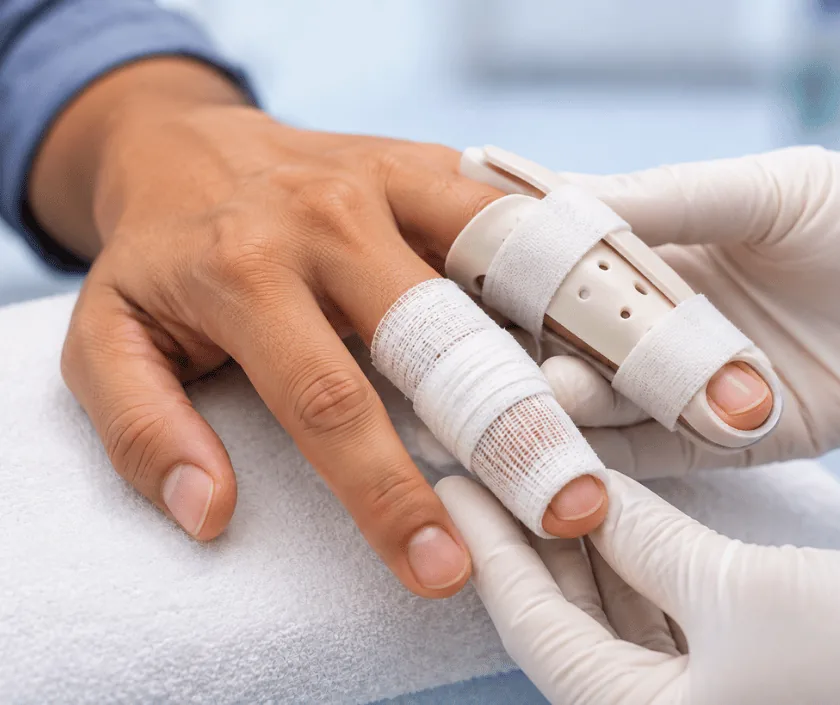
A crush injury squeezes the hand between two forces, damaging skin, muscle, bone, nerve and vessel together. The outside may look intact while pressure builds within. Since rising swelling can cut off blood supply in a matter of hours, any crushed hand needs urgent assessment, elevation and observation, with surgery to release the pressure if circulation is threatened.
Crush injuries happen when the hand is caught between two hard surfaces: a machine roller, a shutter, a heavy load, a vehicle. Force passes straight through skin and reaches everything underneath. Bones may break in several places, muscle is bruised or torn, nerves are stretched, and small blood vessels are damaged along their length rather than cut cleanly.
What separates a crush from a cut is the swelling that follows. Muscles of the hand and forearm sit in tight compartments walled by tough tissue. As injured muscle swells, pressure inside those compartments climbs. Once it rises above what the small vessels can push against, blood flow stops even though the pulse at the wrist may still be easy to feel. Muscle and nerve then begin to suffer within hours.
Treatment therefore starts with observation rather than reconstruction. The hand is elevated, circulation and sensation are checked repeatedly, and if pressure is rising the compartments are released surgically. Bone fixation, wound cover and later reconstruction all follow once the hand is out of danger.
Not every crushed hand goes to theatre. The decision turns on circulation, pressure and the state of the wound, and it is reviewed repeatedly over the first day or two.
Circulation, sensation and movement are checked in every digit, and imaging shows the fractures. Tightness of the forearm and hand is felt and recorded so that change can be detected on repeat examination.
The hand is elevated and reviewed at short intervals. Nurses record pain, colour, warmth and feeling. Any deterioration triggers a surgical decision rather than another period of waiting.
If compartment pressure is rising, incisions are made along the forearm and hand to open the tight spaces. Wounds are deliberately left open at this stage and closed later once swelling falls.
Dead or contaminated tissue is removed. Fractures are held with wires, plates or an external frame so the hand has a stable framework for everything that follows.
Once tissues look healthy, skin cover is provided with a graft or flap, and any tendon or nerve reconstruction is planned for a later sitting.
Elevation, pain control and repeated checks of circulation dominate this period. Dressings may be changed in theatre. Further surgery is common in the first days as the picture becomes clearer.
Wounds are closed or covered and swelling starts to fall. Hand therapy begins on the joints that are safe to move, which prevents much of the stiffness otherwise seen later.
Fractures are reviewed and fixation may be removed. Splints are adjusted and strengthening begins. Sensation is mapped so that nerve recovery can be tracked over the coming months.
Function keeps improving with therapy. Secondary procedures for stiffness, tendon function or nerve problems are usually considered once tissues have fully settled.
Crush injuries recover unevenly. Some hands regain close to normal use, while others stay stiff, weak or altered in sensation despite good treatment. Severity of the original crush sets the ceiling more than anything done afterwards. Progress is measured in months, with therapy driving much of the gain. Honest updates at each review help you plan work and home life around what is achievable.
Crush injuries carry more complications than most hand problems, largely because so many tissues are hurt at the same moment.
Discharge is not the end of treatment. Careful home routines protect what has been repaired and keep swelling under control.
Swelling, muscle bruising and nerve injury cause much of the disability after a crush, and every one of them occurs with intact bones.
Compartment pressure can cut off flow to muscle while the wrist pulse stays easy to feel, so a normal pulse reassures for the wrong reason.
Needing steadily more medication is one of the earliest warnings, so the trend across the day matters more than a single comfortable hour.
Staged treatment is safer after a crush. Rushing reconstruction into swollen, bruised tissue raises the chance of infection and failure.
Elegance Clinic in Surat manages crush injuries as a sequence rather than a single event, with observation, staged surgery and therapy planned together and explained as you go.

A crush injury is rarely one procedure, so costs are built up in stages. The first estimate covers admission, imaging, emergency surgery such as pressure release or wound cleaning, and the hospital stay needed for observation.
Later stages, including bone fixation, skin cover and any reconstruction, are estimated separately once the hand has settled and the plan is clear. Workplace and road accident cases are often covered by insurance or an employer scheme, so bring your policy and accident documents with you.
These are the questions that come up most often in consultation. If yours is not here, send it on WhatsApp and the team will reply, usually the same day.
Ask your question →Costs are staged because the treatment is staged. An initial written estimate covers admission, imaging, urgent surgery and the observation stay. Later procedures such as fixation, skin cover or reconstruction are estimated separately once those plans are settled.
Releasing tight compartments involves long incisions that stay open for a while, so scarring is expected. Set against losing muscle and nerve to sustained pressure, the trade is usually clear. Wounds are closed or grafted once swelling falls.
Expect months rather than weeks. Wound care and bone healing occupy the early period, then therapy rebuilds movement and strength. Nerve symptoms improve slowly and are usually the last thing to settle, sometimes still changing past the first year.
Some hands regain close to normal use, while others stay stiff or weak. Severity of the crush largely sets the limit. Therapy makes a substantial difference within that limit, so attendance matters more than any single operation.
No. A closed crush with good circulation, settling pain and preserved movement can often be managed with elevation, splinting and close review. Surgery becomes necessary when pressure rises, bones are unstable, or tissue is dead or contaminated.
The same day, and sooner if pain is increasing or the fingers feel numb, cold or pale. Pressure damage inside the compartments develops over hours, so waiting to see whether it settles overnight is the wrong approach.
Circulation, sensation and movement are checked in each digit, and imaging is taken. Swelling and tightness are recorded so change can be spotted on repeat examination. You are told clearly whether admission for observation is being advised.
Seeing patients from across the city and beyond: read about the practice on the plastic surgeon in Surat page, or check what a written estimate covers on the costs and insurance page.
