Compression is the backbone of lymphedema care, and everything else is built on top of it. Worn correctly, a bandage or garment supports the tissue so muscles can push lymph along instead of letting fluid pool in the limb.
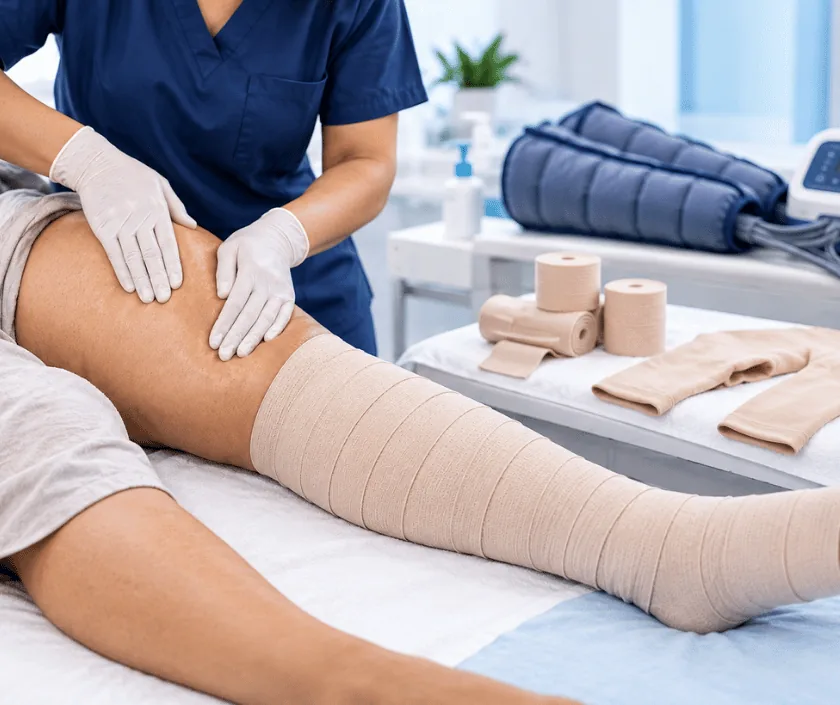
Compression therapy uses graded pressure to stop lymph pooling in a swollen limb. Intensive multilayer bandaging is used first to bring the volume down, then a fitted garment maintains the smaller size. Bandages are adjusted as the limb shrinks, while garments are replaced periodically because the fabric loses its stretch with use.
Lymph does not have a pump of its own. It relies on muscle movement, breathing and the squeeze of surrounding tissue to travel back towards the chest. When drainage is damaged, that system fails and fluid settles in the limb. Compression restores some of the missing resistance from outside, so every step or hand movement pushes fluid upward instead of letting it sit.
Treatment normally runs in two phases. In the reduction phase, short stretch bandages are applied over padding, often daily, and reapplied more tightly as the limb becomes smaller. This phase suits limbs with a lot of fluid, and it is where the biggest volume change usually happens. In the maintenance phase, a fitted garment takes over. Garments are easier to live with, but they cannot be adjusted, so they are ordered once the limb has settled at a stable size.
Fit matters more than force. A garment that digs in at the wrist, rolls down at the thigh or slips off the heel will do harm rather than good, and it should be reviewed rather than tolerated.
Almost everyone with lymphedema uses compression at some stage, but the type and strength must be matched to the limb and to the person wearing it.
The limb is measured at set points, skin condition is checked and pulses are examined. Arterial supply is confirmed before firm pressure is used, because that single check governs how much compression is safe.
Padding and short stretch bandages are applied by a trained therapist, usually daily. Each reapplication is a little firmer as the limb reduces, and measurements are repeated so progress can be seen.
Once the volume settles, a garment is chosen by size, class and style. Ready made garments suit many limbs, while an irregular shape may need one made to measurements.
You and a family member are taught to apply and remove the garment, to check the skin underneath and to spot early warning signs. Practice happens in clinic before you rely on it at home.
Follow up visits compare measurements, check fit and plan replacement, since fabric loses elasticity with washing and wear long before it looks worn out.
The limb often feels tight and unfamiliar at first. Many patients notice fluid moving within the first few days, and the bandage may feel looser by evening.
Volume usually falls fastest during this period of daily bandaging. Bandages are reapplied more snugly as the limb becomes smaller.
By now most limbs have moved to a fitted garment. Attention shifts to comfort, skin care and building the routine into ordinary daily life.
Reviews check whether the limb is holding its size, whether the garment still grips properly and when a replacement is due.
Compression manages lymphedema rather than removing it. Many patients see a clear reduction in size and a limb that feels lighter, yet the swelling tends to return if the garment is left off for long. Results depend heavily on fit and on daily use. Limbs that have become fatty or fibrous respond less to pressure alone, and those are the limbs where surgery enters the conversation.
Compression is safe when it is prescribed and fitted properly, though problems do occur and most of them come from poor fit or wrong pressure.
The habits below make compression far easier to keep up, and they matter as much as the garment itself.
Pressure has to be graded and matched to the limb. Excess pressure can damage skin and restrict blood flow, and it often makes the limb more swollen above the garment.
Elastic fibres fatigue with washing and wear. A garment can look intact yet deliver far less pressure than it did when new.
Operations improve drainage but do not restore a normal lymphatic system. Most patients continue some compression afterwards, often at a reduced level.
Ordinary long stretch bandages behave differently from the short stretch material used in lymphedema, and they can slip or constrict.
At Elegance Clinic in Surat, compression is treated as a skill to be taught rather than a product to be sold. Dr. Ashutosh Shah and the therapy team spend time on fit, technique and the practical business of wearing a garment through a Gujarat summer.

Costs here are driven mostly by garments and therapist time rather than by any single procedure. An intensive bandaging phase involves repeated visits and consumable materials, while maintenance costs depend on how many garments you use and how often they are replaced. Custom made garments cost more than ready made sizes.
Because those variables differ so much between one limb and another, we give a written estimate after assessment that sets out the therapy phase and the expected garment replacement cycle, so the ongoing cost is clear from the start.
These are the questions that come up most often in consultation. If yours is not here, send it on WhatsApp and the team will reply, usually the same day.
Ask your question →It depends on the phase and the garment. Intensive bandaging involves therapist time and materials over several visits, while maintenance depends on garment type and replacement frequency. A written estimate is provided after assessment, covering both the therapy phase and expected replacements.
For most limbs yes, during waking hours, provided the pressure has been prescribed after checking circulation. Garments are usually removed at night unless advised otherwise. Any numbness, colour change or increasing pain means the garment should come off and be reviewed.
Many limbs soften within days of starting proper bandaging, with the largest volume change during the first weeks of the intensive phase. Progress then slows as the limb reaches its stable size. Firm, fibrotic limbs respond more slowly and less completely.
Compression can reduce a limb considerably and keep it there, but it manages the condition rather than reversing it. Limbs treated early tend to come closest to the other side. Longstanding limbs with fatty or scarred tissue improve less with pressure alone.
Often yes, though the assessment matters more. Circulation and sensation are checked first, since reduced feeling means pressure damage can go unnoticed. Skin is inspected daily and pressure levels are chosen carefully rather than applied by default.
Replacement is planned at set intervals rather than left to appearance, because elastic fibres weaken with washing and wear. If the garment slides on easily, feels slack by midday or no longer leaves a gentle mark, it needs reviewing sooner.
Yes, in almost all cases. Operations improve drainage or reduce bulk, yet the lymphatic system remains abnormal. Many patients move to a lighter garment or shorter wearing hours over time, but stopping altogether usually allows the swelling to creep back.
Seeing patients from across the city and beyond: read about the practice on the plastic surgeon in Surat page, or check what a written estimate covers on the costs and insurance page.
