Lymphedema is swelling that builds up when lymph fluid cannot drain away properly. It often follows surgery or radiation that removed or damaged lymph nodes, and it may also be present from birth. The limb feels heavy, clothing and rings become tight, and the skin slowly thickens if the fluid stays. Left alone the swelling usually creeps upward over years.
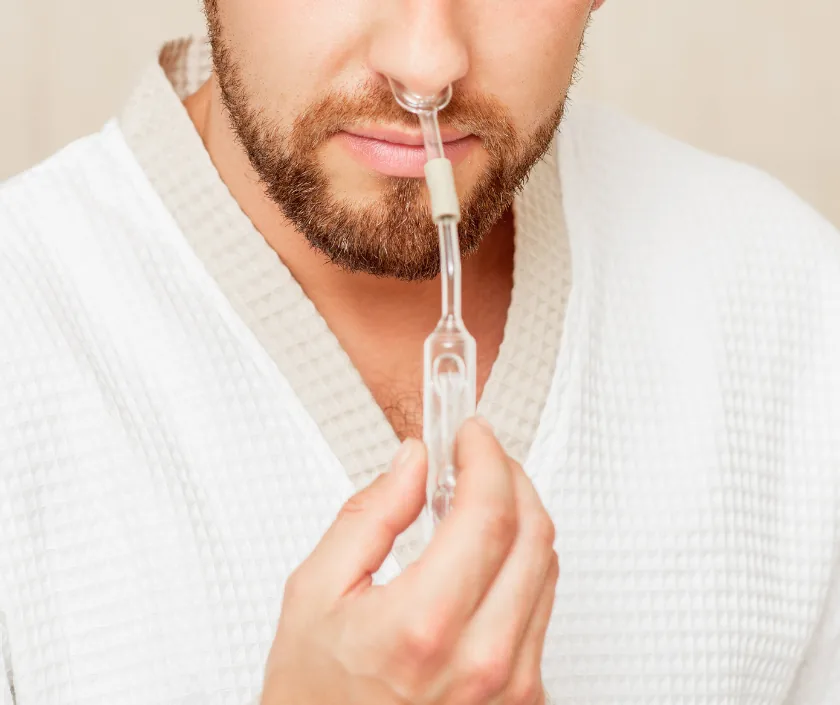
Conservative treatment is the foundation of care and comes first for almost everyone. It combines compression, hands on drainage, movement and careful skin protection into one routine that is followed daily rather than in short bursts. Done properly it reduces volume, softens the tissue and lowers the chance of skin infection. It also prepares the limb if surgery is being considered later, because a soft limb responds better than a hard, fibrous one. Reviews are booked to measure the limb and check that garments still fit.
Staging describes how much of the swelling is still fluid and how much has turned into fat and fibrous tissue. That difference decides what conservative care can achieve.
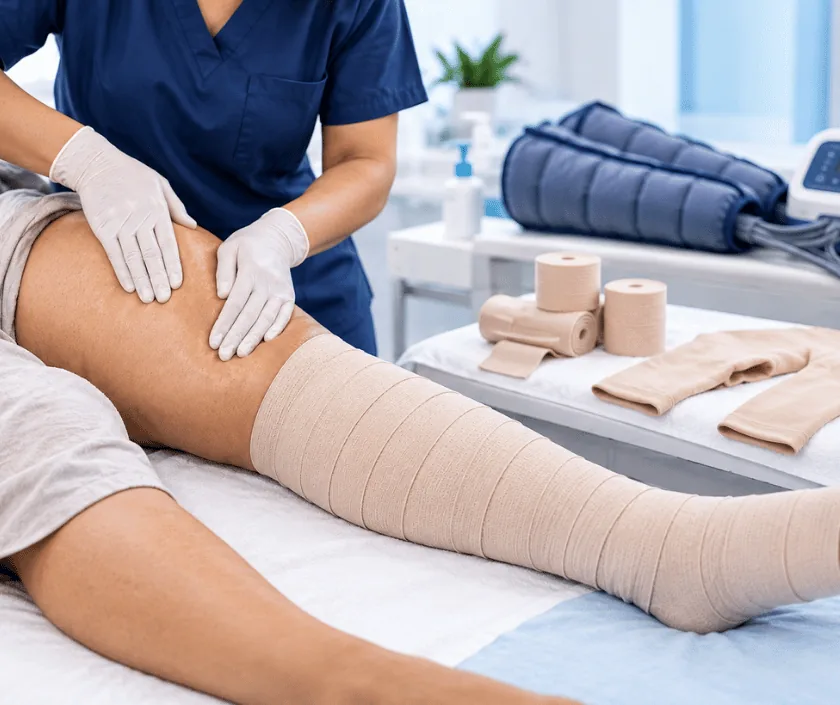

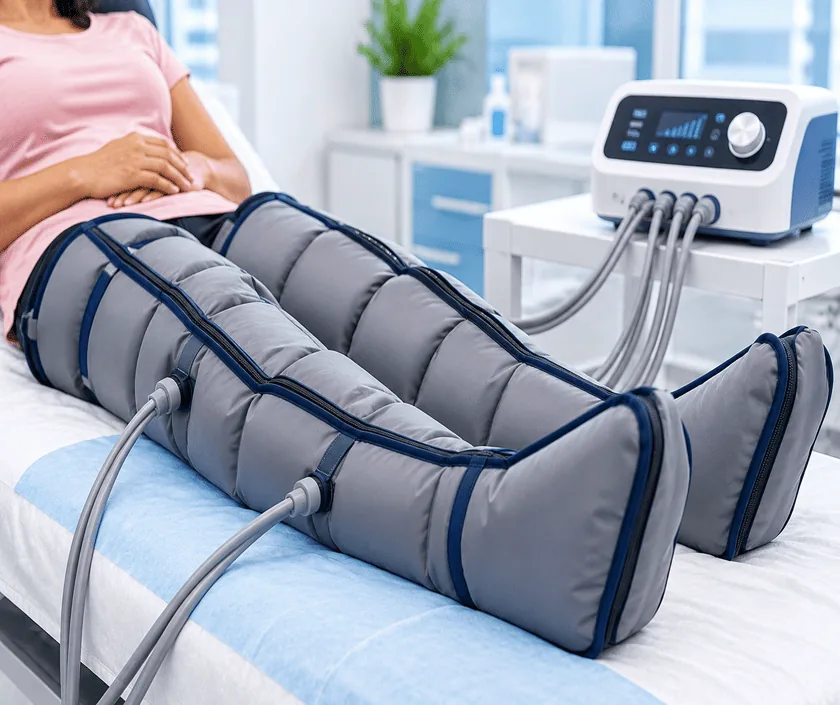
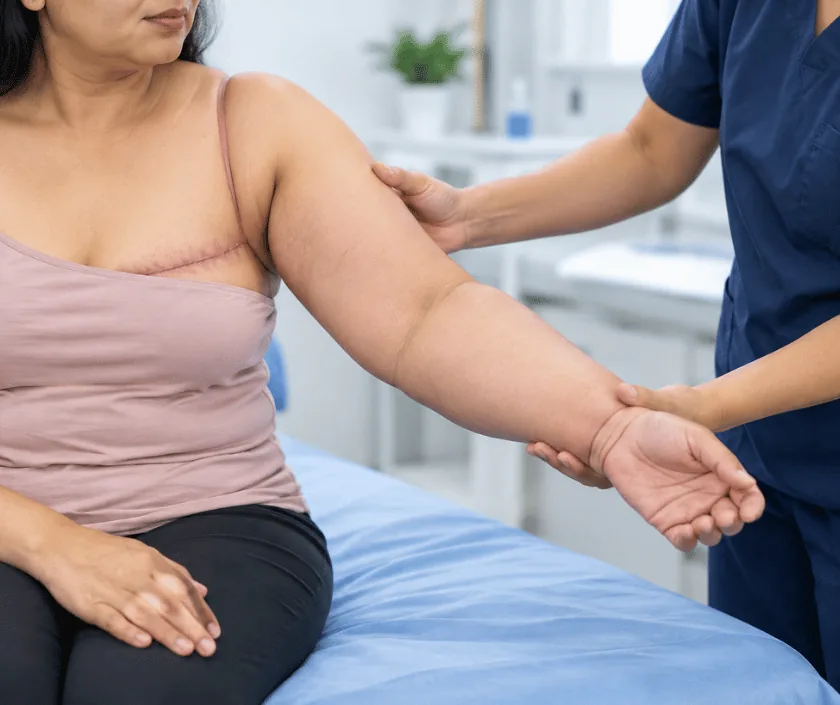
Garments work only if they fit and are worn as advised. Pressure class, length and whether the sleeve or stocking is ready made or custom all depend on the limb shape. Garments wear out and lose their grip, so they are replaced on a schedule.
This is a light, rhythmic massage technique that encourages fluid toward areas where drainage still works. A therapist performs it during the intensive phase and teaches a simplified version for home use, usually combined with bandaging in the same session.
Thickened skin cracks easily and cracks let bacteria in. Daily washing, drying between the toes or fingers, moisturising and protecting the limb during gardening, cooking and nail care all reduce attacks of infection that would otherwise worsen the swelling.
Movement acts as a pump. Walking, swimming and graded strength work all help, particularly when a compression garment is worn. Keeping weight steady makes a measurable difference to limb volume, and heat, tight jewellery and long still periods are best limited.
Most changes in a swollen limb can wait for a routine review, but a few need same day attention.
These are the points most often raised when therapy is first recommended.
Ask your question →Cost is spread across therapy sessions, bandages and garments that need periodic replacement rather than a single hospital bill. An estimate for the intensive phase and yearly garment needs is given after assessment. Insurance cover for garments varies between policies.
It suits most people with lymphedema, but it is avoided during an active skin infection, with untreated heart failure and where a clot is suspected. A qualified therapist assesses you first, and the pressure used is gentle rather than deep.
Many people see softening and a fall in measurements during the first weeks of the intensive phase. The gain then has to be held with daily garment use. Response can vary with how long the swelling has been present and how fibrous it is.
Lymphedema is a long term condition that is managed rather than reversed. Consistent therapy can reduce volume markedly, ease heaviness and prevent progression. Expect improvement and control rather than a limb identical to the other side.
Yes. Surgery is offered as an addition to conservative care, not a replacement for it. A limb that has been well managed is softer and responds better to an operation, and compression is normally continued afterwards for a defined period.
Fever with a hot red limb needs same day treatment, since skin infection can spread rapidly and damages the drainage further. Sudden painful swelling of one limb also needs prompt review to rule out a clot in the deep veins.
Both limbs are measured, the skin and tissue softness are examined, and your history of surgery, radiation and infections is taken. Scans of lymphatic flow may be arranged. A written plan for therapy, garments and review dates is then given.
