The body of the lower jaw is the long horizontal stretch that carries the back teeth and shields the nerve to the lip. A break here usually shows itself as a step in the bite and a numb lower lip.
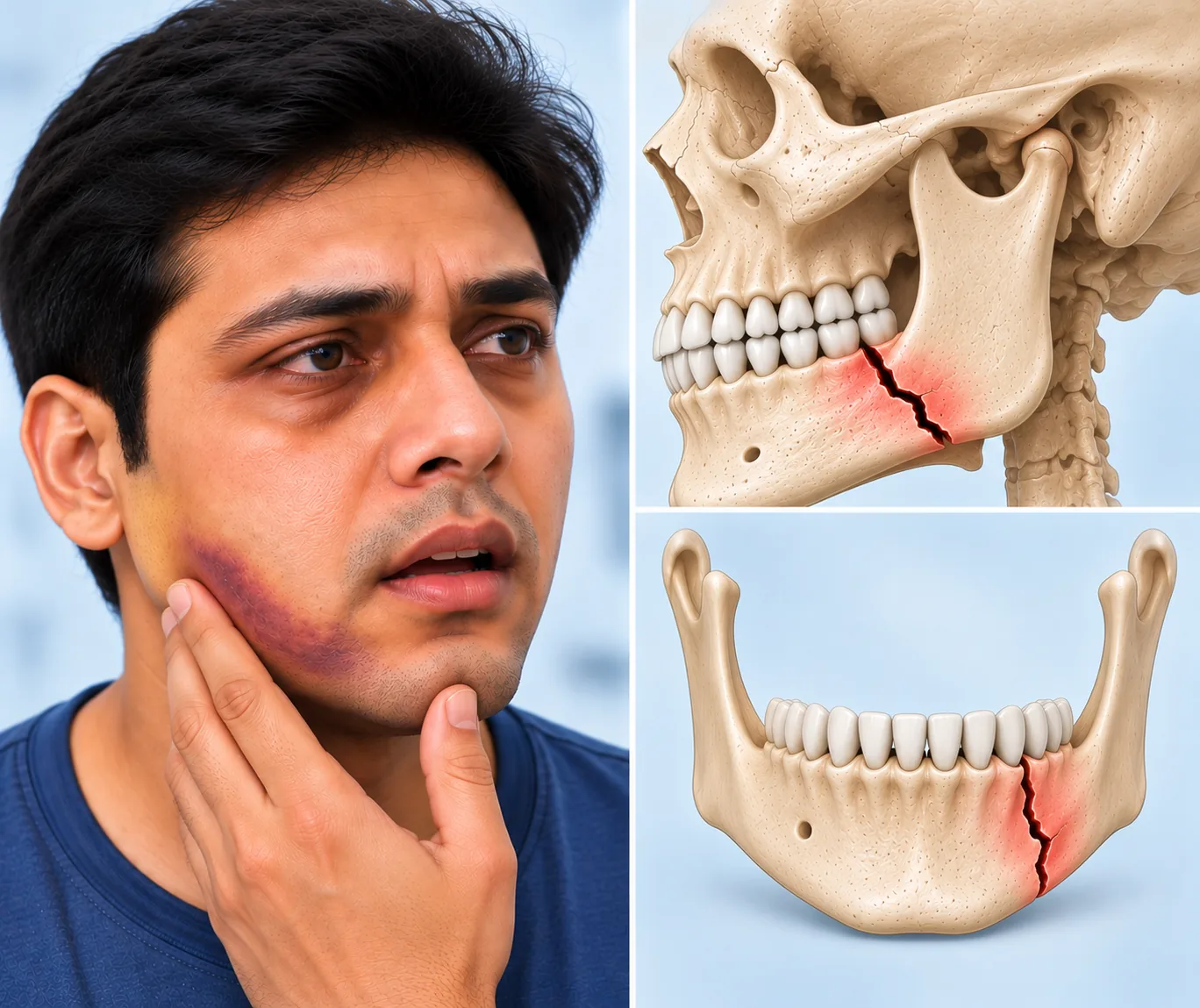
A mandibular body fracture is a break in the horizontal, tooth bearing part of the lower jaw, between the canine and the wisdom tooth. Since the fracture line passes through tooth sockets, it opens into the mouth and often leaves a visible step in the bite. Fixation is usually done with plates placed through a cut inside the cheek.
The body of the mandible is the part of the jaw most people picture when they think of the lower jaw. It runs along each side, carries the premolars and molars, and forms the firm ridge you can feel under the cheek. Inside it lies a channel carrying the nerve and vessels that supply the lower teeth and the lip on that side.
When this section breaks, two things happen together. The fracture line travels through the sockets of the teeth, so the gum splits and saliva reaches the bone at once. At the same time the jaw muscles pull the fragments in different directions, one pulling the back segment upward and the other dragging the front segment down, which produces the step people notice when they close their teeth.
Treatment therefore has two jobs. The bite must be reset so the teeth interlock the way they did before, and the bone must be held firmly enough for it to unite through a mouth that can never be kept sterile. Teeth sitting in the fracture line are judged one by one, since a sound tooth can help hold the segment while a shattered one invites infection.
Most displaced body fractures in adults do best with plate fixation. The decision rests on how far the bone has moved, on the state of the teeth and on general health.
The bite is examined tooth by tooth and the lip sensation is mapped. Scans then show the fracture line, its angle and whether a second break sits at the joint or the angle.
Each tooth in the fracture line is judged on its own merit. A firm, healthy tooth is often kept because it steadies the segment, while a split or badly decayed tooth is removed.
Under general anaesthesia the upper and lower teeth are brought into their original bite and held with wires or screws. This reference is what guides the bone back into position.
Through a cut inside the cheek the fracture is exposed, cleaned and aligned. Titanium plates are then screwed along the lower border and higher up, keeping the nerve channel and the tooth roots clear.
The gum is stitched with material that dissolves. Before discharge the bite is rechecked, and a scan or a mouth check confirms that everything sits where it should.
The cheek swells and opening the mouth is uncomfortable. Liquids and blended food are taken with regular pain relief, and the mouth is rinsed after everything that passes the lips.
Swelling falls away and speech becomes easier. Many people go back to office work, keeping to soft food and avoiding anything that needs a hard bite.
Bone union is usually well advanced, so the diet is widened step by step after review. Jaw opening exercises continue if opening is still short.
Chewing generally feels ordinary again. Any remaining lip numbness is reviewed, and dental treatment for teeth in the fracture line is completed.
A body fracture fixed early usually heals with a bite the patient recognises as their own and a jaw that opens fully. Some issues take longer. Lip numbness may improve over months without returning entirely, a tooth on the fracture line can darken or need root canal treatment, and a plate occasionally has to come out later. Healing time varies with age, with smoking and with how carefully the mouth is kept clean.
The risks below are discussed before consent, so that nothing that follows surgery comes as a surprise.
The fracture heals inside a mouth full of bacteria, so hygiene and diet discipline decide much of the outcome.
Not so. A firm, healthy tooth often helps hold the segment steady and is kept, while only damaged or infected teeth are removed.
A displaced fracture that is left alone tends to unite in the wrong position, leaving a bite that never meets properly again.
Local anaesthetic wears off within hours. Numbness lasting longer comes from bruising or stretching of the nerve inside the jaw.
Small titanium plates used in the jaw rarely trigger them, and a card from the treating hospital settles any query.
At Elegance Clinic in Surat, jaw fractures are assessed with the bite, the teeth and the nerve all considered together, and the plan is explained in plain language before admission.

Repair of a broken lower jaw is treated as necessary medical care, so mediclaim policies usually cover admission, surgery and implants, often on a cashless basis. What the final bill looks like depends on the number of fracture sites, the plates and screws used, the room category and the length of stay. Dental work needed afterwards, such as root canal treatment for a tooth in the fracture line, is billed separately and is explained at the time. A written estimate is shared before admission.
These are the questions that come up most often in consultation. If yours is not here, send it on WhatsApp and the team will reply, usually the same day.
Ask your question →A bruise hurts but leaves the bite intact. Breaks usually change how the teeth meet, produce a step between two teeth, cause a numb lip or make the jaw move oddly. Scans settle the question quickly.
In most cases yes, because the operation restores function rather than appearance. Cover depends on the policy, on how the injury is documented and on approval from the insurer. Related dental treatment is often excluded and is billed separately.
Usually only during the operation itself, to set the bite. Plates then hold the bone, so the wires can be removed or replaced with light elastics. Some fracture patterns still need a period of wiring, which is explained beforehand.
Soft food is the rule for about six weeks, then chewing is built back gradually once healing is confirmed. Full comfort with hard food may take a few months. The pace depends on the fracture and on how the bone unites.
Sometimes. An undisplaced crack with a normal bite can be managed with a soft diet, mouth care and close review. When the segments have shifted or the bite has changed, fixation gives a far more reliable result.
The nerve supplying the lip runs inside the jaw, right through the region that broke. Bruising or stretching of that nerve causes numbness. It often eases over weeks to months, though recovery cannot be promised in every case.
The bite is checked, the wound inside the mouth is inspected, jaw opening is measured and lip sensation is mapped. Scans are repeated when needed. These visits also decide when the diet can be widened safely.
Seeing patients from across the city and beyond: read about the practice on the plastic surgeon in Surat page, or check what a written estimate covers on the costs and insurance page.
