One knock can shift the thin bones of the nasal bridge within seconds, and swelling then hides how far they have moved. Timing matters here, because those bones begin to knit within a couple of weeks of the injury.
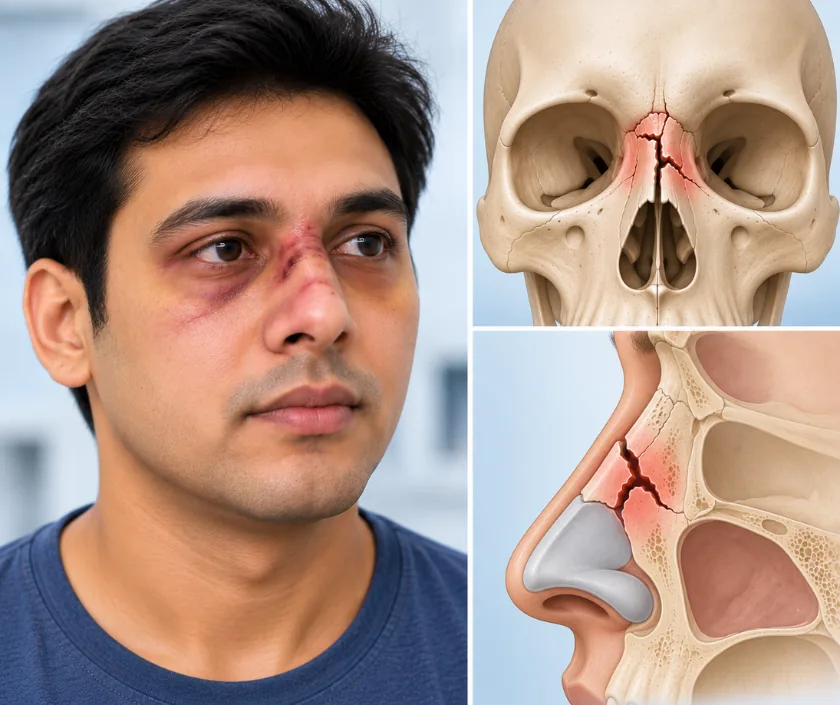
A nasal bone fracture is a break in the small bones that form the bridge of the nose. Plenty of them settle with simple care, though a nose that looks bent or blocks the airway usually needs the bones moved back into line. That correction is far easier within about two weeks of the injury, before the fracture starts to set.
Two slim bones meet in the midline to build the upper third of the nose, and below them the shape is carried by cartilage. A punch, a cricket ball, a fall or a road accident can push those bones sideways or flatten them inwards. Bleeding usually stops within minutes, yet the swelling that follows can make a badly displaced nose look almost normal for several days.
Assessment therefore happens in two parts. The first visit checks for bleeding, for a collection of blood inside the septum and for signs that other facial bones or the head are involved. A second look, once the swelling has eased, shows the real shape and how well air moves through each side. Photographs taken before the injury are genuinely useful at this point.
Where the bones have moved, they can often be lifted and pushed back into line through the nostrils. If the septum has buckled as well, or if the injury is old, straightening the nose becomes a larger operation that addresses cartilage along with bone.
The decision rests on how far the bones have moved, how well you can breathe and how long ago the injury happened. Not every broken nose needs a procedure.
Your face, nose and airway are examined, and the head and neck are checked as well. Imaging is used when other facial bones are suspected, since a simple broken nose is largely a clinical diagnosis.
Where swelling is heavy, a review is arranged a few days later. Setting the bones works best while they are still mobile, which usually means within about two weeks of the injury.
Most adults are comfortable with local anaesthesia and sedation. Children, anxious patients and complex injuries are better managed with a short general anaesthetic in theatre.
An instrument is passed inside the nostril to lift the collapsed side, while the fingers guide the outer wall back. The septum is checked at the same time and repositioned where needed.
A light splint may be taped over the bridge, with soft packs inside for a short while. You go home the same day with a review arranged in the first week.
Swelling and bruising around the eyes are at their worst. Sleep propped up, use cold packs on the cheeks rather than the bridge, and take the pain medicine as advised.
Any splint and internal packs come off at review. Breathing through the nose often feels blocked at this stage because of lining swelling, not because the setting has failed.
Bone has knitted well by now. Most people are back to the gym and to normal work, and the shape of the bridge is becoming clear.
The final contour settles over several months. If a bend or a blocked side remains, it can be reviewed and planned properly rather than rushed.
Setting the bones aims to bring the nose back towards how it looked before, which is not quite the same as making it new. Small irregularities of the bridge are common afterwards, and a nose that was already crooked will still show that older bend. Where the septum was badly buckled, breathing may improve only partly. Many people are satisfied with the shape, and some choose a planned correction later once everything has settled.
Setting a nasal fracture is a small procedure, yet it carries the risks any nasal operation does, and these are discussed with you beforehand.
Most of the healing happens at home, and a few simple habits protect the result while the bone sets.
Swelling can make a badly displaced nose look straight for the first week, and a mildly bent one look severe. Judging the shape after the swelling settles is far more reliable.
Breathing and the septum matter as much as appearance. A collection of blood inside the septum can damage cartilage quietly and needs to be found early.
Bones start knitting within about two weeks. Beyond that window, a simple setting under sedation is no longer possible and a larger operation becomes the alternative.
Setting a fresh fracture is done entirely through the nostrils. Cuts on the outer skin belong to planned reshaping operations, not to this procedure.
Facial injury care at Elegance Clinic in Surat is handled by a plastic surgery team used to both the emergency side and the reconstructive side, so the first assessment already takes the final shape of the nose into account.

Cost depends on whether the bones are set under sedation or under a general anaesthetic, on theatre and day care charges, and on whether the septum needs work at the same sitting. Because those details only become clear after the swelling settles, a written estimate is given once the nose has been assessed properly. Injury related treatment is usually covered by mediclaim, and the team will help you put the paperwork together.
These are the questions that come up most often in consultation. If yours is not here, send it on WhatsApp and the team will reply, usually the same day.
Ask your question →Cost varies with the type of anaesthesia, the theatre and day care charges, and whether the septum is corrected at the same time. A written estimate is shared once the swelling has settled and the nose can be assessed properly, so the figure quoted reflects the actual plan.
Injury related nasal surgery is normally treated as reconstructive rather than cosmetic, so most mediclaim policies consider it. Approval usually needs the accident record, photographs and the surgical notes. Waiting periods and room rent limits written into your policy still apply, so check them early.
The procedure is short and done under sedation or a brief general anaesthetic, so you feel little during it. Soreness, blocked breathing and bruised eyes are usual for a few days and respond to simple medicines. Bleeding and infection are possible but uncommon.
Bruising and swelling ease over one to two weeks, and any splint comes off at the first review. Desk work usually restarts within a week. Bone is solid enough for the gym at around six weeks, while contact sport is left until later.
The aim is to bring the bridge back towards its earlier shape rather than to build a new nose. Small irregularities can remain, particularly if the septum was damaged. Many people are happy with the result, and a planned correction is possible later.
Ideally within about two weeks of the injury, while the bones can still be moved without cutting. A review is often arranged a few days after the accident so the swelling has time to settle without missing that window.
Bring any hospital or accident papers, imaging done elsewhere, a list of your medicines and, if you have one, a clear photograph of your face from before the injury. Insurance details are useful too, as they help with the estimate.
Seeing patients from across the city and beyond: read about the practice on the plastic surgeon in Surat page, or check what a written estimate covers on the costs and insurance page.
