The front of the lower jaw carries the chin, the lower front teeth and the muscles that hold the tongue forward. A break here twists the width of the jaw, so fixing it well matters for the bite and for speech.
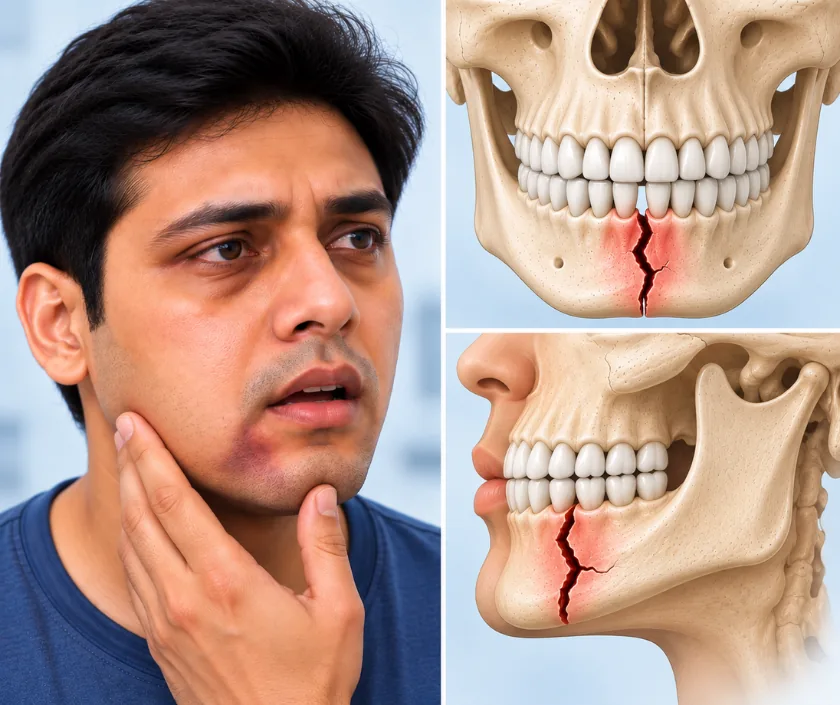
A symphysis or parasymphysis fracture is a break in the front of the lower jaw, at or beside the midline of the chin. Because strong muscles pull this segment in two directions, the jaw tends to splay outward and the bite drifts. Fixation usually needs two plates, one near the tooth roots and a stronger one along the lower border.
The lower jaw is one curved bone, and the chin sits at the front of that curve. A blow to the chin, most often from a road crash or a fall, can split the bone at the midline or just beside it. Since the fracture line runs between or beside the lower front teeth, the gum is usually torn and the break is open to the mouth from the first minute.
What makes this site different is the pull of muscle. The tongue and the muscles in the floor of the mouth attach to the inner surface of the chin and drag the fragments backwards and inwards, while the muscles that close the jaw twist them another way. As a result the jaw can end up wider than before, the back teeth stop meeting properly and the chin looks flattened.
Because of that twisting force, fixation here follows a different rule from the rest of the jaw. One plate goes high up near the tooth roots to hold the bite, and a heavier plate goes along the lower border to resist rotation. A single small plate is rarely enough at this site.
Plate fixation suits most adults whose chin fracture has moved out of place or whose bite has changed. A small number of fractures sit still enough to be watched instead.
A clinical check of the bite comes first, followed by scans that show the fracture pattern and both jaw joints. Loose or broken teeth sitting in the fracture line are assessed at the same visit.
Under general anaesthesia the teeth are brought back into their original bite and held there temporarily with wires or small screws. Bone position follows the bite rather than the other way round.
A cut inside the lower lip gives access to the chin without any scar on the face. The fracture edges are cleaned of clot and torn gum, then aligned under direct vision.
Two titanium plates are fixed with small screws, one near the tooth roots and a stronger one at the lower border. Together they hold the fragments steady against twisting during chewing.
The gum is closed with stitches that dissolve on their own, and the bite is checked again before the patient wakes. Temporary wires may be released at the end or kept a short while.
Swelling of the lip and chin peaks and the mouth feels tight. Cool liquids and soft food are managed with help, and pain relief is given on a regular schedule.
Swelling settles and the stitches inside the lip dissolve. Many people return to desk work, still eating soft food and rinsing the mouth after everything they eat.
By now the bone has usually joined well enough for the diet to widen. Firmer food is introduced slowly, guided by what the review appointment shows.
Bite comfort is usually settled. Lip sensation, if it was affected, may still be improving, and plates are removed only when they cause trouble.
Most people who have a chin fracture fixed early get back a bite that feels like their own and a jaw that opens well. Small changes can remain. A tooth on the fracture line may need root canal treatment later, lip sensation can take months to settle, and a few people are left with a patch that never feels quite the same. Recovery varies with the injury, with age and with how well the mouth is kept clean.
Jaw fixation is routine work in maxillofacial surgery, yet no operation is free of risk. These are the problems that come up often enough to discuss before consent.
Healing depends heavily on mouth hygiene, because this fracture opens into the mouth. A few simple habits do most of the work.
Firm plating usually allows the jaws to move within days, and long wiring is now kept for selected fracture patterns.
Plates are usually left in place and are removed only if they become infected, work loose or cause discomfort.
Numbness most often comes from the injury itself, because the nerve to the lip runs inside the bone that broke.
Bite changes and a fracture at the jaw joint can hide behind a chin that looks almost untouched.
Facial fracture work at Elegance Clinic in Surat starts with an unhurried assessment of the bite and of the whole jaw, not only the obvious break. Families are given a written estimate before admission so that costs are clear from the start.

Fixing a broken lower jaw is medically necessary treatment, so it is usually covered by mediclaim and by cashless schemes when the policy is active and the paperwork is in order. The final figure depends on how many fracture sites there are, the plates used, the length of stay and the room category chosen. A written estimate is prepared once the scans have been reviewed, and any change to that estimate is explained before it is acted on.
These are the questions that come up most often in consultation. If yours is not here, send it on WhatsApp and the team will reply, usually the same day.
Ask your question →Usually yes. Fixing a broken jaw is reconstructive rather than cosmetic, so mediclaim policies generally cover it, and many admissions can be processed as cashless. Cover still depends on the policy wording, the waiting period and the documents submitted at admission.
Earlier is generally better. Many jaw fractures are fixed within the first few days, once swelling and any other injuries allow. Waiting a long time makes the bone harder to move back into position and raises the chance of infection in a break that is open to the mouth.
Usually not. Most chin fractures are reached through a cut inside the lower lip, which leaves no visible mark on the face. A skin incision is used only when the fracture pattern, or a wound already present, makes it necessary.
The front of the jaw twists as you chew, and one plate cannot resist that rotation. Fractures further back in the jaw sit under different forces, so some of them can be held safely by a single plate placed along a particular line.
A soft diet is usually needed for around six weeks, after which firmer food is added gradually once healing has been checked at review. Rushing this can loosen a plate. The exact timing varies with the fracture and with how the bone unites.
Often it improves, though the pace varies a great deal. Sensation may return over weeks or months as the nerve inside the bone recovers, and some people keep a small numb patch. Recording the numbness early helps everyone track progress honestly.
Not as a rule. Titanium plates are designed to stay, and most people keep them for years without trouble. Removal is considered when a plate becomes infected, works loose, feels prominent under thin gum or gets in the way of later dental work.
Seeing patients from across the city and beyond: read about the practice on the plastic surgeon in Surat page, or check what a written estimate covers on the costs and insurance page.
