Behind the visible bridge sits a thin partition of cartilage and bone that divides the two air passages. When an impact cracks or buckles that wall, breathing on one side narrows even though the nose may look almost straight.
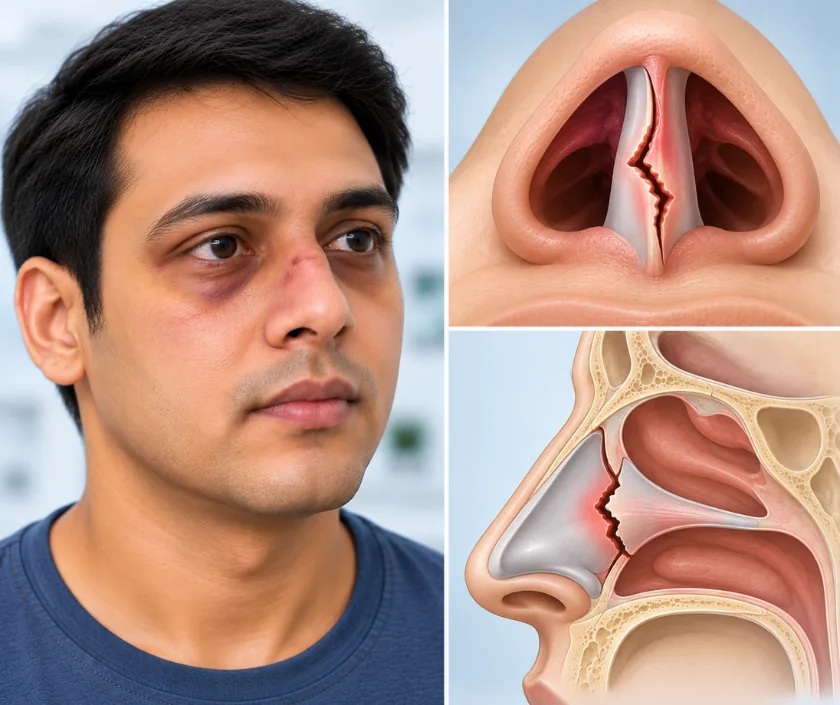
A septal fracture is a break or buckle in the partition that separates the two sides of the nose. Airflow narrows on the pushed side, and the outer bridge may or may not look bent. Fresh injuries can sometimes be repositioned along with the nasal bones, while an older deviation is corrected through a planned operation inside the nose.
Air entering the nose is split by a central partition of cartilage in front and bone behind. That partition also props up the bridge, rather like a tent pole under canvas. A blow strong enough to break the nasal bones frequently cracks or bends this wall at the same time, and sometimes the septum is injured while the outer bones stay in place.
The result is usually felt rather than seen. One side of the nose blocks, the block does not clear with drops, and it may worsen when lying on a particular side. Crusting, dryness and occasional nose bleeds are common companions. Where the buckle is severe, the tip of the nose can twist and the bridge can look deviated from the front.
Examination inside the nose is what settles the question, sometimes with an endoscope. A fresh injury may be repositioned along with the nasal bones. Where cartilage has cracked and healed in a new position, straightening it means trimming, scoring and repositioning the cartilage through the nostril, an operation known as septoplasty.
Correction is offered when the airway is genuinely narrowed by the septum, or when the buckled cartilage is twisting the shape of the nose.
Each side is examined, often with an endoscope, before and after a decongestant spray. This separates blockage caused by the septum from blockage caused by swollen lining.
If blood has collected between the cartilage and its lining, it is released through a small opening under local anaesthesia and a soft dressing is placed to stop it refilling.
For an established deviation, surgery is planned once the swelling has fully settled. Photographs, the breathing history and the examination together decide how much cartilage needs work.
Through a cut inside the nostril, the lining is lifted, the bent or cracked cartilage is repositioned, and any spur of bone is removed. The lining is then laid back and stitched.
Thin soft splints hold the septum straight for about a week. Most people go home the same day, with a review to remove the splints and check the airway.
The nose feels blocked and dry, and there may be a little ooze. Sleep propped up, breathe through the mouth and use the prescribed medicines rather than shop bought sprays.
Splints come out at review and breathing starts to open, although crusting continues. Saline rinses and moisturising drops make this stage much easier.
The lining has healed, airflow feels much steadier and normal exercise can restart. Any remaining crusting is usually mild by now.
The septum has settled into its new position. Breathing is at its best and the shape of the tip and bridge can be judged fairly.
Airflow usually improves once the swelling and crusting settle, though few noses breathe equally on both sides even without injury. Cartilage has memory, so a small residual bend can remain or reappear over time. Where allergy also narrows the lining, medicines are still needed after surgery. Appearance changes only modestly, since this operation works inside the nose rather than reshaping the outside.
Septal surgery is generally well tolerated, and the possible problems are worth knowing before you agree to it.
Care at home is mostly about keeping the lining moist and avoiding pressure while the septum settles.
The partition sits inside and can buckle while the outer bridge stays reasonably straight. Blocked breathing after an injury is the clue that matters more than appearance.
Sprays reduce lining swelling and do nothing to a bent wall of cartilage. Long use of decongestant sprays makes blockage worse rather than better.
The work is done through a cut inside the nostril. Nothing is cut on the outer skin, so there is no visible scar afterwards.
This operation is aimed at the airway. Some straightening of a twisted tip can follow, but reshaping the outside is a separate planned procedure.
The team at Elegance Clinic in Surat looks at the airway and the shape of the nose together, so an injured septum is assessed with an eye on both breathing and the long term contour of the bridge.

What you pay depends on whether the septum alone is corrected or the nasal bones are set at the same sitting, on the anaesthesia used and on theatre and day care charges. Splints, medicines and review visits form a smaller part of the total. Once your airway has been examined and the plan agreed, a written estimate is prepared. Injury related correction is usually covered under mediclaim, and the team helps with the forms.
These are the questions that come up most often in consultation. If yours is not here, send it on WhatsApp and the team will reply, usually the same day.
Ask your question →The figure depends on whether the septum alone is straightened or the nasal bones are set at the same time, on the anaesthesia and on hospital charges. A written estimate is prepared after the airway has been examined, so it matches the plan rather than a general price list.
Correction after an injury is treated as functional surgery rather than cosmetic, so most mediclaim policies consider it. The claim usually needs accident records, the examination findings and operative notes. Policy waiting periods and room limits still apply, so read them before admission.
It is a common and generally well tolerated operation done under anaesthesia, so you feel nothing during it. Bleeding, crusting and temporary numbness of the front teeth are the usual issues. A small hole in the septum is possible and is discussed with you beforehand.
The first week feels blocked because of splints and swelling. Once those come out, airflow improves week by week. Desk work restarts within about a week and exercise at around six weeks, while crusting can linger a little longer.
Most people notice a marked improvement, though few noses breathe equally on both sides. Cartilage can hold a slight bend, and allergy still needs its own treatment. Realistic expectation is easier breathing rather than an entirely open airway.
Urgent drainage is needed within a day or two if blood has collected in the septum. Otherwise the correction is planned after the swelling has settled, often several weeks later, so the airway can be judged accurately.
Both sides of the nose are examined, usually with an endoscope and a decongestant spray, and your breathing history is taken. The findings, the options and the likely recovery are explained, and an estimate follows once a plan is agreed.
Seeing patients from across the city and beyond: read about the practice on the plastic surgeon in Surat page, or check what a written estimate covers on the costs and insurance page.
