Pain in the jaw joint is common, and it usually comes from muscles and a joint working under strain rather than from anything sinister. Treatment begins with the gentlest measures, because those are what help the greatest number of people.
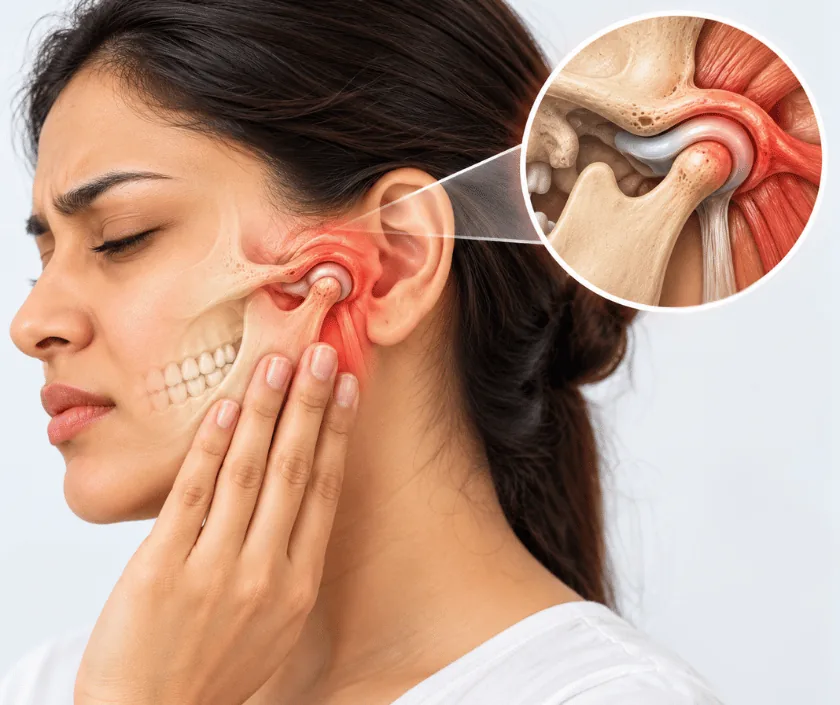
Treatment for jaw joint pain starts with resting the joint, a softer diet, warmth, gentle exercises and short courses of pain relief. A night splint helps people who clench or grind. Stress, posture and neck tension are addressed alongside. Most improve within weeks to a few months, and only a small number go on to need a procedure.
Two structures usually share the blame. One is the joint itself, in front of the ear, with its small cartilage disc. The other is the group of muscles that close and move the jaw, running over the temple and down the cheek. Strain in either produces a similar ache, and often both are involved together.
Clenching during sleep or concentration loads those muscles for hours at a time. A missing back tooth, an uneven bite, an old blow to the chin or a long dental appointment can all set things off. Anxiety and broken sleep make muscles more tender, which is why jaw pain often worsens during difficult periods and eases when life calms down.
Assessment therefore looks wider than the joint. Movement, tenderness, bite, neck and daily habits are all checked. That fuller picture decides which measures are likely to help, and it explains why a scan on its own rarely answers the question.
Conservative treatment suits almost everyone with jaw pain, and it is where care should begin. What varies is how long it takes and what gets added along the way.
A careful history and examination of jaw, muscles, bite and neck comes first. Other causes of facial pain are ruled out before anything is labelled a joint problem.
Softer food, smaller mouthfuls, warmth over the muscles and short courses of pain relief are started. Habits that overload the jaw are identified together.
Gentle, guided jaw exercises restore movement and reduce muscle guarding. They are taught in clinic, then carried out at home to a set schedule.
For clenching or grinding, a fitted night splint reduces the load. It is checked and adjusted, since an unreviewed splint can alter the bite.
Progress is reassessed after a proper trial. A small number need injections, joint washout or referral for further treatment, and that is discussed openly.
Pain often eases with jaw rest and softer food. Sleep may improve first, which by itself helps the muscles settle.
Exercises widen opening and chewing becomes easier. Any splint is adjusted during this period as things change.
Most people are considerably better. Those who are not have the diagnosis revisited before further treatment is offered.
Symptoms usually stay settled, with occasional flares in stressful spells that respond to the same measures.
Most people improve substantially within a few months, and many become free of daily pain. Clicking may persist, and flares during stressful periods are common even after a good response. Treatment aims at comfortable function rather than a joint that never makes a sound. A small number need further procedures, and those results are less predictable.
Simple treatment carries low risk, though nothing here is entirely without downsides and it is only fair to know them.
Home measures carry most of the benefit in jaw pain, and they work best when done consistently.
Muscle strain accounts for much of it. Many people with significant pain have joints that look normal on imaging, and they improve with simple treatment.
Conservative care resolves the problem for most people. Procedures are kept for those still limited afterwards, and their results are less predictable.
Ready made guards are not adjusted to your bite and can make matters worse over time. A fitted splint is checked and altered as things change.
Some rest helps during a flare, yet prolonged stillness stiffens the joint. Gentle guided movement is part of the treatment rather than against it.
Jaw pain at Elegance Clinic in Surat is assessed thoroughly before treatment starts, and the plan begins with the measures that help the greatest number of people.

Standard treatment for jaw pain is inexpensive compared with surgery, because most of it is advice, exercises and short courses of medicine. Consultation and a fitted splint account for the bulk of the cost, with imaging added only when it will change the plan. Anything further, such as an injection or a joint washout, is quoted separately. A written estimate follows assessment.
These are the questions that come up most often in consultation. If yours is not here, send it on WhatsApp and the team will reply, usually the same day.
Ask your question →Most of the plan is advice, exercises and short courses of medicine, which cost little. Consultation and a fitted splint make up the main outlay, with imaging added only if needed. A written estimate is provided after assessment, and any procedure is quoted separately.
Outpatient care and splints are treated differently across policies, and many cover them only in part. Where a procedure or admission becomes necessary, cover is more usual. Clinical notes and imaging are normally requested, and the team helps prepare the file.
Diet changes, warmth and guided exercises carry very little risk. Pain relieving tablets need care with long use, and a splint must be fitted and reviewed so the bite does not shift. Procedures carry more risk, which is why they come later.
Many people notice easing within two to three weeks of resting the jaw and softening the diet. Opening usually improves over the following month with exercises. A proper review at around three months decides what happens next. Recovery can vary.
Flares during stressful or busy periods are common, even after a good response. They usually settle with the same measures that worked before. Learning your own triggers is a large part of keeping the jaw comfortable over the years.
Often not. Examination of the jaw, muscles, bite and neck answers most questions, and imaging is arranged where it would change the plan, such as with locking, injury or suspected arthritis. Scans alone match symptoms poorly in this joint.
Questions about pain, clicking, locking, clenching, sleep and stress, followed by examination of jaw movement, muscles and bite. You leave with a home programme, any medicine needed and a review date, rather than an immediate procedure.
Seeing patients from across the city and beyond: read about the practice on the plastic surgeon in Surat page, or check what a written estimate covers on the costs and insurance page.
