Nearly everyone with a troublesome jaw joint gets better without an operation. Arthroscopy, a keyhole look inside the joint, is offered only to the small group whose symptoms persist after conservative care has been given a fair trial.
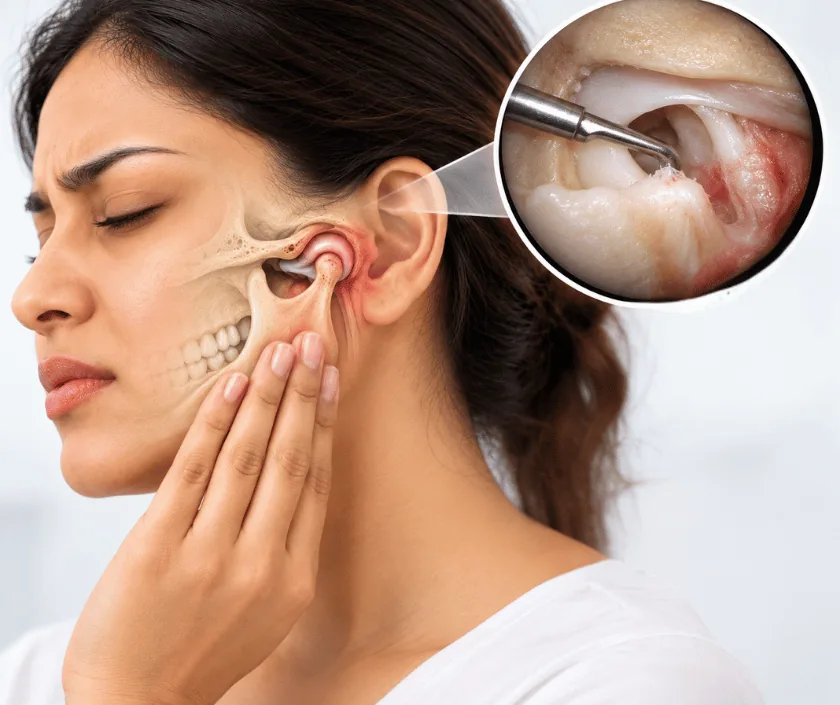
Conservative care means treating a painful jaw joint without surgery, using rest, softer food, exercises, splints and pain relief. It settles symptoms for most people. Arthroscopy is a keyhole procedure in which a fine telescope is passed into the joint to wash it out and release adhesions, and it is considered only after conservative care has failed.
Conservative care is the backbone of treatment for the jaw joint. Resting the joint, eating softer food, applying warmth, taking short courses of pain relief and following a guided exercise programme settle symptoms for most people. A fitted night splint is added where clenching or grinding forms part of the picture. Sleep, stress and neck tension are looked at too, because they influence how much pain is felt.
All of this is given a genuine trial, usually over months rather than weeks, with review along the way. Only when someone remains limited despite that, or when the joint keeps locking and imaging shows a mechanical problem, does surgery enter the conversation.
Arthroscopy is the least invasive of the surgical options. Through punctures a few millimetres wide the joint can be inspected, washed out and freed from adhesions. It suits joints that are stuck or inflamed more than joints that are badly worn. Open surgery remains available for severe disease, yet few patients ever reach that point.
Arthroscopy is for a small, carefully chosen group. Most people with jaw joint symptoms will never need it, and saying so plainly is part of honest advice.
History, examination and imaging are reviewed together, and the record of conservative treatment is checked. Arthroscopy is offered only where the problem clearly sits inside the joint.
The procedure is done under general anaesthesia as a day case. One or two punctures a few millimetres wide are made in the skin crease in front of the ear.
A fine telescope shows the joint lining and disc. Fluid is flushed through to clear inflammatory debris, which by itself relieves symptoms in many patients.
Bands of scar tissue limiting movement can be divided through the same access, and the jaw is then moved to confirm that opening has improved.
You go home the same day in most cases. Jaw exercises begin early, because movement is what holds on to the benefit of the procedure.
Mild swelling and tenderness in front of the ear are usual. Softer food, cold packs and simple pain relief are enough for most people.
Punctures heal and exercises are stepped up. Many return to desk work within a few days, chewing carefully for a while longer.
Opening is usually noticeably better and diet has widened. Progress is reviewed and the exercise programme adjusted.
Improvement is consolidated. Continuing habits and exercises protect the result, and further options are discussed if symptoms return.
Many people who reach arthroscopy gain useful improvement in opening and pain, particularly where locking has been the problem. Bone changes already present do not reverse, and clicking often continues. Some symptoms may return over time, and a few patients need further treatment. Exercises afterwards influence the result considerably. Recovery can vary between individuals.
Arthroscopy is less invasive than open surgery, yet it works in a small space beside the facial nerve and the ear, so risks deserve clear discussion.
Recovery is quick, but what you do through the first weeks decides how much of the benefit lasts.
Conservative treatment settles symptoms for the large majority. Only a small group ever need a procedure, and that order of treatment is deliberate.
Small punctures still sit beside the facial nerve and the ear canal. Nerve bruising, hearing changes and infection are uncommon but genuine possibilities.
Movement and comfort often improve. Wear already present in the bone does not reverse, and clicking frequently continues.
A joint that has been freed will stiffen again if it is not moved. Exercises matter as much as the procedure in holding on to the gain.
Jaw joint care at Elegance Clinic in Surat follows a clear order, with conservative treatment given a full trial and surgery discussed only when it is genuinely warranted.

Conservative care carries little cost beyond consultation, a splint and any medicines. Arthroscopy, being a day case under general anaesthesia, costs considerably more and depends on theatre time and on what is done inside the joint. A written estimate is issued after assessment so both routes can be compared. Where a procedure is medically indicated, mediclaim policies often cover it, and the team assists with the paperwork.
These are the questions that come up most often in consultation. If yours is not here, send it on WhatsApp and the team will reply, usually the same day.
Ask your question →The figure depends on theatre time, anaesthesia and what is done inside the joint, so it is quoted after assessment in a written estimate. Conservative care beforehand costs far less, mainly consultation, a splint and medicines, and it is what most people need.
Where arthroscopy is medically indicated and documented, mediclaim policies often cover the admission. Insurers ask for clinical notes, imaging and a record of the conservative treatment already tried. Waiting periods and room rent limits in your own policy still apply.
It is less invasive than open surgery and most people recover quickly. Even so, the joint sits beside the facial nerve and the ear, so nerve bruising, hearing changes and infection remain possible. These risks are set out before consent is taken.
Most people go home the same day and return to desk work within a few days. Softer food is sensible for a couple of weeks while chewing is built up. Exercises start early, and opening usually improves over the following weeks.
Opening and pain often improve, particularly where locking was the main problem. Clicking may continue and existing wear does not reverse. Some symptoms can return later, and a few people need further treatment, which is discussed honestly beforehand.
Yes, and for good reason. Most people settle with rest, diet changes, exercises and a splint, avoiding surgery altogether. Arthroscopy is offered to those still limited after a genuine trial, not as a first move.
Your history, examination findings and imaging are reviewed alongside the treatment already tried. Both routes are explained, with likely gains and real risks. You are given a written estimate and time to think before any decision is made.
Seeing patients from across the city and beyond: read about the practice on the plastic surgeon in Surat page, or check what a written estimate covers on the costs and insurance page.
