The thumb does much of the work of the whole hand, so surgeons try hard to put an amputated thumb back. Replantation joins bone, tendon, nerve and the tiny blood vessels in one emergency operation.
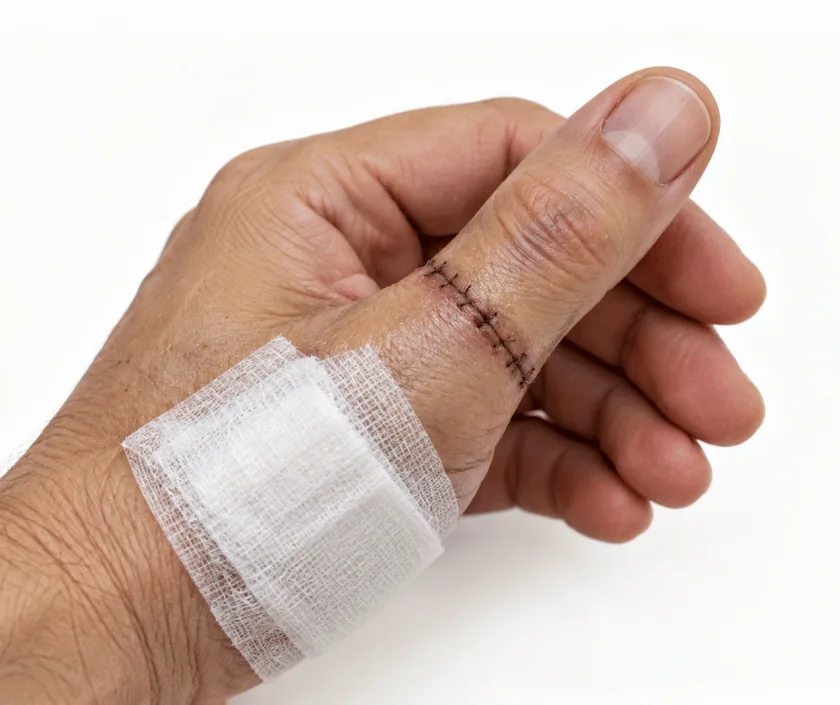
Thumb replantation is emergency surgery that reattaches a completely severed thumb. The amputated part is cooled correctly and brought in quickly, then bone is fixed, tendons are repaired and the artery, vein and nerves are joined under a microscope. Because the thumb provides most of the grip and pinch of the hand, surgeons attempt replantation here whenever the tissue is in reasonable condition.
When a thumb is cut off completely, every structure inside it is divided at once. Bone, tendon, nerve, artery and vein all have to be put back in a single sitting, and the vessels involved are narrower than the lead of a pencil. That is why this work is done under an operating microscope with very fine stitches, by a team trained in microsurgery.
Timing shapes everything. Tissue that has lost its blood supply slowly loses the ability to recover, so the sooner the part is cooled correctly and brought to hospital, the better the chance of a useful result. Our team assesses the stump and the amputated part together, looks at how clean the cut is, and explains honestly whether reattachment is sensible or whether a different reconstruction serves you better.
Surgeons treat the thumb differently from other digits. Even a stiff thumb that only opposes the fingers gives a hand real function, so effort is often made to save it when a similar injury to a small finger might be treated another way. Therapy afterwards matters as much as the operation itself.
Replantation suits people whose amputated thumb has arrived in usable condition and whose general health allows a long operation. The decision is made in the emergency room, with the injury in front of us.
You are examined, blood tests and imaging are arranged, and the amputated part is kept cool. Consent covers replantation and the possibility that reattachment may not be possible once the tissue is inspected.
Both surfaces are washed and damaged tissue is trimmed. Bone is then shortened slightly and fixed with wires or a small plate, which gives a stable frame for everything that follows.
Flexor and extensor tendons are stitched so the thumb can eventually bend and straighten. The nerves on either side are aligned under magnification and repaired to give feeling a route back.
Under the microscope, the artery is joined first so blood flows again, then at least one vein is joined so blood can drain. The thumb usually pinks up within minutes of release.
Skin is closed loosely to leave room for swelling, and a protective splint is applied. Nurses then check colour, warmth and refill of the thumb frequently through the first days.
You stay in hospital with the hand raised and the room kept warm. Staff watch the circulation closely, since this is when a blocked vessel is most likely and most treatable.
Dressings are changed and stitches are reviewed. Gentle protected movement often begins with a hand therapist, guided by how the bone and tendons were fixed.
Bone healing is reviewed on imaging. If the fixation is solid, therapy moves on to more active movement, and light one handed use of the limb is usually allowed.
Feeling continues to improve as the nerves regrow. Strength and fine pinch build slowly, and some people choose a small secondary procedure to loosen a tight tendon or joint.
A replanted thumb is a working thumb, not the thumb you had before. Movement is usually stiffer, feeling is often reduced and cold weather can bring aching. Many people still find the trade worthwhile, because a slightly stiff thumb in the right place restores far more hand function than an empty space. Results vary with the injury, and your surgeon will describe what your particular pattern of damage allows.
Replantation is major emergency surgery on very small structures, so complications do happen. Knowing them in advance makes it easier to spot trouble early.
Once you go home, small daily habits protect the repair while the tissues knit together. Your therapist writes these down for you before discharge.
Tissue without blood supply deteriorates steadily, so the window is short and shrinking. Cooling correctly buys time, it does not stop the clock.
Direct contact with ice freezes and damages the tissue. Wrap it in clean moist gauze, seal it in a bag, then rest that bag on ice.
Reattachment restores position, length and some feeling. Movement and sensation improve gradually over months and rarely match the original.
A living thumb keeps sensation and a natural pinch, which is why surgeons work hard to save it when the tissue allows.
Elegance Clinic in Surat handles hand emergencies with a microsurgery trained team and explains each decision in plain language while the family is still in the corridor. Dr. Ashutosh Shah reviews the injury himself before any plan is confirmed.

Replantation is emergency surgery, so the final figure depends on how many structures need repair, how long the operation runs and how many days you spend in hospital. The band below is a planning guide rather than a quotation.
After the hand has been examined, our team shares a written estimate covering theatre, implants, hospital stay, medicines and the therapy that follows. If you carry insurance or a government scheme card, the front desk helps you start approval while surgery is being arranged.
These are the questions that come up most often in consultation. If yours is not here, send it on WhatsApp and the team will reply, usually the same day.
Ask your question →Finger replantation usually falls within a band of Rs 1.2L to Rs 3.5L, depending on the injury, theatre time and length of stay. Emergency admission is often covered by insurance or a government scheme, and a written estimate is shared once the hand has been assessed.
Straight away. Tissue without blood supply deteriorates by the hour, so every minute of delay reduces the chance of a useful result. Cool the amputated part correctly, do not wait to arrange anything else, and travel to a centre that does microsurgery.
It is major surgery under general anaesthesia, so a check of your heart, lungs and blood sugar comes first. Serious problems are uncommon in people who are otherwise well, though bleeding, clotting of the repaired vessels and infection are all recognised risks that the team watches for.
Expect several days in hospital, then weeks of protected movement with a therapist. Light one handed activity often resumes within a couple of months, while strength, pinch and sensation keep improving for the better part of a year. Recovery can vary widely.
Honestly, no. A reattached thumb is usually a little shorter, stiffer and less sensitive than the original. Most people still prefer it to an absent thumb, because position and pinch matter more for daily tasks than an entirely normal appearance.
People whose thumb has been crushed or torn over a long segment often have no healthy vessel to join. A part that arrived warm, soaked in water or frozen against ice may also be unusable, and continuing tobacco use makes failure far more likely.
In an emergency the consultation happens at the bedside. The injury and the amputated part are examined, imaging is arranged, and the realistic options are explained to you and your family before consent. A written estimate follows the same conversation.
Each technique below has its own page explaining how it works and when it is chosen.
Seeing patients from across the city and beyond: read about the practice on the plastic surgeon in Surat page, or check what a written estimate covers on the costs and insurance page.
