An Abbe flap rebuilds a gap in one lip with a small wedge of tissue borrowed from the opposite lip. That wedge keeps its own blood vessel for a while, so the lips stay joined briefly before the bridge is divided.
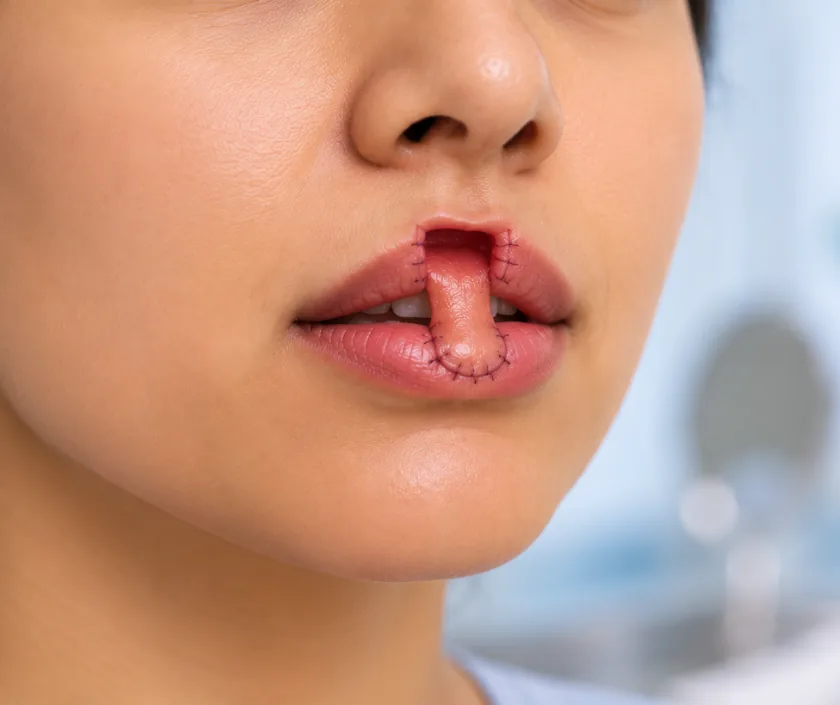
An Abbe flap is a cross lip flap. A full thickness wedge of the opposite lip, carrying skin, muscle and lining, is turned into the gap while it stays attached by a narrow bridge holding one lip artery. The lips remain joined for a few weeks, then a short second procedure divides that bridge and shapes both lips.
Lips are not simply skin. Each one is a ring of muscle lined by moist mucosa and covered by skin, and that layered build is what lets the mouth close, hold food in and shape speech. When a wedge of that structure is lost to injury, an animal bite, a tumour excision or a tight scar after cleft repair, replacing it with skin alone leaves a lip that looks filled but works poorly.
An Abbe flap answers that problem by borrowing like for like. A wedge of the opposite lip, usually about half the width of the gap, is cut through its whole thickness and turned across the mouth into the defect. One of the two lip arteries is left running through a narrow bridge of tissue at the corner of the wedge, so the flap keeps a living blood supply while it settles in.
Both lips are then stitched in layers. For a short spell the mouth opens only partly, since the two lips are linked by that bridge. Once new vessels grow in from the surrounding tissue, a brief second procedure divides the bridge, tidies both edges and frees the mouth.
Choice of flap depends on where the gap sits, how wide it is and whether the corner of the mouth is involved. An Abbe flap fits a fairly narrow set of situations.
Width of the gap is measured and a matching wedge is drawn on the opposite lip, usually about half that width. Marks respect the vermilion border, the line where lip colour meets skin.
Under general anaesthesia the wedge is cut through skin, muscle and lining, leaving a narrow bridge at one side that carries a lip artery. Gentle handling protects that vessel.
That wedge is rotated across the mouth and stitched into the gap in three layers, lining first, then muscle, then skin, so the rebuilt lip moves as one unit.
Whichever lip supplied the wedge is closed in the same layered way. Careful alignment of the colour border matters far more than the length of the scar.
After a few weeks a short second procedure separates the bridge, trims both edges and shapes the red part of the lip. This step is often done under local anaesthesia with sedation.
Swelling and discomfort peak early. Fluids and soft food are taken with care, speech sounds muffled, and regular pain relief with cold packs keeps things manageable.
Stitches settle and swelling eases. Because the mouth still opens only partly, a soft diet continues and gentle rinses keep the suture lines clean.
Division of the bridge usually happens in this window, after which the mouth opens more freely. Scars look red and feel firm, which is normal at this stage.
Scars fade and soften over many months. Fullness settles, sensation returns gradually, and any small revision is planned only once the tissue is quiet.
Most people gain a lip that closes properly and looks far more balanced than before. Scars are visible at first and soften over many months, though a fine line usually remains. Feeling in the moved tissue returns slowly and is rarely identical to the rest of the lip. Small differences in fullness or in the colour border are common, and a minor touch up is sometimes planned once everything has settled.
This is a well established repair, yet like any lip surgery it carries risks that deserve a frank conversation beforehand.
Much of the result rests on how the lip is protected during the weeks when the two lips remain linked.
That joined phase is short, usually a matter of weeks. Once the flap has settled into its new bed, a brief second procedure frees the mouth.
Filler adds volume under intact skin. It cannot replace missing muscle or lining, so a true gap in the lip needs tissue moved from somewhere.
A wedge taken with care and closed in layers usually leaves a fine vertical scar. Both lips are planned together so the pair stays balanced.
Softening a mature scar is possible with laser. Rebuilding a full thickness gap is not, so surgery remains the way to restore the ring of lip muscle.
Lip reconstruction at Elegance Clinic in Surat is planned as a sequence rather than a single sitting, with the flap, the division and any later refinement discussed together before anything begins.

Cost for an Abbe flap depends on the size of the gap, whether a tumour has to be removed at the same time, the type of anaesthesia and the fact that a second short procedure is needed to divide the bridge. Reconstruction after injury or cancer is usually covered by mediclaim policies, since it restores the way the mouth works. A written estimate is shared after assessment, and the team helps with approval paperwork.
These are the questions that come up most often in consultation. If yours is not here, send it on WhatsApp and the team will reply, usually the same day.
Ask your question →Cost varies with the size of the gap, the anaesthesia used and whether a tumour removal happens in the same sitting. Two stages are involved, so the estimate covers both of them. A written figure is shared after assessment rather than quoted over the phone.
Most mediclaim policies cover reconstruction after injury, infection or cancer, because it restores the way the mouth works. Approval usually needs treating notes, photographs and an operative plan. Waiting periods and room rent limits written into your policy still apply.
It is a well established repair carried out under general anaesthesia, and serious problems are uncommon. Risks that do exist include bleeding, infection and partial loss of the flap if its blood supply struggles. Fitness is checked beforehand, and warning signs are explained at discharge.
Usually a matter of weeks, though the decision rests on how healthy and pink the flap looks at review. During that time the mouth opens only partly. Dividing the bridge is a short procedure, and the mouth frees up quickly afterwards.
Expect a lip that closes properly and looks balanced, with a fine scar line running through it. Scars stay red for some months before fading. Fullness and the colour border settle slowly, and a small refinement is occasionally planned later.
This flap suits gaps in the middle of the lip. When the corner of the mouth is involved, a different design serves better. Continuing smokers, people with uncontrolled diabetes and anyone unable to manage a soft diet for a few weeks should reconsider timing.
The gap is measured, photographs are taken and the donor lip is assessed for spare tissue. Both stages, the recovery in between and the likely scar are explained. Bring earlier operation notes and any biopsy report so the plan rests on facts.
Seeing patients from across the city and beyond: read about the practice on the plastic surgeon in Surat page, or check what a written estimate covers on the costs and insurance page.
