A split or stretched earlobe usually follows years of heavy earrings or a single sudden pull. Repair is a short procedure under local anaesthesia that leaves a fine line in place of the split.
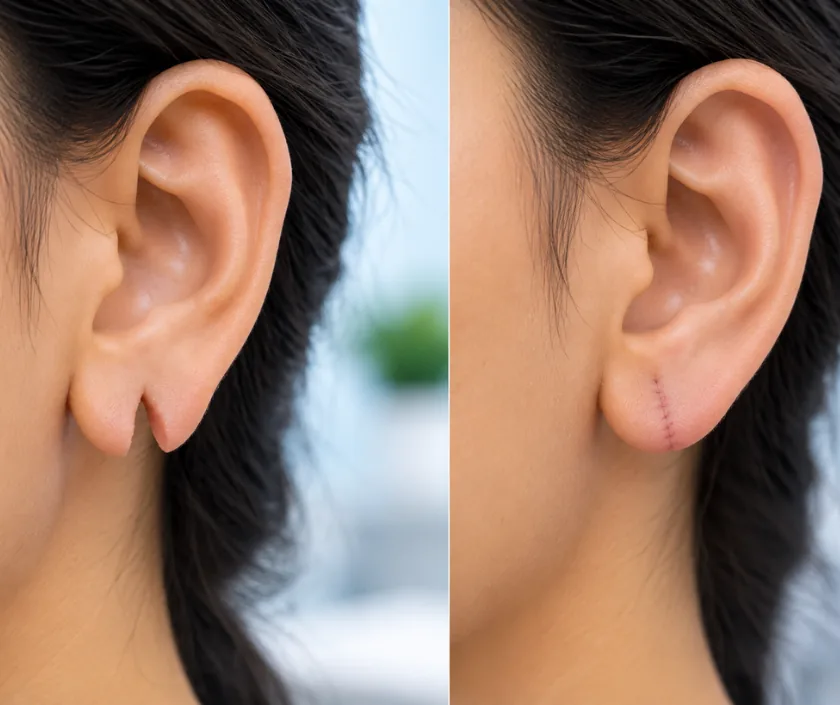
Ear lobule repair closes a lobe that has split, stretched or torn, most often from heavy earrings or a sudden pull. Scarred edges are trimmed and the lobe is stitched back into a smooth outline under local anaesthesia. Repiercing is possible later, usually once the repair has healed for a couple of months.
The lower part of the ear has no cartilage inside it. That softness is why it takes a piercing so easily, and also why it gives way under weight. Heavy earrings drag on the hole for years until the skin below it thins, and a single snag on clothing or a pull from a child can finish the job in a moment.
Once a lobe has split, it cannot rejoin. Skin grows over both raw edges within days, and two skin covered surfaces will not knit together no matter how long they are held. Repair therefore starts by trimming those lined edges away, which creates fresh surfaces able to heal into one another.
Your lobe is then closed in layers, front and back, with the lower edge shaped so it does not notch as the scar tightens. All of this is done under local anaesthesia in the clinic, and most people go home shortly afterwards. Stitches come out at about a week, and repiercing is planned later once the scar has matured.
Most people with a split or stretched lobe are suitable. The main questions are whether the area is free of infection and whether repiercing is wanted afterwards.
Both lobes are examined and the plan is marked on the skin, including where a new piercing could later sit. Sides are compared carefully so the two lobes end up a similar length and shape.
The lobe is numbed with a small injection. Numbness follows within minutes, and you stay awake and comfortable throughout the short procedure, which needs no admission.
Skin lined edges of the split are trimmed away with a fine blade. That step is essential, because two skin covered surfaces placed together will never knit into one another.
Your lobe is closed in layers with fine stitches, front and back, and the lower edge is shaped so it does not notch as it heals.
Stitches come out at about a week. Repiercing is planned later, once the scar has settled, with the new hole placed away from the repair line.
Mild soreness and a little swelling are normal. Simple pain relief is usually enough and you can carry on with everyday activity.
Stitches are removed in clinic. The line looks pink and slightly raised, which is expected at this stage.
Your scar begins to soften and flatten. Most people find the repair difficult to see unless they look closely.
The line keeps fading. Repiercing can be considered once your surgeon confirms the repair has matured.
Repair usually leaves a fine line that is hard to notice once it has faded. A small notch can appear at the lower edge if the tissue was thin or badly stretched, and that can be adjusted later. Scars behave differently in different people, and a few thicken for a while before settling. Choosing lighter earrings afterwards is the single most useful thing you can do to protect the result.
This is minor surgery, though the lobe is thin tissue under regular strain, so a few problems do come up.
Aftercare here is straightforward, and most of it is about keeping strain off the healing line.
Torn edges heal over with skin and cannot rejoin. Trimming those edges surgically is the only way the two sides knit together again.
Most people can be repierced once the repair has matured. A new hole is simply placed away from the scar, and lighter earrings are advised.
Glue holds skin surfaces together without letting them heal into one another. The split reopens as soon as the tape or glue comes away.
It is short outpatient work under local anaesthesia. Most people go home within the hour and return to their normal routine straight away.
Earlobe repair at Elegance Clinic in Surat is done as a planned clinic procedure, with the shape of both lobes compared and repiercing discussed before anything is closed.

Earlobe repair is a short clinic procedure under local anaesthesia, which keeps it at the lower end of surgical costs. Whether one lobe or both are treated makes the main difference, and a thickened scar or a heavily stretched lobe can add a little time. A written estimate is given at the consultation. Repair after an injury may be covered under mediclaim, while repair of a lobe stretched by earrings is often treated as elective.
These are the questions that come up most often in consultation. If yours is not here, send it on WhatsApp and the team will reply, usually the same day.
Ask your question →It is a short procedure under local anaesthesia, so it sits at the lower end of surgical costs. Whether one or both lobes are treated makes the main difference. A written estimate is given after the lobes have been examined in clinic.
Repair is done under local anaesthesia with the area fully numbed, and most people find it straightforward. Infection is uncommon in a clean wound. A thickened scar or a small notch at the lower edge are the more likely issues, and both can be addressed.
Mild soreness for a day or two is usual and simple pain relief is enough. Normal activity carries on almost immediately, with some care while pulling clothing over the head. Stitches come out at about a week and the line fades over months.
A fine line remains, and in most people it becomes hard to see once it has settled. A small notch can appear at the lower edge if the lobe was thin or heavily stretched, and that can be adjusted later if it bothers you.
Yes. A hole stretched into a long slot is treated in much the same way, with the lined edges trimmed and the lobe closed in layers. Old gauged piercings can also be closed, although the lobe may need more shaping.
Not until the repair has matured, which usually means waiting a couple of months and being cleared at review. Your new hole is placed away from the scar line, and lighter earrings are strongly advised so the lobe does not split again.
Both lobes are examined and compared, the split is assessed and any thickened scar is noted. You will hear whether one or both sides need work, where a new piercing could later sit and what the written estimate covers.
Seeing patients from across the city and beyond: read about the practice on the plastic surgeon in Surat page, or check what a written estimate covers on the costs and insurance page.
