Bites look modest and behave badly, because teeth carry mouth bacteria past the skin into tissue that cannot easily clear them. Careful cleaning, the right prevention and sensible timing of closure matter far more than the number of stitches.
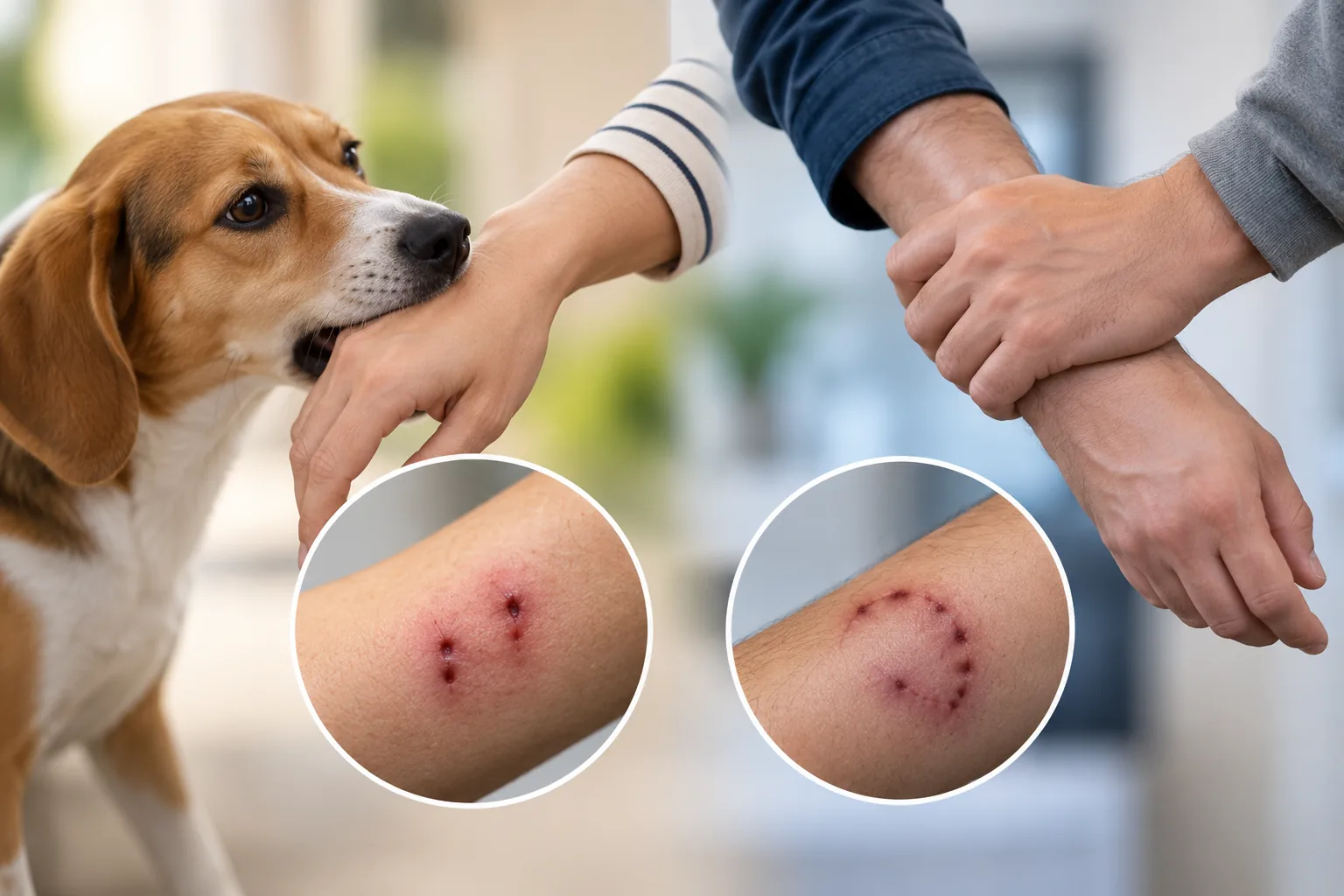
Bite injuries from humans, cats, dogs and other animals are treated as contaminated wounds rather than simple cuts. Assessment covers wound depth, tendon and joint involvement, tetanus protection and, for animal bites, rabies prevention. Wounds are washed thoroughly, dead tissue is removed, and closure is often delayed so that trapped bacteria do not cause a deep infection.
Mouths are full of bacteria, and a bite delivers them below the skin. The wound may be a small puncture, a torn flap or a piece of tissue lost altogether, yet the common thread is contamination. Cat teeth are fine and sharp, so their bites seal over quickly while bacteria sit deep inside. Human bites are often underestimated, above all the small cut over a knuckle from striking someone in the mouth, which can open the joint.
Assessment therefore looks past the skin. The wound is explored for damage to tendon, joint, nerve or bone, and hand wounds are examined with the fingers in the position they held at the moment of injury. Tetanus status is checked, and for animal bites the treating team advises on rabies prevention following national guidance. Antibiotics are commonly prescribed for deep wounds, for hand wounds and for people whose healing is impaired.
Cleaning is the treatment that matters most. Wounds are irrigated generously and crushed tissue is trimmed. Many bites are then dressed open and closed a few days later, while facial bites are often repaired earlier, because the face heals well and appearance counts.
This approach applies to every bite wound, though depth and site decide how much treatment is needed. Some wounds need only cleaning and review, while others need surgery in theatre.
How the bite happened, which animal was involved and how many hours have passed all shape treatment. The wound is examined for depth and for tendon, joint or nerve injury.
Tetanus protection is reviewed and, for animal bites, the treating team advises on rabies prevention according to national guidance. Antibiotics are prescribed where the wound or the patient calls for them.
The wound is irrigated generously under anaesthesia, and puncture tracks or knuckle wounds are opened so that cleaning reaches the depth. Crushed tissue is trimmed away.
Facial bites are often repaired at once. Hand and limb wounds are more often dressed open and closed after a few days, once they have proved to be clean.
An early review within a day or two checks for infection, since that is when it usually declares itself. Once healing is complete, scar revision or reconstruction of lost tissue is planned if the result needs improving.
Swelling and soreness are common, and the wound is reviewed for early infection. Hand injuries are elevated and splinted, and antibiotics are taken as prescribed.
Wounds left open are usually closed or well on the way to healing. Stitches come out, and supervised movement begins for hand and finger injuries.
Most wounds are sealed and comfortable. Grip and movement continue to improve with therapy, and scar care is under way.
Scars soften and fade slowly. Any reconstruction for lost tissue, such as part of a lip or an ear, is planned once the area has matured.
Most bites heal without lasting trouble when they are cleaned early and closed at the right time. Scars are usually irregular, since tissue is torn rather than cut, and puncture wounds can leave small pitted marks. Hand bites that reached a joint may leave some stiffness even after successful treatment. Where tissue was lost, reconstruction can restore shape though not the original appearance, and it is planned once healing is complete.
Bites carry more risk than their size suggests, so the possibilities are discussed at the first visit.
Most bite complications appear within the first few days at home, so knowing what to watch for is part of the treatment.
Human mouths carry bacteria that infect readily, and knuckle wounds can reach the joint. These bites are treated with more caution rather than less.
A small puncture can be deep. Cat bites in particular seal at the surface while bacteria sit in the tissue beneath.
Medicine helps, though washing the wound out properly does more. The two are used together, and cleaning comes first.
Several animals can pass on rabies. Prevention is decided by a doctor at the first visit, using the circumstances of the bite and national guidance.
Bite wounds at Elegance Clinic in Surat are assessed for what lies beneath the skin, with cleaning, prevention advice and the timing of closure explained clearly at the first visit.

Bite injury treatment is medical and reconstructive care, so health insurance policies and many government schemes consider it once the injury is recorded. Cost depends on the depth and site of the wound, whether cleaning is done in theatre, the antibiotics used, and whether closure or later reconstruction is needed. A written estimate is given before any planned admission.
These are the questions that come up most often in consultation. If yours is not here, send it on WhatsApp and the team will reply, usually the same day.
Ask your question →Cost depends on the depth and site of the wound, whether cleaning is done in theatre, the anaesthesia used, the antibiotics needed and whether later reconstruction is planned. Hand infections that need admission cost more. A written estimate is given before any planned admission.
Bite treatment is medical rather than cosmetic, so mediclaim policies and government schemes generally consider it. Approval needs the injury record, photographs and hospital paperwork. Waiting periods, room rent limits and reporting deadlines in your policy still apply, so inform the insurer early.
They are treated with particular caution. A small cut over a knuckle from striking a tooth can carry bacteria into the joint, where infection spreads quickly. Such wounds are explored and cleaned properly rather than simply dressed.
Surface wounds usually settle within one to two weeks. Hand wounds take longer, because movement returns gradually with therapy. Scars keep changing for months, so the appearance seen early is not a fair guide to the final result.
Bites tear rather than cut, so scars are often slightly irregular and punctures can leave small pitted marks. Where tissue was lost, reconstruction restores shape though not the original look. Scar care and sun protection make a visible difference.
Go on the same day. Early washing lowers infection risk sharply, and prevention for tetanus and rabies is most useful when given promptly. Wounds seen late are still treated, though they are more often left open before closure.
Details of the bite are recorded and the wound is examined for depth and for tendon, joint or nerve injury. Tetanus and rabies prevention are discussed. Cleaning is carried out, and the timing of closure and review is explained with a written plan.
Seeing patients from across the city and beyond: read about the practice on the plastic surgeon in Surat page, or check what a written estimate covers on the costs and insurance page.
