Scalp micropigmentation places tiny dots of pigment into the skin so the scalp looks as though it carries closely cropped hair. Nothing grows and no hair is restored, so it changes appearance only and does not treat the cause of hair loss.
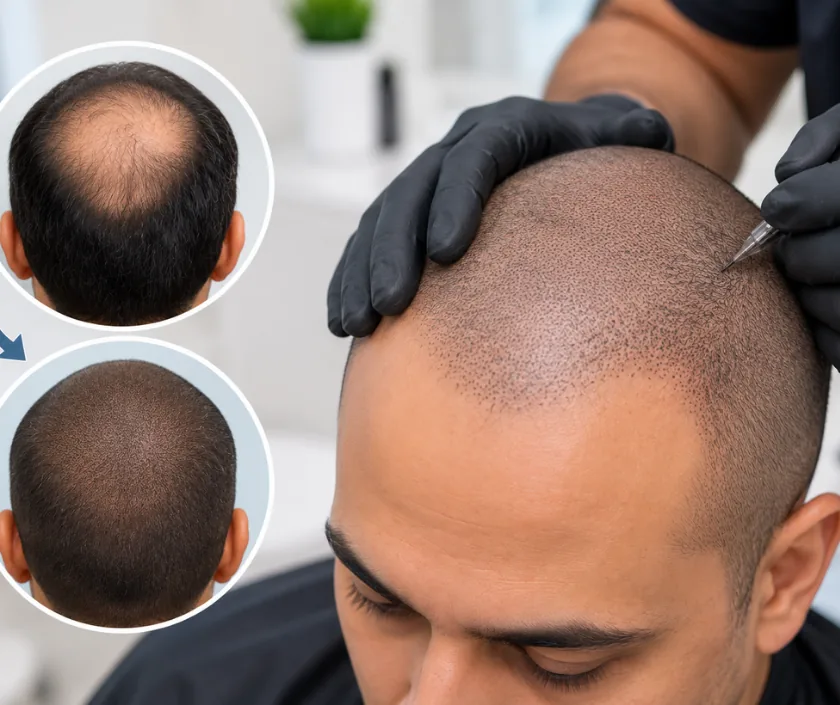
Scalp micropigmentation is a cosmetic tattooing technique. Fine dots of pigment are placed in the upper layers of scalp skin so that a thinning area, a receding front line or a scar looks more like closely cropped hair. It does not grow hair, slow hair loss or treat any medical cause, and the pigment fades over years.
Think of it as very precise tattooing rather than any kind of hair treatment. A fine needle deposits small points of pigment in the upper layers of the scalp, each meant to read like the stubble of a hair cut short. Seen together across an area, those dots reduce the contrast between bare skin and hair, so the scalp looks fuller than it is.
What the technique cannot do matters just as much. No follicle is created, no existing hair is strengthened and no medical cause of hair loss is addressed. Someone who is still losing hair will keep losing it, and the pattern around the treated area may shift over the years, which is why planning allows for future change.
Work is usually spread across a few sessions spaced apart, since depth, colour and density are built up gradually. Pigment softens and lightens with time under sunlight and normal skin turnover, so periodic touch ups keep the effect looking right.
It works best for people who want a shaved head look or a softer contrast, and who understand that this is an appearance treatment rather than a medical one.
Hair colour, skin tone and the pattern of loss are studied. A front line is drawn and agreed, kept soft and age appropriate rather than sharply defined.
A small test area may be treated first, so the team can check how your skin responds and how the colour settles once healing is complete.
Numbing cream is applied and pigment is placed as fine dots across the planned area. Depth and spacing are controlled to imitate real follicle spacing.
Later sessions add dots and adjust shade. Spacing those sessions apart lets the team judge how colour has healed before adding any more.
Colour is reviewed periodically. Touch ups follow as the pigment lightens, and the design is adjusted if hair loss has progressed.
Scalp looks red and the dots appear darker than they will remain. Washing and sweating are avoided while the skin settles.
Redness fades and the colour lightens as the surface heals. Normal washing resumes once the team advises it.
Final tone of the first session is clear. A further sitting is usually planned around this point to build density.
Colour continues to soften slowly. Reviews decide when a touch up is worthwhile and whether the pattern needs adjusting.
Expect the look of a closely shaved head rather than growing hair. At conversational distance the effect can be convincing, though close inspection and touch reveal smooth skin. Colour settles a few shades lighter than it appears on the day, then keeps fading slowly across years. Ongoing hair loss can change how the treated area blends, so periodic adjustment keeps the result looking right.
Tattooing the scalp is a low risk procedure in trained hands, though a few problems are worth understanding before starting.
Healing takes only days, and simple restrictions during that window protect how the colour settles.
No hair is created by this treatment. Pigment placed in the skin makes the scalp look as though it carries short hair, and real regrowth must come from other treatment.
Pigment fades slowly under sunlight and normal skin turnover, so touch up sessions are needed to keep the look consistent over the years.
These two do different jobs. A transplant moves living follicles that grow, while micropigmentation changes appearance only and is often used alongside surgery.
Results read best with hair kept very short. Longer hair beside tattooed skin makes the difference in texture obvious.
Micropigmentation at Elegance Clinic in Surat is offered as one option among several, and the consultation begins by checking whether a medical or surgical approach would serve you better.

Charges depend on the area treated, the number of sessions planned and whether scar camouflage is included. Since this is a cosmetic appearance treatment rather than reconstruction, insurance usually does not apply, though camouflage of a scar after injury is occasionally viewed differently. Session numbers become clearer once the first sitting has healed. A written estimate follows assessment, covering the planned sessions and the likely touch up schedule.
These are the questions that come up most often in consultation. If yours is not here, send it on WhatsApp and the team will reply, usually the same day.
Ask your question →Cost reflects the area treated, the number of sessions planned and whether scar camouflage is included. Touch ups over the years add to the longer term total. A written estimate covering the planned sessions is shared after the scalp has been assessed.
Usually not, because this is a cosmetic appearance treatment rather than reconstruction. Camouflage of a scar after injury is occasionally viewed differently, so it is worth asking your insurer directly. Assume a self funded treatment unless you are told otherwise.
No. Pigment is placed in the skin to imitate the look of short hair, and nothing is grown or restored. Hair loss carries on underneath, so anyone wanting real regrowth needs a medical or surgical route instead.
Risks stay low in trained hands. Infection, an inflammatory reaction to pigment and colour that heals unevenly are the main concerns. Skin is checked first, and any lump, ulcer or active scalp condition is assessed before treatment begins.
Colour softens slowly under sunlight and normal skin turnover, so this is not a lifelong result. Most people need touch up sessions after a few years. Sun protection slows the fading and keeps the tone looking consistent.
Scalp looks red for a few days and the dots appear darker than they will settle. Washing, sweating and swimming are avoided briefly. Many people return to work the same day or the next, since nothing is cut or stitched.
Anyone with an active scalp infection, an unhealed wound or an unassessed skin condition should wait. It also disappoints people who want longer hair, since the effect reads best when hair is kept very short.
Seeing patients from across the city and beyond: read about the practice on the plastic surgeon in Surat page, or check what a written estimate covers on the costs and insurance page.
