Scalp reconstruction restores skin cover after burns, injury, tumour removal or a long standing ulcer, while hairline work rebuilds the front line where hair meets forehead. Choice of method depends on the size of the gap and whether bone lies exposed.
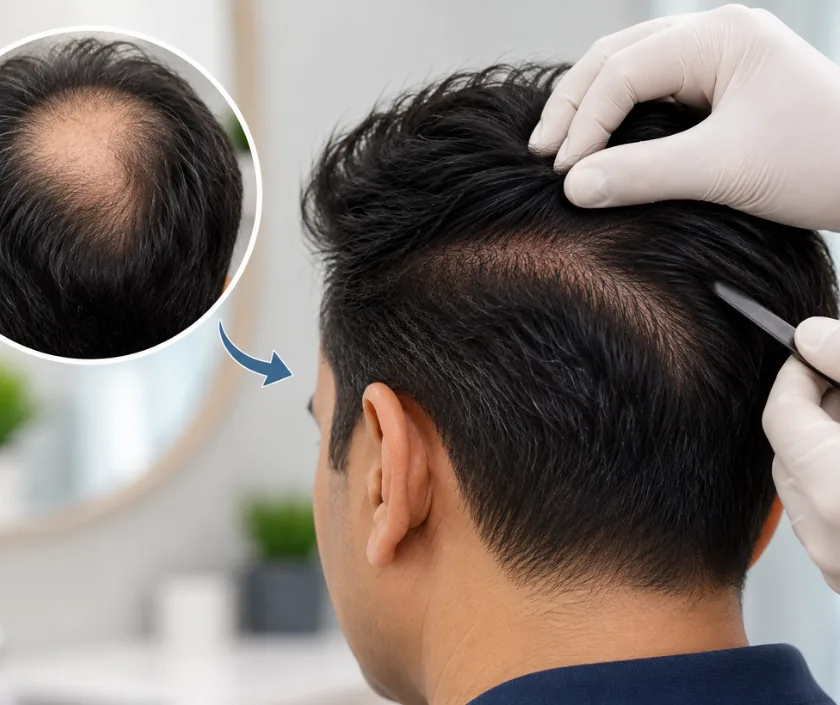
Scalp reconstruction closes a defect on the head with tissue that will survive and, where possible, grow hair. Small gaps close directly or with a local flap. Larger ones may need tissue expansion, where a soft balloon slowly stretches hair bearing scalp, or tissue brought from elsewhere with its own vessels. Exposed bone needs a flap rather than a graft.
Skin on the head behaves unlike skin anywhere else. It is thick, firmly tethered and carries hair in a definite pattern, which means a gap cannot simply be pulled shut and a patch of the wrong tissue shows from across a room. Underneath sits bone with a thin covering, and when that covering is lost the bone will not support a graft.
Method follows the defect. Small losses close directly once the tough layer beneath the scalp is released. Medium ones are covered by rotating neighbouring scalp, which brings hair along with it. Large or awkward defects may call for tissue expansion, where a balloon under healthy scalp is filled a little at a time over weeks until enough hair bearing skin exists to advance. Very large wounds, or ones over bare bone after radiotherapy, sometimes need tissue brought from another part of the body with its own vessels.
Hair adds a second layer of planning. Direction of growth, the shape of the front line and how a scar will sit within it all influence where the cuts are placed.
Planning starts with the size and depth of the defect, the state of the surrounding scalp and how much hair the person hopes to regain.
Size, depth and the state of the bone are assessed, along with the quality of the surrounding scalp. Photographs and sometimes imaging guide the plan.
Direct closure, a local flap, tissue expansion or free tissue transfer is selected. Hair pattern and the position of the front line influence that choice.
A soft balloon is placed under healthy scalp and filled in clinic across several weeks. Once enough skin has grown, a second operation advances it.
Tissue is moved and inset, with the tough layer beneath the scalp closed carefully, since that layer holds tension and protects the repair.
Later steps may include hair transplantation into a scar, or adjustment of the front line once everything has healed.
Swelling around the eyes is common as fluid tracks downward. A drain may be used, and the head is kept slightly raised.
Stitches or staples are removed and the scalp feels tight. Washing usually restarts once the team confirms the wound is sealed.
Most people are back to full routine. Numb patches are common and the scar remains firm, both of which improve with time.
Hair grows across or beside the scar and the line softens. Any refinement, including transplantation into scar, is considered now.
Cover is usually reliable, and that alone changes daily life when a wound has been open for a long time. Hair returns where hair bearing scalp has been moved, though a line of scar without hair often remains and may need later work. Numbness across the area is common and can persist. Expansion gives the best hair result but asks for patience across several weeks of clinic visits.
Scalp surgery is generally reliable, yet the tightness of the tissue and the bone beneath bring particular risks.
Scalp heals well when it is kept clean and free of tension, and a few habits protect the repair through the first weeks.
Grafts need a living surface beneath them. Over bare bone they usually fail, so a flap that brings its own blood supply is needed instead.
Grafted skin from elsewhere carries no scalp follicles, so it stays bald. Hair returns only when hair bearing scalp is moved or follicles are transplanted.
Filling sessions cause tightness for a day or so and then settle. What people describe is usually a feeling of pressure rather than real pain.
Front line position can often be lowered or reshaped once healing settles, either by advancing scalp or by transplanting hair into it.
Scalp work at Elegance Clinic in Surat is planned around what the tissue can safely give, with the hair result and the front line considered alongside simple wound closure.

Cost varies widely with the method chosen. A small local flap sits far below tissue expansion, which involves an extra operation, an implanted expander and several clinic visits for filling. Hospital stay, anaesthesia and any later hair transplantation all add to the picture. Reconstruction after burns, injury, tumour removal or a long standing ulcer is generally admissible under mediclaim, while cosmetic hairline lowering in a normal scalp is not. A written estimate follows assessment.
These are the questions that come up most often in consultation. If yours is not here, send it on WhatsApp and the team will reply, usually the same day.
Ask your question →Cost varies widely with the method. A small flap differs greatly from tissue expansion, which involves an extra operation and several clinic visits. Hospital stay and any implants also matter. A written estimate is prepared once the defect has been assessed.
Reconstruction after burns, injury, tumour removal or a long standing ulcer is generally admissible under mediclaim. Cosmetic hairline lowering in an otherwise normal scalp is not. Approval needs photographs, clinical notes and a documented surgical plan.
A graft survives by drawing nourishment from the surface beneath it. Bare skull bone offers very little, so grafts placed directly on it usually fail. Tissue that brings its own blood supply is needed to cover such areas.
Filling sessions run over several weeks, spaced apart so the skin has time to grow. A second operation then advances the expanded scalp. Patience matters here, because rushing the fills risks both the skin and the expander.
Hair returns where hair bearing scalp has been moved, or where follicles have been transplanted. A line of scar without hair usually remains, and that can often be improved later by transplantation or by revising the scar.
In many cases yes, either by advancing scalp or by transplanting hair into the front line. Suitability depends on scalp looseness, the amount of donor hair and whether previous surgery has left scarring. Assessment decides what is realistic.
The wound or scar is examined, surrounding scalp is assessed and photographs are taken. Imaging may be arranged when bone is involved. Bring earlier operation notes, biopsy or radiotherapy details and a list of your medicines.
Each technique below has its own page explaining how it works and when it is chosen.
Rebuilding hair bearing skin uses grafting technique from hair restoration as well as reconstructive surgery. The same surgeon covers both, and the hair restoration side of the practice is set out on the sister site.
Seeing patients from across the city and beyond: read about the practice on the plastic surgeon in Surat page, or check what a written estimate covers on the costs and insurance page.
