Burn scar around the ankle can hold the foot pointing downwards, while scar on the top of the foot lifts the toes out of line. Release surgery restores the skin these movements need, so walking and footwear become manageable again.
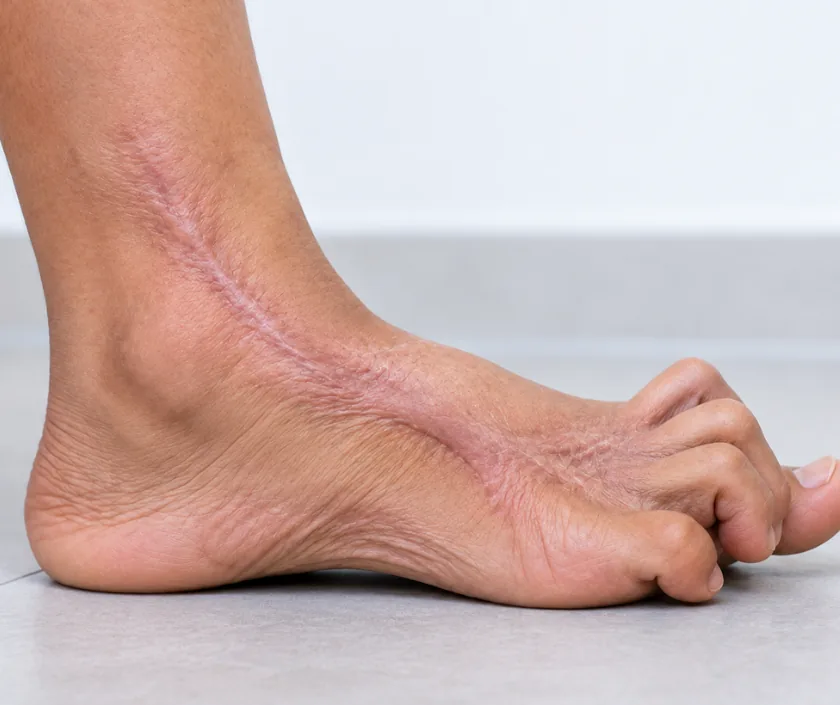
Ankle and toe contracture release divides the burn scar that holds the foot pointing down or pulls the toes upwards, then covers the raw area with a graft or a flap. Wires occasionally steady a toe while it heals. An ankle splint, sensible footwear and walking practice afterwards protect the position that surgery achieves.
Every step needs the ankle to move through a range and the toes to bend and straighten. Burn scar removes that freedom. Tight tissue behind the ankle holds the foot pointing down, so weight lands on the ball of the foot and the heel floats above the floor. Scar across the top of the foot does the reverse, lifting the toes so that they no longer rest flat.
Both patterns create pressure where there should be none. Skin over the ball of the foot or over a raised toe takes load it was never designed for, and hard skin, blisters or open sores follow. Shoes stop fitting, sandals rub the scar, and long walks become painful. Balance suffers as well, because the foot cannot adjust to uneven ground.
Surgery restores the skin needed for movement, then protects it. Once the tight band is released, cover is chosen to withstand daily loading, and splinting holds the ankle at a working angle. Advice on footwear and daily skin checks completes the plan, particularly where sensation has been reduced by the original burn.
Release is offered when tight skin, rather than a damaged joint, is holding the foot or toes out of position.
Ankle and toe movement is measured, and pressure areas on the sole are noted. Sensation is tested carefully, because a foot with reduced feeling needs extra protection throughout treatment and afterwards.
Scar is divided across the line of pull, either behind the ankle or over the top of the foot. Tendons and the nerves supplying the toes lie close beneath and are protected during this step.
Thick grafts suit most areas, while a weight bearing surface or exposed tendon may need a flap. Durability matters here more than anywhere else, since the foot is loaded with every step.
A fine wire sometimes holds a released toe in line while healing takes place. The ankle is splinted at a right angle in the same sitting, so the new skin heals at a functional length.
Weight bearing is reintroduced under guidance, often with a splint or a moulded insole. Footwear advice and daily skin checks are given before discharge, particularly when sensation is reduced.
Leg is elevated to control swelling, and the foot rests in a splint. Toe colour and warmth are checked regularly by the nursing team.
Graft take is reviewed at the first dressing change. Standing and limited walking may start, usually with support and a protective splint.
Any wires are removed as planned, and walking distance increases. Footwear is reassessed, and scar care begins once the skin has fully closed.
Grafted skin toughens gradually and pressure areas are reviewed. Night splinting frequently continues, while children are followed as the foot grows.
Foot position usually improves enough for the heel to load properly and for shoes to fit, though a foot burned deeply may not reach a full range at the ankle. Grafted skin stays different in texture and needs protection from friction and heat. Long term comfort depends on splinting, footwear and daily skin checks. Tightening can return, and children often need review as the foot lengthens.
The foot heals more slowly than many other areas, so its particular risks are worth spelling out.
Foot skin faces friction and load every day, so aftercare focuses on protection as much as on exercise.
When scar holds the foot pointing down, the heel physically cannot reach the floor, so the pattern is mechanical.
Careful choice of cover and staged return to walking allow many grafts to become durable enough for daily use.
Reduced feeling actually raises danger, since sores develop unnoticed. Daily inspection replaces the warning that pain would normally give.
Scar continues to shorten for months. Night splinting keeps the ankle at a working angle while that settles.
Foot and ankle reconstruction at Elegance Clinic in Surat is planned with walking, footwear and skin protection considered together, rather than treating the scar alone.

Ankle and toe release restores standing and walking, so it is normally treated as reconstructive surgery under mediclaim and government schemes. What you pay reflects the extent of the release, the type of skin cover, use of wires, anaesthesia, hospital stay and the splints or insoles supplied afterwards. A written estimate is shared before admission, with support for the insurance file.
These are the questions that come up most often in consultation. If yours is not here, send it on WhatsApp and the team will reply, usually the same day.
Ask your question →Most treatment falls inside Rs 45,000 to Rs 1.6L. Extent of the release, type of skin cover, use of fine wires, anaesthesia, hospital stay and the splint supplied all shift the figure. A written estimate is given before admission.
Approval is usually straightforward, because the operation restores walking and prevents pressure sores. Photographs, a note on the fixed foot position and a surgical plan are typically required. Policy waiting periods and sub limits still apply in the usual way.
Extra care is needed, since a numb foot does not warn you about pressure. Splints are padded and checked, and daily skin inspection is taught. Healing is slower here than elsewhere, so reviews are scheduled more closely.
Limited weight bearing often begins within the first weeks, once the graft is settling, usually with a splint or protective footwear. Longer walks build up gradually. Night splinting and skin checks generally continue for months afterwards.
Heel contact usually returns when scar was the main restraint, though a deeply burned ankle may keep some limitation. Grafted skin stays different in texture. Footwear and splinting largely determine how comfortable walking remains long term.
Yes, and early treatment helps prevent lasting changes in the way the foot and leg develop. Because scar does not grow with the foot, a further release is sometimes needed. Reviews continue until growth finishes.
Ankle and toe movement is measured, the sole is examined for pressure areas and sensation is tested. Photographs are recorded for the file and for insurance. Cover options, splinting, footwear and the therapy plan are then discussed with a written estimate.
Each technique below has its own page explaining how it works and when it is chosen.
Seeing patients from across the city and beyond: read about the practice on the plastic surgeon in Surat page, or check what a written estimate covers on the costs and insurance page.
