Fat grafting takes a small amount of your own fat and injects it beneath a tight or hollow burn scar. This page explains how it is done in Surat, why more than one session is usual and what change you can reasonably expect.
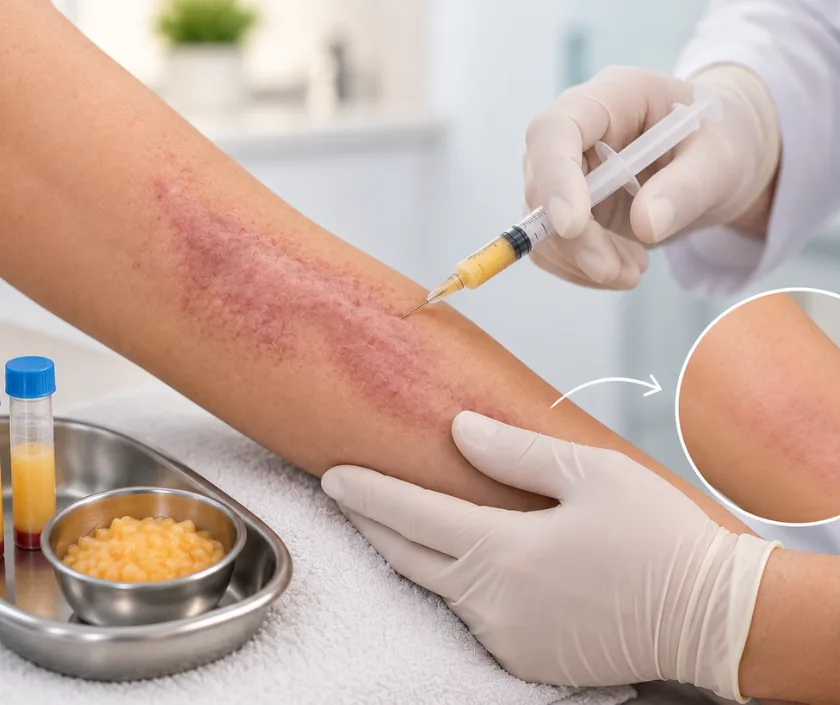
Fat grafting moves fat from your abdomen or thigh, processes it and injects it in small amounts under a burn scar. Added fat can soften a tight area, fill a hollow and improve the quality of the overlying skin. Part of every graft is absorbed, so two or three sessions are commonly planned.
Burn scars are often stuck down to the tissue below, thin over bone and short of the soft padding that healthy skin sits on. Fat grafting addresses that missing layer. Tissue is taken from the abdomen or thigh through a small cannula, cleaned and separated, then placed in tiny amounts under the scar through fine needles.
Two effects are described. Volume returns to a hollow or a tethered patch, so contour looks more even and the area feels less rigid. Beyond simple filling, grafted fat also seems to improve the overlying skin over the following months, with many patients reporting less tightness and less itch as the area softens.
Absorption is the reason a single session rarely finishes the job. A portion of the transferred fat does not survive, and how much survives varies between patients and even between areas. Surgeons therefore plan a course, judge the result several months later and top up where the graft has thinned.
This treatment suits people with a mature burn scar that is tight, thin or hollow, and who have enough fat available to harvest.
The scar is examined for tightness, thickness and contour, and a donor area is chosen. Photographs are taken and the likely number of sessions is discussed before anything is booked.
Through a small opening in the abdomen or thigh, a fine cannula collects fat gently into a syringe. Gentle technique matters here, because roughly handled fat survives less well after transfer.
Collected fat is separated from fluid and blood, usually by settling or by spinning, so that only usable tissue is transferred. Preparation takes some minutes and happens while you are still asleep.
A fine needle is often used first to break the bands tethering the scar down. Small amounts of fat are then laid in many passes at different depths, which spreads the graft and helps more of it survive.
Openings are tiny and usually need a stitch or a small dressing only. Most patients go home the same day, with a support garment over the donor area and instructions for the first week.
Swelling and bruising are expected at both the donor and the treated area. Simple pain relief is usually enough, and the treated site looks fuller than the final result will be.
Bruising fades and most people return to desk work. Pressure, massage and sleeping on the treated area are avoided, since early handling can disturb the graft.
Swelling has largely settled and a fair idea of the volume that survived begins to emerge. Scar therapy, garments and stretching restart around this point if they were paused.
The graft is stable by now and the softening effect on the skin becomes clearer. Photographs are compared, and a further session is planned where more volume is wanted.
Fat grafting softens and fills. It does not erase a burn scar, and the scar will still be visible afterwards. Because part of every graft is absorbed, the early fullness settles over some months and two or three sessions are commonly needed to reach a stable result. How much fat survives varies between people, so honest photographs at each review matter more than promises made beforehand.
Fat grafting is a small operation, yet it involves two sites and its result is less predictable than most patients expect.
The first fortnight decides how much of the graft settles in, so the instructions are worth following closely.
A portion is absorbed in the first months, which is why surgeons plan more than one session.
Grafted fat softens tissue and restores contour, while the scar itself remains visible.
Grafted fat behaves broadly like fat elsewhere in the body, so large weight changes can alter the area, though weight gain is not a treatment.
Some small areas do settle after a single treatment, though most burn scars need a course spread over months.
Burn reconstruction at Elegance Clinic in Surat is planned in stages, with fat grafting used where it genuinely helps rather than offered as a quick fix. Dr. Ashutosh Shah reviews results with photographs before advising any further session.

Cost depends on the size of the area treated, how much fat has to be harvested, the type of anaesthesia and whether the procedure is combined with a scar release. Since more than one session is usual, the total for a full course matters more than the price of a single operation. A written estimate follows your assessment, and staff will explain what insurance may or may not cover.
These are the questions that come up most often in consultation. If yours is not here, send it on WhatsApp and the team will reply, usually the same day.
Ask your question →Charges depend on the area treated, the volume of fat needed, the anaesthesia used and whether a scar release is done at the same time. Since a course is usual, the written estimate given after assessment sets out the likely total, not just one session.
Harvesting a modest amount of fat through a fine cannula is a routine part of plastic surgery. Bruising and tenderness at the donor site are expected, and infection is uncommon. Your general health, diabetes control and smoking history are checked before surgery is planned.
Most people go home the same day and return to desk work within a week or two. Swelling and bruising settle over that period at both sites. Pressure and massage on the treated area are avoided for several weeks so the graft is not disturbed.
No. Grafted fat softens tight tissue and restores contour, so the area may look and feel considerably better, yet the scar stays visible. Improvement is gradual, and a realistic aim is a softer, fuller, more comfortable area rather than skin that looks untouched.
A small amount of fat can often be found on the abdomen, inner thigh or flank even in slim patients. Where there is genuinely too little to harvest safely, other options are discussed instead. Examination at the consultation settles the question.
Grafting waits until the burn has healed and the scar has matured, which usually means many months after the injury. Operating into an active, inflamed scar gives poorer graft survival. Your surgeon judges readiness by how the scar looks and feels.
Your scar is examined and photographed, and possible donor areas are assessed. Options such as therapy, laser, scar release and grafting are compared for your situation. If grafting suits you, the likely number of sessions and the written estimate are explained before booking.
Seeing patients from across the city and beyond: read about the practice on the plastic surgeon in Surat page, or check what a written estimate covers on the costs and insurance page.
