Burn scar between the thighs can pull the legs together and narrow the space needed for washing, using the toilet and sitting comfortably. Release surgery restores that skin, so hygiene and daily comfort become manageable again.
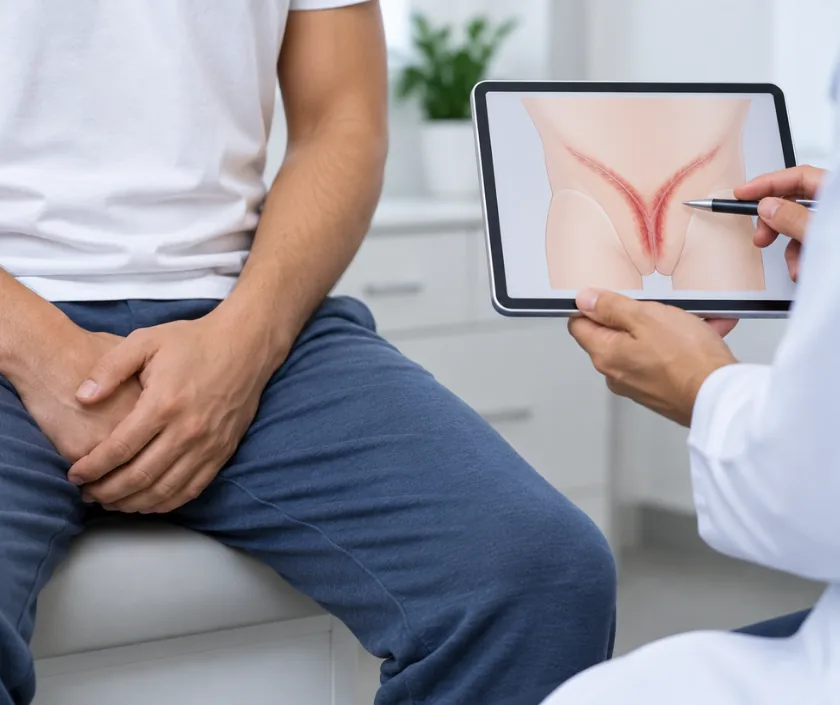
Perineal contracture release divides burn scar that holds the thighs together, restoring the space needed for hygiene, toileting and sitting. Skin cover is chosen for a moist area that moves constantly, so a flap is sometimes preferred to a graft. Positioning with the legs apart, along with careful wound care, protects the result while healing.
Skin between the thighs has to move and stretch throughout the day, whether someone is walking, sitting down, squatting or attending to hygiene. Burn scar in this region has no such give. As the scar matures it shortens, drawing the thighs towards each other and narrowing the space between them. Access for washing and for using the toilet becomes restricted, and many people find the situation distressing as well as physically difficult.
Practical problems accumulate. Sitting for long periods is uncomfortable, walking develops a shorter stride, and squatting may be impossible. Because the area stays warm and moist, tight scar folds trap sweat and lead to soreness, itching and repeated skin infections. Personal care that used to take a moment becomes slow and awkward.
Surgery aims to restore access and comfort. The band is divided so that the legs can separate properly, and the resulting gap is resurfaced with tissue that will tolerate a moist, mobile area. Positioning and hygiene care afterwards are then just as important as the operation itself.
Release is offered when scar, rather than any underlying condition, is what limits hygiene, sitting and movement of the legs.
Examination is done with a chaperone present and with privacy respected throughout. Movement of the hips, the position of the scar bands and the practical difficulties described by the patient guide what is planned.
Bowel and bladder care is arranged before surgery, and a catheter is sometimes used for a short period. These measures keep the healing area clean during the days when dressings must stay undisturbed.
Scar between the thighs and around the perineum is released so that the legs separate properly. Dissection stays superficial and controlled, with the surrounding structures identified and protected.
A graft may be enough for a shallow defect, while a flap of nearby healthy tissue is often preferred where movement and moisture would threaten a graft. Choice depends on the depth and position of the raw area.
Legs are held apart with pillows or a splint while healing takes place. Nursing care focuses on keeping the area clean and dry, and instructions for home continue the same routine.
Legs rest slightly apart and the area is kept clean and dry. Any catheter is managed by the nursing team, and pain relief is adjusted as required.
Dressings are reviewed and healing assessed. Sitting is reintroduced in stages, and walking with a comfortable stride is encouraged under guidance.
Positioning continues at home while activity increases. Scar care and gentle stretching start once the skin has closed properly.
Comfort with sitting, hygiene and walking is reviewed. Night positioning may continue for some time, and children are followed as they grow.
Access and comfort usually improve substantially, which for most people is the main goal of treatment. Skin in the area will still show grafts or flap lines, and it may remain slightly less supple than untouched skin. Healing can be slower here than elsewhere, because the region is moist and moves constantly. Careful positioning reduces recurrence, though some tightening can return, especially during childhood growth.
Wound healing is more demanding in a moist, mobile region, so the risks are discussed frankly before surgery.
Hygiene and position do most of the work at home, and both need attention every single day.
Perineal contracture is a recognised burn complication, assessed privately and with a chaperone, and treatment is entirely routine.
Release restores hygiene, sitting and walking, so insurers and treating teams regard it as functional reconstructive work.
Healing does take longer in a moist area, yet careful cover, positioning and hygiene allow most wounds to settle well.
Positioning, cleanliness and review appointments protect the result, especially in children who are still growing.
Sensitive area reconstruction at Elegance Clinic in Surat is handled with privacy, a chaperone at examination and a clear explanation of what surgery can and cannot change.

Perineal contracture release restores hygiene, sitting and mobility, so insurers treat it as reconstructive surgery rather than cosmetic work. Charges depend on how extensive the release is, whether a graft or a flap is used, anaesthesia, the length of admission and the nursing care required during healing. A written estimate is prepared before admission, along with support for the insurance file.
These are the questions that come up most often in consultation. If yours is not here, send it on WhatsApp and the team will reply, usually the same day.
Ask your question →Treatment usually falls within Rs 45,000 to Rs 1.6L. Extent of the release, the choice between a graft and a flap, anaesthesia, hospital stay and nursing care during healing all affect the total. A written estimate is provided before admission.
Cover is generally available, since the surgery restores hygiene, sitting and walking rather than changing appearance. Insurers usually request photographs, a note on the functional difficulty and a treatment plan. Waiting periods and policy sub limits apply as normal.
Release here is routine reconstructive surgery, with dissection kept superficial and surrounding structures protected. Healing needs more attention because the region is moist and mobile. Infection and delayed healing are the main concerns, and both respond well to early care.
Most people stay in hospital for a few days while dressings and hygiene are managed. Sitting and walking are reintroduced over the following weeks. Positioning with the legs apart, particularly at night, often continues for a considerable time afterwards.
Access for washing and toileting usually improves a great deal, which is the main aim of surgery. Skin will still show grafts or flap lines. How well the result holds depends on positioning, hygiene and attending the planned reviews.
Yes, and it is often advised when tightness limits hygiene, play or normal development. Since scar does not lengthen as a child grows, a further release may be needed later. Review continues until growth is complete.
Examination takes place privately and with a chaperone present. Hip movement, the position of the scar bands and the practical difficulties you describe are all recorded. Skin cover options, hospital stay, hygiene care and costs are then explained clearly.
Seeing patients from across the city and beyond: read about the practice on the plastic surgeon in Surat page, or check what a written estimate covers on the costs and insurance page.
