A skin graft replaces skin that a burn has destroyed by moving a sheet of skin from an unburned part of the body. This page explains split thickness and full thickness grafts, what the donor site is like and how grafts are cared for.
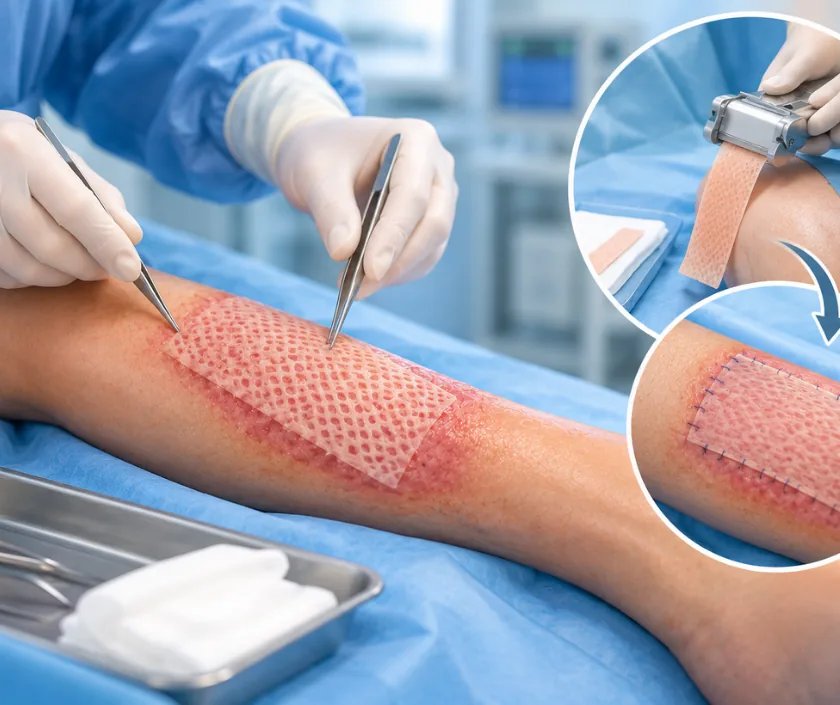
Skin grafting covers a burn wound with skin taken from another part of the body. Split thickness grafts are thin, take readily and let the donor site heal by itself, so they are used for most burns. Full thickness grafts include the whole dermis and give better quality cover for smaller areas such as the face or hand.
Skin has two layers that matter here: a thin outer epidermis and a thicker dermis beneath it, which gives skin its strength and stretch. Deep burns destroy both. Because the dermis does not grow back, the raw area has to be resurfaced with skin brought from somewhere else on the same body.
Most burn grafts are split thickness. A powered blade shaves a thin sheet from the thigh, back or scalp, taking the epidermis and part of the dermis and leaving the deeper dermis in place so the donor area can heal on its own. Sheets are often passed through a mesher, which cuts small slits and lets the graft expand to cover more ground. Full thickness grafts take the whole dermis, are cut with a scalpel and need the donor edges stitched together, so they suit small areas where quality of cover matters more than quantity.
Whatever the type, a graft has no blood supply of its own at first. It feeds on fluid from the bed for the first days while new vessels grow into it, which is why stillness, snug dressings and a clean bed decide whether a graft takes.
Grafting suits a wound with a clean, well supplied bed and a patient able to keep the area still while it takes. Choosing between split thickness and full thickness depends on the site and how much skin is needed.
Any remaining dead tissue is removed and bleeding is settled. The bed is inspected closely, because a graft laid on unhealthy or infected tissue will not survive however carefully it is placed.
Thigh, back, buttock or scalp are common choices. Selection weighs skin thickness, how visible the healed donor area will be and whether the same area may be needed again later.
For a split thickness graft, a powered dermatome shaves a sheet of set thickness. A full thickness graft is cut with a scalpel and the donor edges are stitched together directly.
The sheet may be passed through a mesher to expand it. Graft is laid on the bed, trimmed to fit and held with sutures, staples or glue so it cannot shift.
Layered dressings apply gentle even pressure. Splints hold nearby joints still, and the first inspection is planned for a few days later rather than the next morning.
Rest and stillness matter most. The grafted part is elevated where possible, pain relief is given regularly and dressings stay untouched unless there is a clear reason to look.
First inspection shows how much has taken. Small unhealed gaps are dressed and usually close over. Donor site discomfort often peaks in this period, then eases as it dries.
Grafted skin is usually stable, though fragile and dry. Moisturiser, silicone and pressure garments begin, and therapy focuses on regaining movement that stiffened during rest.
Colour and texture keep changing across many months. Some grafts stay raised or tight and need further treatment, which is judged only after the scar has matured.
A graft restores cover rather than the original skin. Grafted areas usually heal a different shade, feel drier and may lack normal sensation, and meshed grafts keep a faint net pattern. Donor sites leave a patch that fades but stays visible. Function generally recovers well with therapy. Further procedures to improve contour or release tightness are common and are planned once scars have settled.
Grafting is a familiar operation, yet it depends on biology that cannot be forced. Problems are usually manageable when reported early.
Two wounds go home with the patient, and both need attention. Honest care in these weeks protects the result.
Only skin from the patient stays alive on the wound. Skin from another person is temporary cover and is eventually replaced.
Many patients find the donor area more uncomfortable than the graft itself in the first week, so it is dressed and reviewed properly.
Grafted skin heals with its own colour and texture. Treatment improves the appearance over time without restoring the original look.
Grafted skin stays drier and more fragile, needing moisturiser and sun protection long after healing.
Grafting at Elegance Clinic in Surat is planned with the donor site discussed as openly as the burn itself, so nobody is surprised by a second wound. Costs are set out in writing before admission.

The estimate reflects the area to be grafted, whether split thickness or full thickness skin is used, theatre and anaesthesia time, dressings, splints and the length of stay. A second sitting is sometimes needed if part of the graft does not take, and that possibility is discussed in advance. After assessment the office prepares a written estimate and checks what a policy or a government scheme covers.
These are the questions that come up most often in consultation. If yours is not here, send it on WhatsApp and the team will reply, usually the same day.
Ask your question →Cost depends on the area covered, the type of graft, theatre and anaesthesia time, dressings and how long the stay lasts. Repeat sittings, if part of a graft fails, add to the total. A written estimate is prepared after assessment and insurance cover is checked beforehand.
Many people say it does, at least in the first week. A donor site is a fresh raw area, while the grafted burn is often numb. Dressings are chosen to reduce that discomfort, and pain relief is prescribed with the donor area in mind.
Stillness in the first days lets new blood vessels grow into the graft. Gentle movement usually restarts after the first inspection, guided by the physiotherapist. Full activity returns gradually over weeks, and timing depends on the site and how well the graft has taken.
A split thickness graft is thin, takes readily and lets the donor area heal by itself, so it covers larger burns. Full thickness grafts include the whole dermis, contract less and look better, though they need the donor edges stitched, which limits their size.
Grafted skin remains different in colour and texture, and meshed grafts keep a faint pattern. Appearance improves gradually with moisturiser, silicone and pressure garments. Matching the surrounding skin exactly is not realistic, although the difference usually becomes less obvious over the years.
An infected bed is treated first, because a graft laid on infected tissue tends to fail. Dressings, antibiotics where indicated and further removal of dead tissue come first. Surgery is rescheduled once the bed looks clean and bleeds healthily.
The wound is examined, the likely donor site is shown and marked, and the type of graft is explained. Blood tests and a fitness check follow. Expected appearance, the recovery routine, the risk of partial failure and the written estimate are covered before consent.
Each technique below has its own page explaining how it works and when it is chosen.
Seeing patients from across the city and beyond: read about the practice on the plastic surgeon in Surat page, or check what a written estimate covers on the costs and insurance page.
