Removing the voice box treats cancer, yet it changes how a person breathes, swallows and speaks. Reconstruction rebuilds the food pipe and the neck, and it opens a practical route back to speech through planned voice restoration.
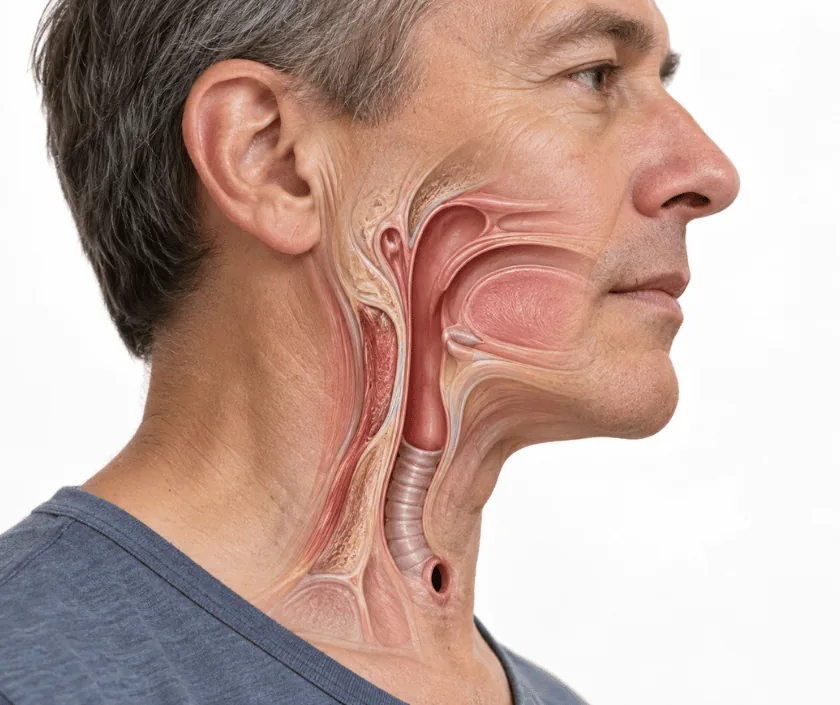
Laryngectomy reconstruction rebuilds the swallowing passage and the neck after the voice box is removed. A flap of tissue, often taken from the forearm or thigh, replaces what cancer surgery took away. Speech is restored later using a voice prosthesis, an electronic device or oesophageal speech, guided by a speech therapist.
A total laryngectomy removes the voice box because cancer has grown into it. Once the larynx is gone, the windpipe is brought to the front of the neck as a stoma, and air no longer passes through the nose or mouth. The food pipe often needs rebuilding at the same sitting, especially when the tumour has spread beyond the larynx itself.
Reconstruction uses tissue borrowed from elsewhere in the body. A thin sheet of skin from the forearm or thigh can be rolled into a tube to carry food and liquid. When more bulk is needed, muscle from the chest or back may be used instead. Blood vessels in the flap are joined to vessels in the neck under a microscope, so that the tissue stays alive in its new home.
Speech is addressed as part of the same plan. Many people go on to use a small valve placed between the windpipe and the food pipe, which lets air from the lungs create sound again. Others prefer a handheld electronic device, and some learn oesophageal speech with a therapist.
Suitability depends on the tumour, on general health and on how much support is available at home during the first months.
Scans, a scope examination and biopsy reports are reviewed together with the oncologist. Blood tests, heart and lung checks and a nutrition review follow, so the plan fits both the cancer and the person.
The surgical team chooses which tissue to borrow, usually from the forearm, thigh or chest. Blood flow in that area is checked beforehand, and the donor site is marked and discussed with you.
Working alongside the head and neck surgeon, the voice box and any involved lymph nodes are removed. A stoma is created in the front of the neck so that breathing continues safely.
Borrowed tissue is shaped into a tube or a patch and stitched into place. Its artery and vein are joined to neck vessels under a microscope, and blood flow is confirmed before closing.
A small valve may be placed at the same sitting or later. Either way, a speech therapist starts working with you once healing allows, and the options are reviewed at every visit.
Time is spent in a monitored bed while the flap is checked often. Feeding goes through a tube at first, and pain is controlled with regular medicine.
Wound checks continue while the neck settles. Swallowing tests decide when sips can start, and stoma care is taught patiently before you go home.
Most people manage a soft diet and handle the stoma with less help. Speech work is well under way, and further cancer treatment may begin if it was planned.
Swelling continues to settle and scars soften. Regular scope and scan checks look for any sign of the cancer returning, and voice options can still be adjusted.
Most people swallow again and speak again, though neither feels the way it did before. Voice through a valve or an electronic device sounds different, and it takes practice before it feels natural. The neck looks flatter and a stoma stays visible, so scarves and covers are commonly used. Recovery can vary widely, and taste, smell and stamina often take many months to settle.
Every part of this operation carries some risk, and hearing about them early makes shared decisions much easier.
Life at home settles into a routine faster when a few things are prepared before discharge.
Speech is usually possible through a voice prosthesis, an electronic larynx or oesophageal speech, and therapy makes it steadily clearer.
Breathing now happens through the neck, so the opening needs daily care, humidity and protection from dust and water.
Rebuilding the swallowing passage restores a basic function, and how the neck looks is only one part of what borrowed tissue does.
Additional treatment is often planned from the start, based on what the pathology report shows about the tumour.
At Elegance Clinic in Surat, head and neck reconstruction is planned together with the treating oncologist, so surgery, healing and any further cancer treatment fit into one timeline.

Cost depends on the type of flap, the length of the operation, the intensive care needed afterwards and whether a voice prosthesis is placed. Insurance and government schemes often cover cancer surgery, though approval terms differ between policies. A written estimate is shared before admission, and any change to it is explained as soon as it comes up.
These are the questions that come up most often in consultation. If yours is not here, send it on WhatsApp and the team will reply, usually the same day.
Ask your question →Many people speak again, though the sound changes. A small valve between the windpipe and the food pipe lets lung air create voice, while an electronic device or oesophageal speech works well for others. A speech therapist guides both the choice and the practice.
Free flap reconstruction usually falls between Rs 1.8L and Rs 4.5L, and the final figure is case based. Flap type, theatre time, intensive care and implants all move the number, so a written estimate is given before admission.
Age alone rarely decides the answer. Heart, lung and kidney function, nutrition and earlier radiotherapy matter far more. When the assessment raises concerns, a shorter reconstruction or a different order of treatment may be suggested instead.
A stay of several days is usual, sometimes longer when the flap needs close watching or when swallowing takes time to return. Discharge happens once the wound has settled, stoma care is understood and fluids are being managed at home.
Feeding starts through a tube. A swallow check then decides when sips can begin, and soft food usually follows over the next weeks. Texture is built up slowly, and some people keep a softer diet in the long term.
Sometimes yes. The pathology report shows how far the tumour spread and whether the margins were clear, and the oncologist uses that to advise. Radiotherapy is often planned once the wound has healed enough to tolerate it.
Carry all scans, biopsy slides and reports, a list of current medicines and details of any earlier treatment. Bringing a family member helps, since a great deal is discussed and decisions about voice and feeding are easier when shared.
Each technique below has its own page explaining how it works and when it is chosen.
Seeing patients from across the city and beyond: read about the practice on the plastic surgeon in Surat page, or check what a written estimate covers on the costs and insurance page.
