Skin cancer on the nose often takes away a small but important piece of tissue. Reconstruction rebuilds the lining, the support and the outer skin, so that breathing and appearance are both looked after.
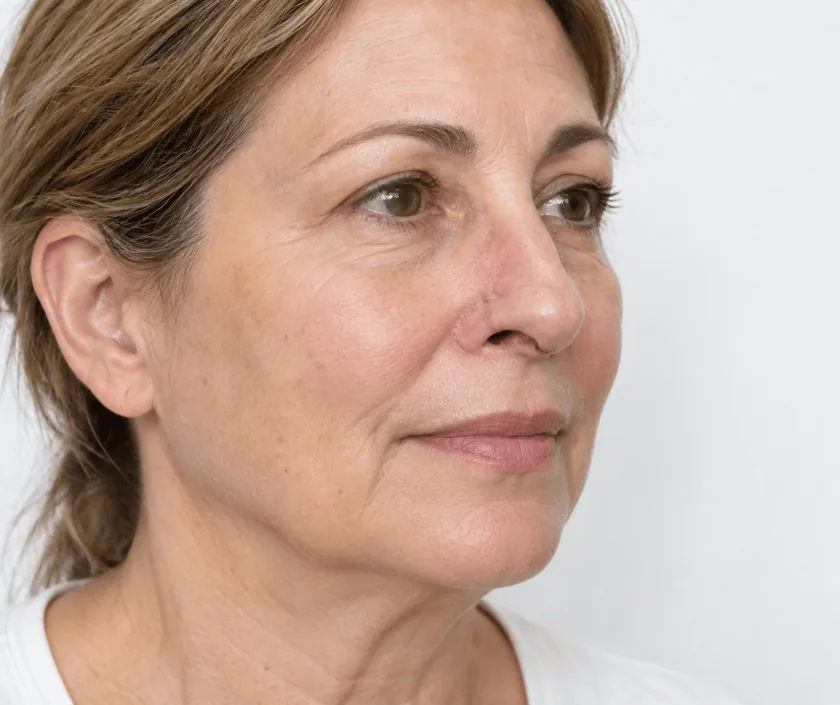
Nasal cancer reconstruction is the repair carried out after a skin cancer has been removed from the nose. Once the surgeon is satisfied that the margins are clear, the hole is closed using nearby skin, a graft or a forehead flap. The aim is a nose that breathes well and looks settled, and the work is sometimes done in more than one stage.
Skin cancers on the nose are common because the nose catches a great deal of sun over a lifetime. When the cancer is removed, the surgeon takes a rim of healthy tissue around it so that no cancer cells are left behind. That leaves an opening, and the opening is usually deeper than patients expect, because the nose is thin and there is little spare tissue to borrow.
Reconstruction rebuilds what was taken. Surgeons think of the nose in three layers. The inner lining keeps the airway open, cartilage gives the nose its support, and the outer skin gives it shape and colour. A repair that replaces only skin over a missing support tends to sink inwards later, so the plan usually addresses every layer that was lost.
The method depends on where the defect sits and how big it is. A shallow defect on a sidewall may close directly. A defect on the tip or the ala often needs skin with a similar thickness and colour, and the forehead is the closest match, so a flap is rotated down and divided at a second sitting.
Most people who need a skin cancer removed from the nose are also suitable for a repair. Timing and method still depend on general health and on what the pathology report shows.
The surgeon examines the nose, reviews the pathology report and discusses the options. Photographs are taken, the likely method is explained and a written estimate is prepared before any date is fixed.
If the cancer is still present, it is removed with a margin of healthy tissue. The specimen goes to the laboratory, and the repair waits until the report confirms that the edges are clear.
Lining is restored first where it is missing, then cartilage from the ear or the septum is shaped to support the nostril rim, and finally the outer cover is brought in.
Small defects take a graft or a local flap. Larger ones take a forehead flap, which stays attached to its blood supply for a few weeks before it is divided.
A later sitting thins the flap and refines the contour. Reviews continue afterwards, partly to check the shape and partly to watch the area for any new skin lesion.
Swelling and bruising around the nose and eyes are at their worst. Dressings stay dry, discomfort is managed with simple medicines and the head is kept raised while resting.
Stitches are usually removed and crusting begins to clear. Most people feel able to move about normally, although a forehead flap is still attached and needs care.
The repair feels firmer and less tender. If a flap was used, the second sitting has often taken place by now and the contour begins to settle.
Colour matches better, stiffness eases and scars fade. Any small refinement is judged at this stage, once the tissue has softened.
A well planned repair usually looks natural at a normal talking distance, though close up the skin of the flap can stay slightly different in colour or texture. Swelling takes many months to settle and the nose often looks bulky before it looks right. Some patients choose a small refinement later. Honest planning, patience and steady follow up matter more than any single technique.
Nasal reconstruction is generally well tolerated, yet it is surgery on delicate tissue and complications do happen. These are discussed openly before you agree to a date.
Most of the healing happens at home, and simple habits protect the result. Your team will give written instructions and a contact number before you leave.
Even a small cancer needs removal with a margin of healthy skin, and that usually leaves a defect too deep to close on its own.
A graft suits shallow defects. On the tip or rim it can sink and look patchy, so thicker tissue from the forehead often gives a better shape.
Waiting for the pathology report is sometimes wiser, because closing a defect over unclear margins can hide a problem underneath.
Skin that produced one cancer can produce another, so regular reviews of the whole face remain part of the plan.
Elegance Clinic in Surat treats nasal reconstruction as reconstructive work rather than cosmetic work, so breathing, support and appearance are planned together. Dr. Ashutosh Shah explains the options in plain language before any date is agreed.

The cost of nasal reconstruction depends on the size of the defect, whether a graft or a flap is used and whether the work is planned in one sitting or two. Anaesthesia, theatre time, implants of your own cartilage, dressings and the hospital stay all feed into the figure.
After the consultation you are given a written estimate that sets out each item, so the family can compare it with any insurance cover. Where the operation follows cancer treatment, the team will tell you what documents your insurer usually asks for.
These are the questions that come up most often in consultation. If yours is not here, send it on WhatsApp and the team will reply, usually the same day.
Ask your question →The figure depends on the size of the defect, the technique chosen and whether a second sitting is planned. You are given a written estimate after the assessment that lists surgeon fee, anaesthesia, theatre, dressings and stay, so nothing arrives as a surprise later.
Age on its own rarely rules anyone out. Fitness for anaesthesia matters more, so heart, lung and diabetes control are checked first. Many older patients have their repair under local anaesthesia with sedation, which reduces the strain of a longer general anaesthetic.
Swelling and bruising settle over the first couple of weeks, and most people return to desk work within a few weeks. A staged forehead flap keeps you in follow up for longer. Full softening of the repair carries on quietly for many months.
The aim is a nose that reads as normal in conversation rather than an exact copy. Colour and thickness of borrowed skin can differ slightly close up. Shape improves as swelling settles, and small refinements are possible once the tissue has softened.
No, and that is deliberate. Closing a defect over an uncertain edge can hide cancer under the repair. Further removal is arranged first, the report is checked again, and reconstruction follows once the edges are confirmed clear.
Some defects are closed at the same sitting when the margin is confidently clear. Others are dressed for a short period while the report is awaited. Both routes are normal, and waiting a little does not spoil the final result.
The nose is examined, previous reports and biopsies are reviewed and photographs are taken with your consent. Options are explained with their trade offs, questions are welcomed, and a written estimate follows so you can decide without pressure.
Each technique below has its own page explaining how it works and when it is chosen.
Seeing patients from across the city and beyond: read about the practice on the plastic surgeon in Surat page, or check what a written estimate covers on the costs and insurance page.
