Skin on the neck moves every time you turn your head or swallow. A repair here has to close the wound without tethering that movement or pulling the jaw and chin out of line.
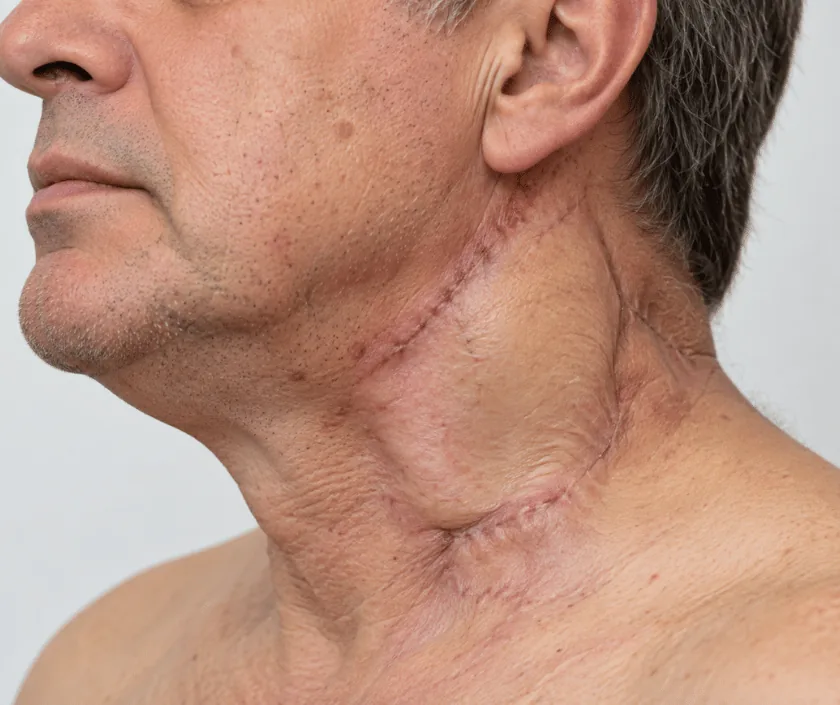
Neck skin defect reconstruction closes the wound left after a skin cancer or an ulcer is removed from the neck. Because neck skin is mobile, the surgeon avoids a tight closure that could restrict turning the head. Options include direct closure, a skin graft, a local flap or tissue rotated up from the chest and shoulder.
Defects on the neck arise after removal of skin cancers, after excision of a recurrent lump, or when irradiated skin breaks down and will not heal. The neck is more forgiving than the nose or eyelid because there is looser tissue nearby, yet it brings its own problem. Every swallow and every turn of the head pulls on the repair, so a closure that is too tight will either break down or heal as a tight band.
Planning starts with the size and depth of the defect and with the state of the surrounding skin. Soft, healthy skin allows direct closure along a natural crease. A shallow wound with a healthy base can take a skin graft. Deeper wounds, or those over important structures such as vessels, need tissue with substance and its own blood supply.
Local flaps borrowed from the neck and lower face suit many defects. Larger or irradiated wounds may need tissue rotated up from the chest or the back. Where the wound is very large, or the neck vessels have already been used, a free flap becomes the sensible option.
Most people with a neck skin defect can be repaired in some way. The choice of method matters more than the question of suitability, and it follows the depth of the wound and the quality of the surrounding skin.
The defect is measured and the surrounding skin is assessed for previous radiotherapy or scarring. Natural neck creases are marked, because scars hidden in those lines are far less obvious afterwards.
Any remaining tumour is removed with a margin, and unhealthy or irradiated tissue at the edges is trimmed back until a healthy bleeding surface is reached.
Direct closure suits narrow defects along a crease. A graft suits shallow wounds with a healthy base. Deeper wounds take a local flap or tissue rotated from the chest or back.
The repair is designed so the neck can still extend and turn. Tension is released with careful undermining, and drains are placed where fluid is likely to collect.
Gentle neck movement is started at the time the surgeon advises. Reviews check the scar for tightness and the surrounding skin for any new lesion.
Swelling and mild difficulty swallowing are common. Drains may be in place, discomfort is managed with regular medicines and the head is kept in the advised position.
Drains and stitches usually come out. Gentle movement is encouraged within the limits given, and most people manage light tasks around the house.
The scar begins to soften and neck movement improves. Massage and stretching, if advised, become an important part of the routine at this stage.
Redness fades, the scar flattens and suppleness continues to improve. Any residual tight band is assessed for release at this point.
Neck scars usually settle well because there are natural lines to hide them in, yet they can stay red and firm for several months before fading. A skin graft leaves a visible patch of different colour and texture. Flaps give a suppler result but bring extra scars at the donor site. Movement generally returns fully when stretching advice is followed.
Neck repairs are usually straightforward, but the moving, well supplied tissue here brings its own set of problems worth knowing in advance.
The neck rewards steady, gentle care. Written instructions and a contact number are given before discharge.
A graft is quicker but sits flat and can tether. Where movement or sturdy cover matters, a flap usually gives a more supple and durable result.
Total stiffness encourages a tight band. Gentle movement at the stage your surgeon advises is what keeps the repair supple.
Scars can be placed in natural creases and made far less obvious, but neck skin moves constantly, so some visible line is expected.
Sun damaged skin can produce further lesions, and treated cancers can recur, so review visits remain part of the plan.
At Elegance Clinic in Surat the neck is treated as a moving structure rather than a flat surface, so movement and scar placement are planned from the start. Dr. Ashutosh Shah explains why a particular repair suits your wound.

The cost of a neck repair follows the method used. Direct closure of a small defect under local anaesthesia sits at one end, while a rotated chest flap under general anaesthesia with a hospital stay sits at the other. Theatre time, drains, dressings and stay all count.
After the assessment you are given a written, itemised estimate for your own case. Where the defect follows cancer removal, the team will explain which reports insurers usually ask to see before approving a claim.
These are the questions that come up most often in consultation. If yours is not here, send it on WhatsApp and the team will reply, usually the same day.
Ask your question →It depends on whether the wound closes directly, needs a graft or needs a flap with a hospital stay. A written, itemised estimate is prepared after your assessment, covering surgeon fee, anaesthesia, theatre, dressings and any stay involved.
It can be done, though irradiated skin heals more slowly and the risk of wound breakdown is higher. That is why sturdy tissue with its own blood supply is often chosen instead of a graft, and why follow up is closer.
Gentle movement usually starts within the first couple of weeks, guided by your surgeon. Full comfortable movement often returns over the following weeks. Staying completely stiff is discouraged, since that encourages a tight scar band.
Scars are placed in natural neck creases where possible, which helps a great deal. Expect redness and firmness for several months before fading. A graft leaves a patch of different colour and texture that stays noticeable.
Small, shallow defects often can be. Larger wounds, flaps and anything requiring undermining or a donor site are more comfortable and safer under general anaesthesia, and your fitness for that is assessed beforehand.
Where the margin is uncertain, a short wait with dressings is safer than closing over it. Once the edges are confirmed clear the repair goes ahead, and the delay does not harm the final result.
The wound is examined and measured, the surrounding skin is checked for radiotherapy change, and previous reports are reviewed. Options are explained with their trade offs, and a written estimate follows so you can decide calmly.
Each technique below has its own page explaining how it works and when it is chosen.
Seeing patients from across the city and beyond: read about the practice on the plastic surgeon in Surat page, or check what a written estimate covers on the costs and insurance page.
