Choanal atresia means the back of the nasal passage is blocked by bone or tissue. Because newborn babies breathe mainly through the nose, this can cause breathing difficulty from the first hours of life.
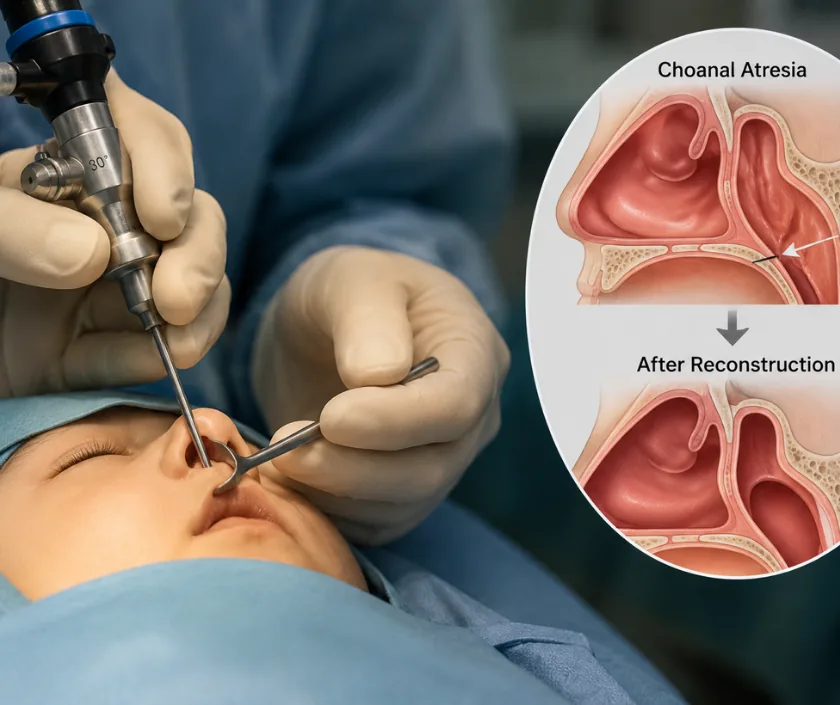
Choanal atresia is a blockage at the back of the nose where the nasal passage should open into the throat. When both sides are blocked, a newborn can struggle to breathe and needs urgent care. Surgery opens the passage, usually through the nose, and a soft stent may be left in place while the new opening heals.
Air normally travels from the nostrils through the nose and out at the back, where each side opens into the throat. In choanal atresia that opening did not form, so a plate of bone or a membrane closes the passage. One side or both sides can be affected.
Babies breathe mainly through the nose in the first months of life. A block on both sides is therefore an emergency, because the baby settles, closes the mouth and then cannot draw air in. Doctors often notice that the baby turns blue at rest and improves when crying, since crying forces the mouth open. When only one side is blocked, the problem can go unnoticed for months and shows as a constantly runny, blocked nostril.
Surgery opens the blocked passage, most often through the nostril using a fine telescope. Bone and tissue are removed to create a wide channel, and a soft stent is sometimes left in place. Because the new opening can narrow again, careful review afterwards is an important part of treatment.
A camera examination and a scan confirm the diagnosis and show whether the block is bone or membrane, and how thick it is. Babies blocked on both sides are treated as an emergency.
Breathing comes first. An airway is kept open, often with a simple oral device, and feeding is supported while tests confirm the diagnosis and check for other conditions.
A fine tube passed through the nostril and a scan of the area show whether the blockage is bone or membrane, how thick it is and whether one or both sides are involved.
Under general anaesthesia, a telescope is passed into the nostril and the blocking plate is removed with fine instruments, creating a channel into the throat on each affected side.
The edges are widened and lining is preserved or laid back over raw bone, which lowers the chance of the new opening scarring closed again.
A soft stent may be left in place for a period. Suction, saline and regular checks follow, and a telescope review confirms the passage is still open.
Your baby is monitored closely, often in a high dependency area. Breathing, oxygen levels and feeding are watched, and gentle suction keeps the passage clear.
Feeding improves as nasal breathing returns. Saline drops and suction continue at home if a stent is in place, and the family is taught how to manage it.
A review with a telescope checks that the opening is wide. The stent is often removed around this stage, depending on how healing has gone.
Regular checks continue through the first year or two. Some children need a further procedure if the passage narrows as scar tissue matures.
Most children breathe far better straight after the opening is made. The main issue is that the new opening tends to shrink as it heals, especially in small babies, so a second procedure to widen it is not unusual. Some children need a stent or regular cleaning appointments for a period. Where the atresia is part of a wider condition, other treatments run alongside. Long review is normal rather than a sign that something has gone wrong.
This surgery treats a serious breathing problem, so the balance of benefit is usually clear. The points below are explained fully to parents beforehand.
The nose needs keeping clear and moist while the new opening heals, and blocked breathing needs reporting quickly.
Newborns breathe through the nose, so a baby who struggles to breathe when the mouth is closed needs checking straight away.
Working through the nostril with a camera reaches the same place, avoids a facial scar and is the usual approach today.
The opening can narrow as it heals, which is why reviews and sometimes a second procedure are part of the plan.
It can be watched in some children, but constant discharge and repeated infection are good reasons to treat it.
Families want a team that treats the urgent breathing problem first and then stays involved through the months of review that follow.

Cost depends on whether one or both sides are treated, whether the blockage is bone or membrane, the length of the anaesthetic, the level of monitoring the baby needs afterwards and how many nights are spent in hospital. Stents, telescope reviews and any repeat procedure add to the total. A written estimate is shared once the baby has been assessed, together with a check of scheme and insurance cover.
These are the questions that come up most often in consultation. If yours is not here, send it on WhatsApp and the team will reply, usually the same day.
Ask your question →No fixed band is published, because babies need very different levels of care. One side or both, the type of blockage, monitoring after surgery and hospital nights all affect the total. A written estimate follows the assessment.
When both sides are blocked, yes. A newborn who turns blue at rest and settles when crying needs to be seen immediately, because they cannot breathe through the nose. A one sided blockage is usually less urgent but still needs review.
A fine tube is passed through each nostril to see whether it reaches the throat. A scan then shows whether the blockage is bone or membrane and how thick it is, which decides how the operation is planned.
Several nights are usual, and longer when the baby needs breathing or feeding support. Monitoring continues until nasal breathing is reliable and feeding has settled. The team gives a clearer idea once your baby has been reviewed.
Narrowing after surgery is not unusual, because the healing passage tends to contract. Stents, saline and regular telescope checks help. A further procedure is offered when the channel narrows enough to affect breathing.
Feeding usually improves once air can pass through the nose, though it can take a few weeks to settle. Some babies need help from a feeding specialist in the early period, especially if they were tiring during feeds before surgery.
Breathing and feeding are assessed, the nose is examined and any tests already done are reviewed. You hear how the passage would be opened, what the hospital stay involves and what treatment would cost in writing.
Seeing patients from across the city and beyond: read about the practice on the plastic surgeon in Surat page, or check what a written estimate covers on the costs and insurance page.
