Some children are born with part of an arm or leg missing, short or formed differently. This page explains how limb deficiency is assessed, what surgery can and cannot change, and how a prosthesis fits into the plan.
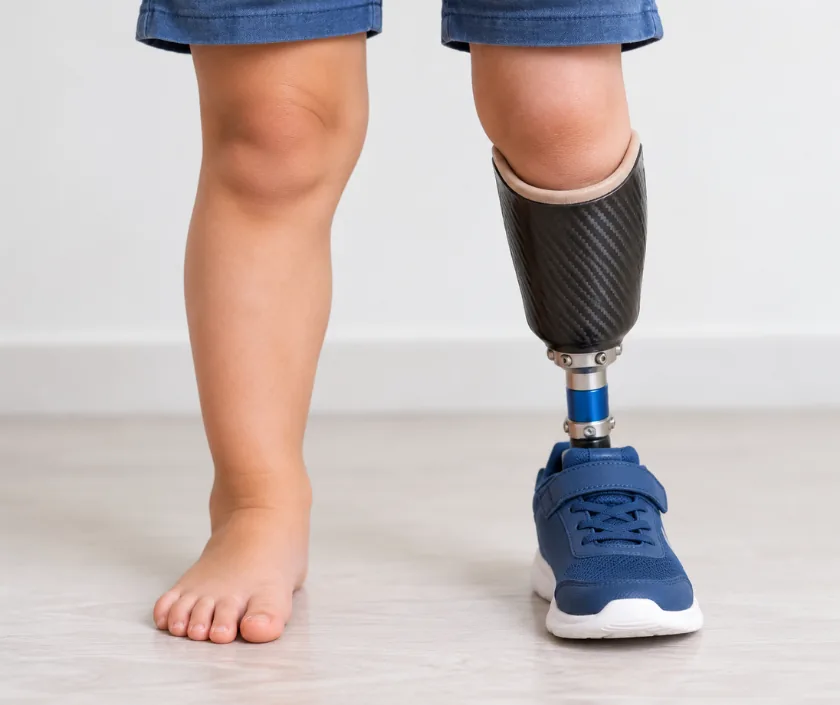
Limb deficiency means part of an arm or leg did not form fully before birth. Care is led by a team and is planned around function, not appearance alone. Some children need no surgery and do well with a prosthesis, or with nothing at all. Others are helped by reshaping tissue, deepening a web, or improving a limb so a prosthesis fits.
A limb deficiency is present from birth and is not caused by anything that happened during pregnancy. It can involve a whole segment of a limb, a shortened bone, missing or joined digits, or a limb that is complete but much smaller than the other side. Many children have no other health problem.
Assessment starts with what your child can already do. Children adapt early and often use a limb in ways that surprise adults, so the first question is always whether an operation would add anything. X rays, and sometimes scans, show which bones are present. A physiotherapist, an occupational therapist and a prosthetist are usually part of the discussion, alongside the surgeon.
Reconstructive surgery has clear aims. It may improve grip by separating or deepening a web, remove a small part that gets in the way, cover a bone end with better padded skin, correct an angle that stops a limb being useful, or reshape a limb so a prosthesis can be worn comfortably. Surgery cannot make a missing bone appear, and it is never the whole answer. Timing is guided by growth, by school and by what your child wants as they get older.
Not every child needs an operation. Surgery is offered when it adds something the child cannot achieve with therapy or a prosthesis alone.
Function is assessed by watching play, grip and walking rather than by looks alone. Parents describe what is difficult at home and at school, and those problems shape the plan.
X rays show which bones are present and how they are growing. A physiotherapist, a prosthetist and the surgeon review the findings together, so options are compared before anything is offered.
Doing nothing is a real option and is often the right one. Where an operation is offered, its aim is stated plainly, along with what it will not change.
Under general anaesthesia the surgeon may separate digits, deepen a web, trim or reshape bone, or move skin and tissue so a limb end is well padded. Several stages are sometimes planned.
Therapy starts early and matters as much as the surgery. A prosthesis, when it is wanted, is fitted or refitted once the limb has healed and swelling has settled.
A dressing or cast protects the limb, which is kept raised. Pain relief is given regularly. Most children go home within a day or two and are quicker to move again than parents expect.
Wounds are reviewed and dressings changed. Gentle therapy begins as healing allows, and school can often restart before the limb has fully settled.
Swelling has settled enough for a prosthesis to be fitted or adjusted. Therapy focuses on using the limb in daily tasks rather than on exercises alone.
Growth changes the limb, so reviews continue through childhood. Further small procedures are sometimes planned as your child grows or as their goals change.
Children generally gain function, but a reconstructed limb still works differently from a typical one and keeps changing with growth. Further operations at intervals through childhood are common rather than unusual. Therapy and prosthetic training do at least as much of the work as surgery does. Scars, altered sensation and a limb that stays shorter are all expected. The honest measure of success is what your child can do at home and at school.
Every operation carries some risk. In limb surgery the honest discussion is as much about limits as about complications.
Recovery here is as much about therapy and daily practice as it is about wound healing.
Surgery is aimed at making the limb work better and fit a prosthesis, and the shape will still be different.
Most children adapt early and find their own ways to write, dress and play alongside classmates.
In most cases no cause is ever found, and it is not the result of anything a parent did.
Care usually continues through childhood, with adjustments as a child grows.
Families come to us for an honest view of whether an operation will genuinely add something to their child's day.

Costs vary more here than in almost any other paediatric operation, because plans range from a single small procedure to several staged operations with therapy in between. Imaging, hospital stay, anaesthetic time, therapy and any prosthesis all form part of the total. For that reason the estimate is written after assessment, and it separates the surgical cost from therapy and prosthetic costs, so families can plan ahead.
These are the questions that come up most often in consultation. If yours is not here, send it on WhatsApp and the team will reply, usually the same day.
Ask your question →No fixed band applies, because plans differ so much from child to child. The written estimate follows assessment and separates surgery, hospital stay, therapy and any prosthesis, so families can see what falls where and what a scheme or policy may cover.
Often not. Many children use a limb difference well and need therapy and support rather than an operation. Surgery is offered when it will add something specific, such as better grip, a limb that fits a prosthesis, or skin that stops breaking down.
Timing is chosen with the anaesthetic team, and a child is listed only when growing well and generally fit. Staged surgery keeps each operation shorter. Risks are explained in writing before consent, along with what happens if a stage does not go to plan.
A single procedure usually means a dressing or cast for a few weeks, then therapy for a few months. Staged plans stretch over years, with normal school and play in between. Because growth changes things, reviews continue through childhood.
Many children gain useful function, especially where grip or prosthetic fit was the problem. Improvement is judged by what your child can do at home and at school. Surgery cannot replace a missing bone, so aims are agreed honestly first.
An early opinion is useful even when no surgery is planned, because therapy, prosthetic advice and school support all benefit from early input. There is no age at which it becomes too late to ask for a review.
The limb is examined and your child is watched at play. X rays may be arranged. You will hear the realistic options, including doing nothing, and leave with a written plan, an idea of timing and an estimate of cost.
Seeing patients from across the city and beyond: read about the practice on the plastic surgeon in Surat page, or check what a written estimate covers on the costs and insurance page.
