Toe syndactyly means two or more toes are joined by skin, and sometimes by bone. This page explains why many joined toes need no treatment at all, when release is worth considering and what surgery involves.
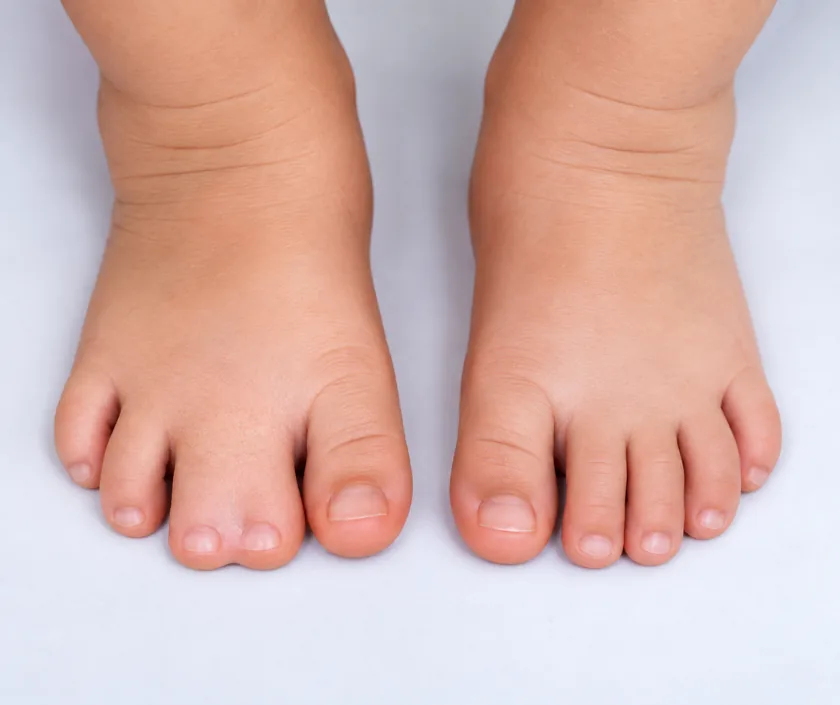
Toe syndactyly is a common way for toes to form before birth, and in most children it causes no trouble at all. Joined toes rarely change walking, balance or shoe fitting, so surgery is often not advised. Release is considered mainly when the join pulls a toe crooked, when the skin stays sore, or when bones are joined.
Syndactyly means joined digits. In the foot it most often involves the second and third toes, and the join can be skin only, which is called simple, or include bone, which is called complex. It runs in some families and is present from birth. Nothing during pregnancy causes it.
The important point for parents is that joined toes usually work well. Toes act as a group when we walk, so a join between them rarely affects balance, running or shoe fitting. Many adults with joined toes never seek an opinion and never need one. Treatment in the foot is therefore very different from the hand, where separate fingers matter for grip.
Surgery is offered when there is a reason beyond appearance alone. A join that pulls a toe sideways as it grows, skin that stays sore or damp between the toes, a joined toe that rubs inside shoes, or a bony join that makes the toes deviate can all be helped by release. Families sometimes ask about release for appearance, and that request is discussed honestly, including what the scars will look like.
Most children with joined toes are better left alone. We look for the small number where the join causes a genuine problem with the shape or the skin.
Most joined toes need no surgery. The foot is examined, walking is watched and an X ray is taken if bone may be involved. Only then is release discussed, with clear reasons on both sides.
Skin is short across a join, so the surgeon draws zigzag flaps that will cover both sides of the new web. Careful planning here decides how the toes look and feel later.
Under general anaesthesia the toes are divided, keeping the small blood vessels to each toe safe. Where bone is joined, it is separated and any bend is straightened at the same sitting.
The flaps are stitched into place. A small skin graft, often taken from the groin crease, may be needed to cover an area that the flaps cannot reach.
A soft bulky dressing, and sometimes a light plaster, protects the toes. The foot is kept raised, and the dressing stays undisturbed until the first review.
The foot is kept up as much as possible to control swelling. Younger children are usually more comfortable than parents expect. Walking is limited, and a pram or being carried helps.
The dressing is changed at review and the wounds are checked. Stitches are often dissolving by now. A soft roomy shoe or sandal is usually allowed once the wounds are dry.
Most children are walking and playing as before. Scars are still pink and firm, and gentle massage with a plain moisturiser is often advised.
Scars fade slowly over many months. The new web is checked as the foot grows, because it can creep down slightly and rarely needs a small revision.
Walking is usually unchanged, because it was rarely affected to begin with. The toes will be separate but the grafted skin between them heals a different colour and texture, and the scars are visible in sandals. Toes joined at the bone stay more different in shape than toes joined by skin alone. The web can creep upwards again during growth. For most families the sensible answer remains to leave well joined, comfortable toes as they are.
Toe release is a small operation and most children heal well. Because the skin between toes is tight and the blood supply is fine, a few problems are worth knowing about.
If surgery is done, the foot is protected for a few weeks and kept off the ground more than parents usually expect.
Joined toes rarely affect walking, running or balance. Most children need no operation at all.
There is not enough skin to cover both toes once separated, so grafts are needed and the recovery takes weeks.
Grafted skin between the toes stays a different shade, and the scars show in open shoes.
Skin only joins usually stay stable. It is joins involving bone or unequal toe lengths that are watched for changes.
We are comfortable telling parents that the right answer is often to do nothing, and we explain clearly why that is a good outcome rather than a refusal.

Cost depends on how many toes are joined, whether the join involves bone, whether a skin graft is needed, the anaesthetic time and whether your child stays overnight. Treating both feet in one sitting changes the figure as well. Because these factors vary so widely, a written estimate is prepared after the foot is examined, along with a check of what a health policy or government scheme may cover.
These are the questions that come up most often in consultation. If yours is not here, send it on WhatsApp and the team will reply, usually the same day.
Ask your question →No fixed band is published, because the work needed ranges from a simple skin release to a bony separation with a graft. A written estimate follows the examination. If both feet are involved, the estimate covers whether they are treated together or separately.
No. Most joined toes cause no problem with walking, balance or shoes, and are best left alone. Release is suggested when a toe is being pulled crooked, when the skin between the toes stays sore, or when a bony join is causing a bend.
The operation is short and is done under general anaesthesia by a team used to young children. A general check comes first. Afterwards the toes are watched for colour and swelling, since the blood supply to a separated toe is delicate.
Where a bony join is bending a toe, earlier release avoids that bend worsening with growth. For a simple skin join there is no rush, and many families wait until the child is older. Growth and the reason for surgery guide the timing.
Walking is limited for the first week or two while the dressing is on. Most children are back in a soft shoe by around three weeks and playing normally by six weeks. Swelling in the toes settles over a few months.
The toes are separate, with a scar running along the facing sides and around the new web. Scars fade but stay visible, and a graft usually keeps a slightly different colour. Shape improves more than the skin ever fully matches.
The foot is examined, walking is watched and an X ray may be taken to see whether bone is joined. You will hear an honest view on whether surgery helps, what it involves and what it costs, in writing before any date is fixed.
Each technique below has its own page explaining how it works and when it is chosen.
Seeing patients from across the city and beyond: read about the practice on the plastic surgeon in Surat page, or check what a written estimate covers on the costs and insurance page.
