Pectus carinatum is a chest where the breastbone is pushed outward, often becoming obvious during the teenage growth years. This page explains when a brace can reshape a flexible chest and when surgery is the better answer.
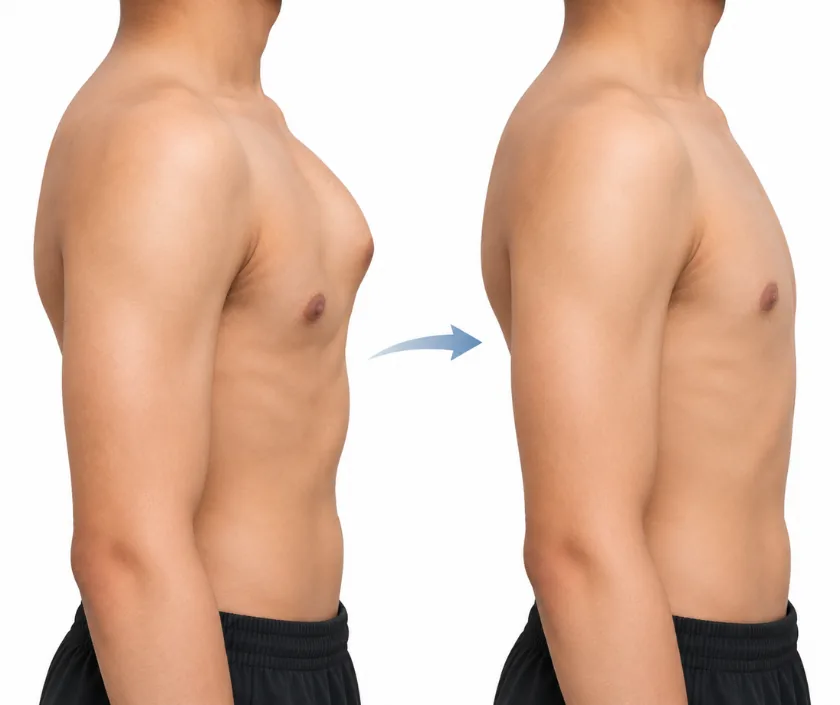
Pectus carinatum correction treats a chest where the breastbone and ribs stand forward, sometimes called pigeon chest. In a young person whose chest is still flexible, a fitted brace worn daily can flatten the ridge over many months without surgery. Where the chest has become stiff or the shape is marked, an operation reshapes the cartilage and breastbone.
In pectus carinatum the cartilage that joins the ribs to the breastbone overgrows and pushes the front of the chest outward. The breastbone stands forward in a ridge, sometimes evenly and sometimes more on one side. The shape is present from early on but usually becomes noticeable during the years of fastest growth.
Breathing is usually normal. Some teenagers describe tenderness over the ridge, especially when lying face down or when the chest is knocked, and a few become short of breath on hard exercise. For most, the real difficulty is how the chest looks under a shirt and the wish to avoid changing in front of others.
At Elegance Clinic in Surat the chest is examined and its flexibility tested by pressing gently on the ridge. A chest that gives under that pressure often responds to a brace. Photographs and measurements are recorded, and a scan is added when the shape is uneven or surgery is being considered.
Timing matters here more than almost anywhere else, because a growing chest is far easier to reshape than a finished one.
The ridge is measured and photographed, and the chest is pressed gently to see how far it moves. A flexible chest in a growing teenager is the group most likely to improve with a brace rather than an operation.
A brace is fitted to press on the highest point of the ridge, with light pressure that is increased slowly. It is worn for many hours a day over months, and the fit is adjusted at review visits as the shape changes.
Photographs and measurements at each visit show how the ridge is flattening. Wearing the brace steadily matters more than wearing it tightly. Once the shape has corrected, wear is tapered rather than stopped suddenly.
If the chest does not give under pressure, or bracing has not worked, the overgrown cartilage is removed through a chest incision and the breastbone is repositioned. A support may be placed behind it while healing takes place.
The muscle layer is repaired over the reshaped chest and the skin is closed with fine stitches. Drains may be used for a short time, and breathing exercises begin as soon as the young person is awake and comfortable.
Skin over the ridge may look pink at first and the fit is eased until it settles. Wearing time builds up gradually. Normal school, sport and sleep continue alongside the brace.
Chest soreness is expected and is managed with regular pain relief. Deep breathing is encouraged from the start. A short hospital stay with drains is usual before going home.
Pain settles and normal walking returns. Lifting, twisting and contact sport are avoided so the reshaped chest is not stressed. School usually restarts within two to three weeks.
Swelling has gone and the flatter shape is clear. Sport is usually back to normal. Reviews continue through the remaining growth years to check the correction is holding.
Bracing started during the growth spurt reshapes many chests substantially, but it depends entirely on wearing the brace for the hours advised over many months. Skin redness and pressure marks are common and settle with adjustment. Surgery gives a flatter contour in exchange for scars and several weeks of restricted activity. A little springing back over time happens with both routes. Because heart and lung function is usually normal already, the gain is in shape and comfort.
Bracing is low risk but demands steady daily use. Surgery carries the usual risks of a chest operation, which are explained before any decision.
Both routes ask something of the teenager, and steady daily habits decide the outcome more than anything else.
Treatment is available, and a brace during the growing years often reshapes the chest without any surgery.
Exercise builds the surrounding muscle and helps posture, but it does not move bone and cartilage.
For a growing teenager with a flexible chest, bracing is tried first and often does the job.
Waiting past the growth spurt removes the option that works best without an operation.
Teenagers get a straight answer about which route suits their stage of growth, and what wearing a brace really involves.

What you pay depends on the route taken. A brace involves the cost of the device, the fitting and review visits over months. Surgery brings in theatre and anaesthesia time, hospital stay, any support placed behind the breastbone and physiotherapy. A written estimate is given after the chest has been assessed, with a note on what insurance may cover.
These are the questions that come up most often in consultation. If yours is not here, send it on WhatsApp and the team will reply, usually the same day.
Ask your question →It depends on whether a brace or an operation is chosen. Bracing involves the device, the fitting and review visits, while surgery involves theatre time, anaesthesia and a hospital stay. A written estimate is prepared once the chest has been examined and measured.
For a young person still growing, whose chest gives under gentle pressure, a fitted brace can flatten the ridge over many months. Steady daily wear is what makes the difference. A stiff chest, or one that has stopped growing, responds far less well.
Bracing is measured in months rather than weeks, with many hours of wear each day and regular visits to adjust the fit. Once the shape has corrected, wear is reduced slowly during the remaining growth years rather than stopped all at once.
Chest wall surgery is done under general anaesthesia in a hospital, with checks beforehand to confirm fitness. Bleeding, infection and air around a lung are the main risks and are explained in advance. Most young people recover well with good pain control.
Bracing works best while growth is still happening, so an early assessment is worthwhile once the ridge is noticed. Surgery, when it is needed, is usually left until later in the growth years so the corrected shape is less likely to change.
In most cases the shape holds, whether it was corrected by bracing or by surgery. Some prominence can return if a lot of growth is still to come, which is why reviews continue for a while. Any change is picked up early that way.
The chest is examined, measured and photographed, and its flexibility is tested by gentle pressure. Bracing and surgical options are explained with what each can achieve and what it asks of the family. A written estimate follows so you can decide without pressure.
Seeing patients from across the city and beyond: read about the practice on the plastic surgeon in Surat page, or check what a written estimate covers on the costs and insurance page.
