A first cleft lip repair does not always settle the way a family hoped. This page explains how a secondary lip revision is judged in Surat, what the operation can change, how healing goes and what shapes the cost.
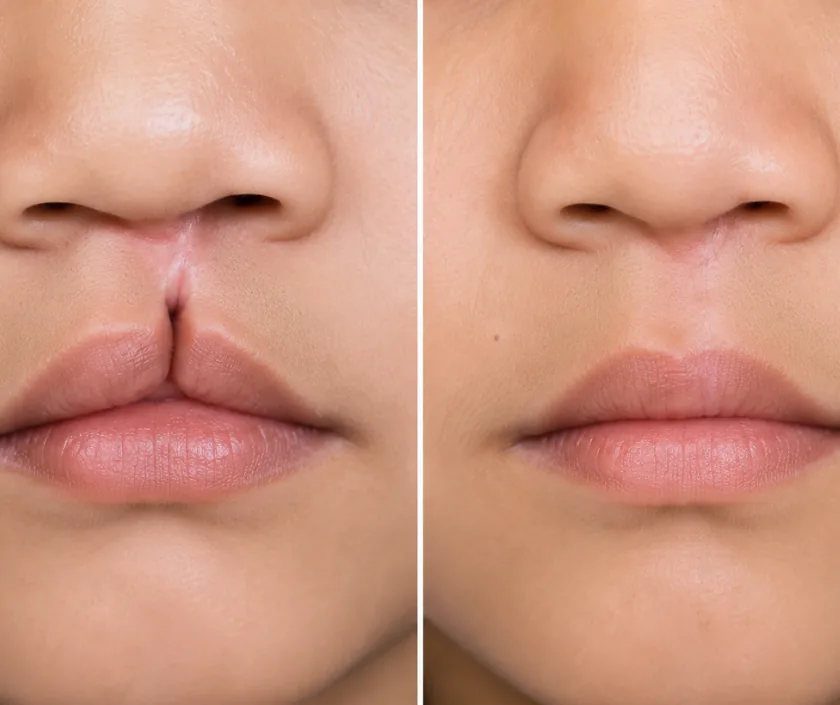
Secondary cleft lip revision corrects problems left after an earlier repair, such as a notched lip border, a tight upper lip, a wide scar or an uneven red margin. Surgeons reopen the old scar, rebuild the muscle where needed and reshape the red lip. Timing depends on growth, so minor work often waits until the face is more settled.
Every cleft lip repair leaves a scar, and the lip then has to grow with the child. Sometimes the muscle underneath was never joined fully, so the lip pulls oddly when the child smiles. In other children the red border steps up or down at the scar, or a small notch forms in the middle of the lip.
A revision is a fresh planned operation on that lip rather than a touch up. The old scar is removed, muscle layers are separated and rejoined so the lip moves evenly, and the red margin is realigned. Tissue may be borrowed from inside the lip to fill a thin or notched area. Small flaps can lengthen a lip that feels tight.
Not every difference needs surgery. Scars keep changing for a year or more, and many settle without help, so a careful wait often serves a child better than early revision. Where the muscle or the lip height is truly wrong, waiting will not fix it, and revision is planned for a suitable point in growth.
Revision suits a child whose lip has healed fully but still shows a difference that bothers the child or gets in the way of eating and speech. Timing is usually chosen around school years or later.
The lip is examined at rest and on smiling, and the muscle is felt for gaps. Photographs and sometimes video are taken, so the plan is based on how the lip actually moves.
Minor scar work usually waits until the scar has matured. Muscle problems and marked height differences are corrected earlier, because they will not improve on their own with time.
The previous scar is cut out and the layers beneath are opened. Old tethering bands are released so that skin, muscle and lining can each be moved to the right place.
Muscle ends are found and stitched across the cleft line so the lip purses evenly. The white roll and red border are matched, and a small flap may be turned in to fill a notch.
Fine stitches close the skin along natural lines. A light dressing or ointment is used, and most people go home the same day with instructions for cleaning and rest.
Swelling and bruising peak early. Cool packs and simple pain relief are usually enough. Soft food is easier, and stretching the lip with a wide yawn or a big bite is avoided.
Swelling begins to fall and stitches are removed or start to dissolve. Children often return to school within a week, avoiding sport and rough play for longer.
The scar looks red and firm at this stage, which is normal. Massage and sun protection are started once the surgeon agrees the wound is fully closed.
Redness fades and the lip softens. Final judgement on shape is made now rather than earlier, and any further small step can be discussed at that review.
A revision improves a lip. It does not return it to a lip that was never operated on. The new scar goes through the same red and firm phase for several months before it fades, so the lip can look worse before it looks better. Small differences in fullness and movement usually stay. Some children need more than one revision through growth, most often around the teenage years. We talk about the size of the likely change before deciding.
Revision works on tissue that has already been operated on, so healing is less predictable than in a first repair. Being clear about that from the start avoids disappointment later.
The lip heals quickly on the surface, but scar care runs for months and is where most of the result is won.
Every repair leaves a line. A revision aims to make that line flatter, paler and better placed, not absent.
Operating on a scar that is still settling often gives a poorer result. Waiting for the tissue to soften usually pays back.
Growth changes the lip. Some children choose a further small adjustment in the teenage years.
The lip and nose are often treated together, but they are separate problems and each needs its own plan.
Revision work asks for patience and a clear sense of what is worth changing, so we spend the first visit deciding whether to operate at all.

Revision cost varies more than a first repair, because the work ranges from a short scar correction to a full reopening with muscle repair. Anaesthetic type, operating time, whether the nose is treated at the same sitting and any day care charges all matter. Insurance cover for revision after a congenital repair differs between policies. A written estimate follows the examination.
These are the questions that come up most often in consultation. If yours is not here, send it on WhatsApp and the team will reply, usually the same day.
Ask your question →There is no single band, because revision ranges from a short scar correction to a full reopening with muscle repair. Cost follows the operating time, the anaesthetic used and whether the nose is treated at the same sitting. A written estimate is given after examination.
Revision is planned work on healed tissue and is generally well tolerated. Blood supply to the lip is rich, which helps healing. Infection, wound separation and a scar that stays red are the main risks, and each is explained before consent along with the chance of needing more work.
Most swelling settles within two weeks and stitches come out or dissolve in the first week. School and desk work usually restart after about seven days. Sport, swimming and rough play wait longer, and the scar keeps improving for many months.
Revision usually improves symmetry, the line of the red border and the way the lip moves. Some difference between the two sides normally remains, because scarred tissue is less forgiving. Photographs taken before surgery help judge the change honestly at review.
Small scar problems are usually left for at least a year, since scars keep changing and many settle on their own. Muscle gaps, a badly stepped border or a very tight lip are treated sooner, because waiting does not help those.
Yes. Adults who had a repair in childhood often ask about the scar, the red border or a lip that feels tight. Tissue is firmer and healing is slower than in a child, so the plan is discussed carefully with realistic aims.
The lip is examined at rest and while smiling and talking, and old operation notes are reviewed if available. Photographs are taken. You will hear which parts can be improved, which cannot, the likely timing and a written estimate.
Seeing patients from across the city and beyond: read about the practice on the plastic surgeon in Surat page, or check what a written estimate covers on the costs and insurance page.
