A cut across the back of the hand can stop a finger straightening within seconds. Extensor tendon repair joins the divided ends again, then a splint and hand therapy protect that repair while the tendon knits.
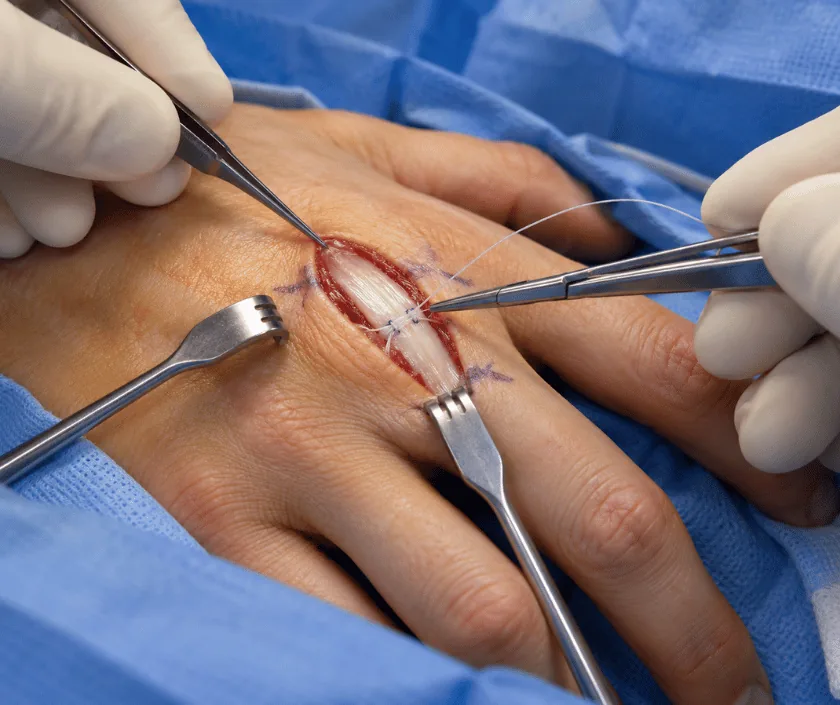
Extensor tendon repair is surgery to reconnect a torn or cut tendon on the back of the hand, finger or wrist. Because these tendons lie just under the skin and are flatter, repairs here often settle better than flexor repairs in the palm. Even so, splinting and hand therapy are still needed for the finger to move well again.
An extensor tendon runs from the forearm muscles, across the back of the wrist and hand, and into the finger or thumb. Because the tendon sits close to the surface, even a shallow cut from glass, a blade or a machine can divide it. The finger then droops at one joint and will not lift on its own, although the hand may still grip.
Surgery brings the two tendon ends together with fine stitches. On the back of the hand the tendon is flat and broad, and it glides along a simpler path than the flexor tendons in the palm, so repairs here often behave more kindly. Any injured skin, joint capsule or bone is checked at the same sitting, since these usually travel with the tendon injury.
Once the repair is done, a splint holds the wrist and finger in a position that keeps tension off the stitches. Hand therapy then starts early and controls exactly how far the finger may move each week. That balance between protecting the repair and keeping the joints supple decides much of the final movement.
Most people with a divided extensor tendon do well. Even so, the decision depends on the wound, the timing and how much hand therapy someone can realistically attend.
The surgeon examines each finger, tests movement against resistance and checks nerve and blood supply. Imaging is arranged if a fracture is suspected, and the plan for repair or grafting is explained before the day of surgery.
Most repairs are done under a regional block that numbs the arm while you stay awake, with sedation if you prefer. General anaesthesia is used for larger injuries or when several structures need work.
The wound is cleaned thoroughly and extended a little so both tendon ends can be found. Any grit, glass or dead tissue is removed, since a clean bed helps the tendon heal and glide.
Fine stitches join the ends in a pattern strong enough to allow early protected movement. Nearby nerve, joint or bone injuries are treated in the same sitting, and skin is closed or covered as needed.
A custom splint holds the wrist and finger where tension on the repair stays low. Your therapist explains what may move, what must not, and when the first therapy visit will be.
Keep the hand raised above heart level as much as possible so swelling settles. Pain relief is taken as prescribed, dressings stay dry, and the splint is not removed at home.
The wound is checked and stitches are often removed around this time. Hand therapy begins with gentle guided movement inside the splint, and the exercises feel small on purpose.
Your splint is usually reduced or discarded once the therapist agrees, and stronger active movement starts. Grip work is added slowly, because the repair is still gaining strength.
Many people are back to normal use by now, although a slight lag in straightening or scar tenderness can persist. Recovery can vary, so continue therapy for as long as it is advised.
Many people regain useful straightening and return to their usual work, and repairs on the back of the hand often move more freely than flexor repairs in the palm. Even so, a small lag when lifting the finger, mild stiffness or a firm scar can remain. Injuries close to a joint, crush wounds and delayed repairs tend to recover less completely. Recovery can vary from person to person.
Every operation carries risk, and knowing these in advance makes the recovery far less unsettling.
Simple habits over the first few weeks protect the repair while therapy moves things forward.
Grip uses the flexor tendons in the palm. An extensor injury shows up as a finger that will not lift, so movement in one direction proves nothing about the other.
Extensor tendons lie just below the skin on the back of the hand. Because of that, a shallow blade or glass wound can divide one completely.
Comfort returns long before the tendon is strong. Taking the splint off early is one of the commonest reasons a sound repair pulls apart.
Repair is only half the treatment. Guided movement stops scar sticking the tendon down, and it usually decides how far the finger moves in the end.
Elegance Clinic in Surat treats a hand injury as one problem involving tendon, nerve, bone and skin together. Dr. Ashutosh Shah plans the repair and the therapy at the same visit rather than separately.

Cost depends on which tendons are cut, whether nerve, bone or skin also needs work, the type of anaesthesia and how many therapy sessions are planned. An emergency repair after a fresh injury is priced differently from a planned graft. At Elegance Clinic you receive a written estimate after examination, and the team explains which parts your insurer is likely to cover.
Hand surgery after an injury is usually covered by mediclaim policies, although waiting periods and room rent limits still apply. Bring your policy papers to the consultation so the office can help with approval.
These are the questions that come up most often in consultation. If yours is not here, send it on WhatsApp and the team will reply, usually the same day.
Ask your question →Cost varies with the number of tendons involved, whether nerve or bone also needs repair, and the anaesthesia used. A written estimate is given after your hand is examined. Most repairs following an injury are covered by mediclaim, subject to policy terms and waiting periods.
Tendon repair is a routine hand procedure, usually done under a block that numbs only the arm. Infection, stiffness and rupture of the repair remain possible. Each of these is discussed with you beforehand and reviewed at every follow up visit.
Light use with the splint on often starts within days, while stronger gripping waits until the repair has gained strength over several weeks. Manual workers usually need longer than desk workers. Recovery can vary, so the therapist adjusts the plan to how your hand responds.
Many people regain useful straightening, although a small lag can remain, especially when the cut was close to a joint. Repairs on the back of the hand often move more freely than repairs in the palm. Steady therapy gives you the best chance of a good range.
Often it can. Once the ends have pulled apart and shortened, a direct join may not be possible, so a graft or a tendon transfer is considered instead. Stiff joints are loosened first, because a tendon cannot move a joint that has already locked.
Early repair is generally easier and gives the tendon a better path to heal along. Contaminated wounds are cleaned first and repaired once the tissue is healthy. Even some weeks later something useful can usually be offered, so it is worth being assessed.
Each finger is tested for movement and sensation, the wound is examined, and imaging is arranged if a fracture is suspected. The likely operation, the splinting plan and the therapy schedule are explained. You then receive a written estimate before anything is booked.
Seeing patients from across the city and beyond: read about the practice on the plastic surgeon in Surat page, or check what a written estimate covers on the costs and insurance page.
