Tendons are the cords that carry the pull of forearm muscles into the fingers. Flexor tendons run along the palm side and curl the digits, while extensor tendons lie just under the skin on the back of the hand and straighten them. Both sit close to the surface, so a cut that looks minor on the skin can divide a tendon completely.

Two things make tendon injuries different from other wounds. A cut tendon end pulls away and retracts up the finger or forearm, which is why waiting makes repair harder rather than easier. Repaired tendons also stick to the tissues around them while healing, and that stiffness, not the stitch itself, is what usually limits the final result. Careful therapy after surgery therefore matters as much as the operation, which is why a hand therapist is involved from the first week. Understanding this early helps patients commit to the exercises that protect their result.
Which tendon is involved, how much is divided and how long ago it happened all change the treatment plan.
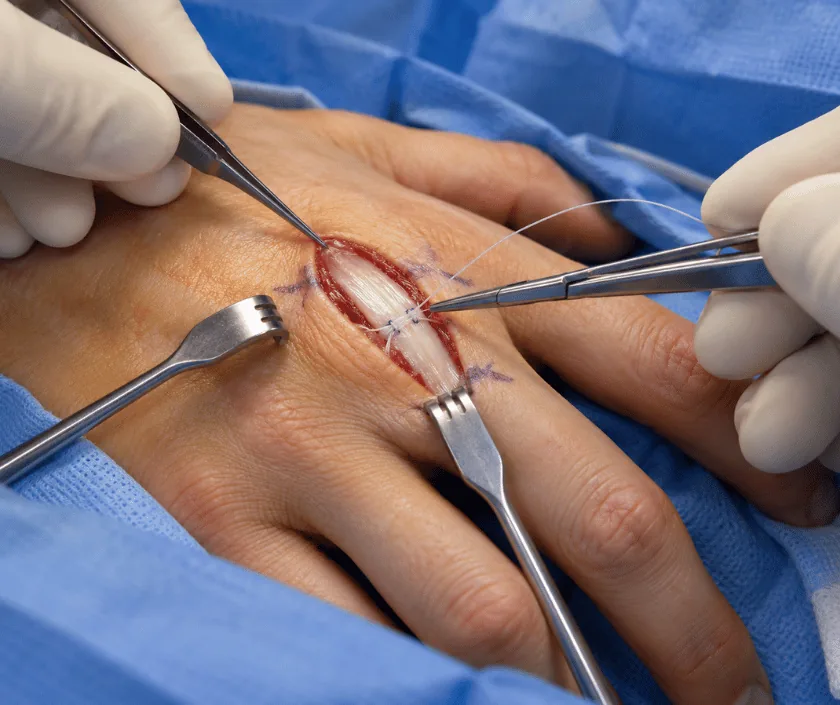
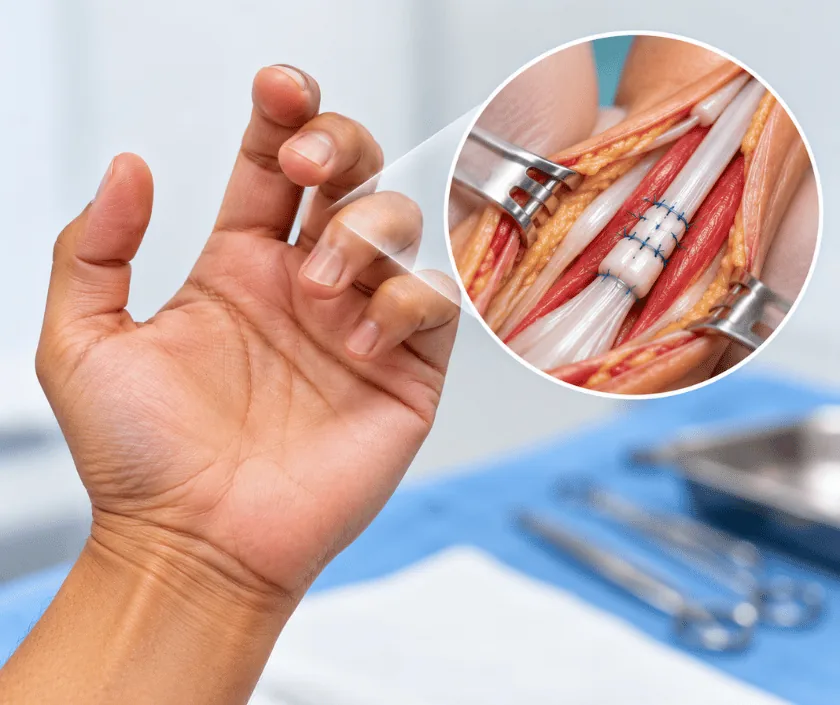
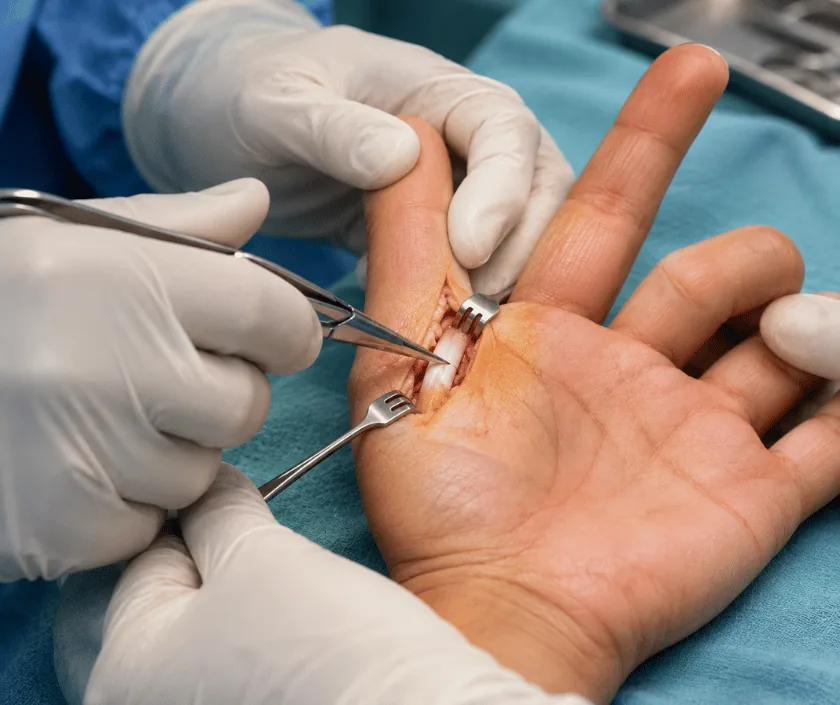
A repaired tendon must glide, and gliding only happens with guided movement. Therapists start protected exercises within days and adjust them week by week. Skipping sessions allows scar to bind the tendon down, and no operation can fully undo that stiffness afterwards.
A splint holds the wrist and fingers in a position that takes tension off the repair. Removing it early risks the repair pulling apart, while leaving joints unmoved too long causes stiffness. Wearing instructions therefore change through the weeks of healing.
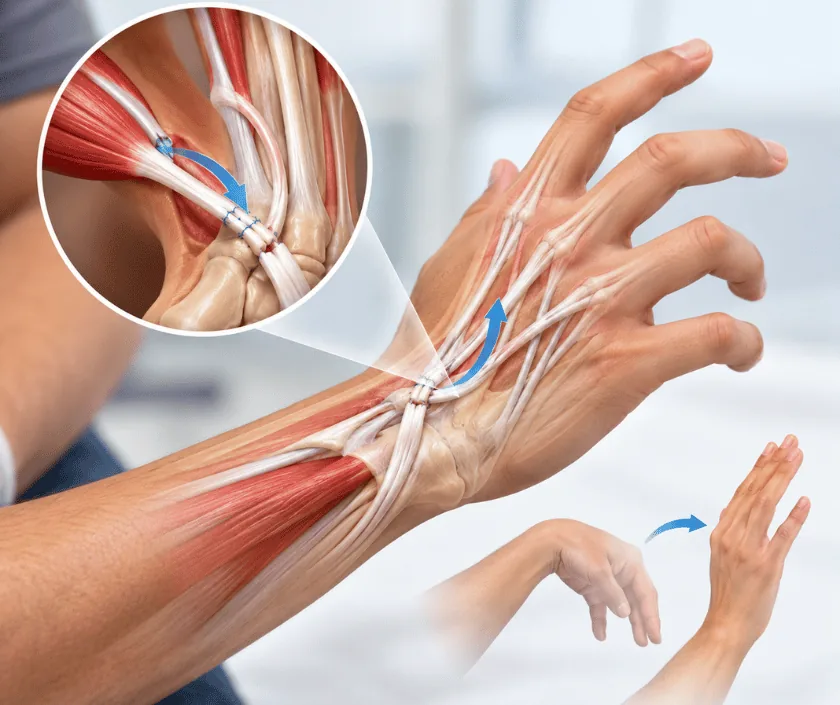
When a tendon cannot be repaired, another tendon that the hand can spare is rerouted to do the job. Training the brain to use it takes practice with a therapist, but many patients regain a strong and usable movement pattern.
Rheumatoid disease, long standing tendon irritation and rough edges of old fractures all wear tendons through over time. Treating the underlying cause is part of the plan, otherwise a neighbouring tendon may rupture in the same way months later.
Tendon problems are far easier to treat early. Arrange assessment quickly if you notice any of these.
These questions come up most often once a tendon injury has been confirmed.
Ask your question →A single fresh tendon repair as a day case sits at the lower end. Costs rise with multiple tendons, nerve or bone involvement, and staged grafting. Therapy sessions afterwards form part of the total. A written estimate follows examination of the hand.
Repair is usually done under a regional block that numbs the arm, so a general anaesthetic is often avoided. Infection, stiffness and rupture of the repair are the recognised risks. Following the splint and therapy plan reduces the chance of rupture considerably.
A splint is typically worn for around six weeks, with guided movement throughout. Light use returns after that, and grip strength keeps building for three to six months. Heavy manual work is usually delayed until the repair has fully matured.
Many people regain a good working range, though a small loss of full bend or full extension is common. Results depend on the level of the cut, on how much scar forms, and on how consistently therapy is done during the healing weeks.
Yes, although the approach differs. Retracted, scarred ends cannot simply be stitched, so a graft or a tendon transfer is planned instead, sometimes in two stages. Joints that have stiffened may need releasing first before any tendon work is worthwhile.
Within the first week or two is ideal for a clean cut, since the ends are still reachable and supple. Delay beyond that turns a straightforward repair into a much larger reconstruction, so early assessment is worth arranging even for a small wound.
Each finger is tested individually to find which tendons are working, and sensation is checked as nerves often run alongside. The wound is examined, imaging is arranged if bone is involved, and the repair, splint and therapy plan are explained.
