Fingertip injuries are the commonest hand injury of all, and a great many of them heal very well with dressings alone. Surgery is kept for the wounds where bone is exposed, pulp has been lost or the nail bed is torn.
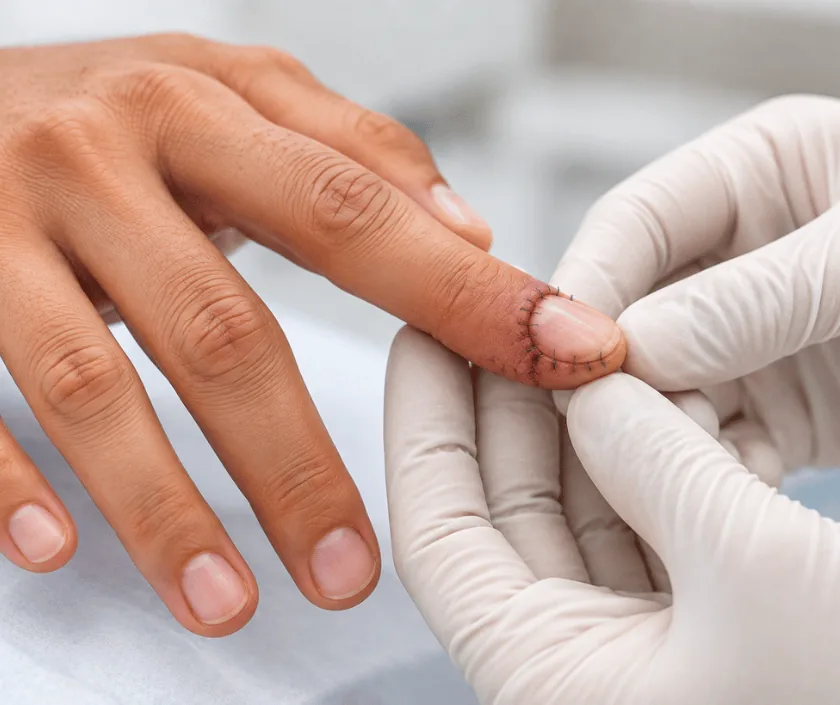
Most fingertip injuries do not need an operation. Where the wound is modest and no bone is exposed, regular dressings let the tip heal on its own with good shape and feeling. Surgery is considered when bone stands uncovered, a large area of pulp is missing, or the nail bed has been cut and needs repairing.
Fingertips get caught in doors, machines and kitchen knives more often than any other part of the hand. The tip carries dense nerve endings, a nail that supports pinch, and a thin pad of tough skin over bone. Because so much is packed into a small space, even a modest loss feels significant.
Whether surgery is needed at all is always the first question. Where bone is not exposed and the wound is small, the tip is cleaned and dressed, and the body fills the gap over a few weeks. Healing this way is often better than a graft, since the returning skin has good sensation and the nail keeps its support. Regular dressing changes and a clear review plan are the whole treatment.
Surgery becomes sensible when bone stands proud of the wound, when a large piece of pulp is gone, or when the nail bed is torn. Options then include trimming the bone slightly, a local flap that brings neighbouring skin in with its blood supply, a small graft, or careful nail bed repair under magnification.
The decision rests on what tissue is missing and where the wound sits, not on how alarming the injury looked at the time. Plenty of tips do best when left to heal.
The wound is assessed for exposed bone, pulp loss and nail bed injury, and an image of the bone is usually taken. Feeling is tested on both sides of the finger.
A ring block numbs the whole finger. The wound is washed thoroughly and dead tissue removed, which by itself settles many injuries and lets a dressing plan begin.
Where the tissue base is healthy and bone is covered, dressings continue with review every few days. If bone is exposed or pulp is missing, a reconstructive step is planned instead.
According to the defect, neighbouring skin is advanced as a flap, a small graft is applied, bone is trimmed back slightly, or the nail bed is repaired with fine absorbable sutures.
A bulky dressing shields the tip and a splint may be added. Your first review is arranged within days so healing can be checked before any problem takes hold.
The finger throbs and needs elevation with regular pain relief. Dressings stay on unless they become soaked. Most people manage light one handed activity at home.
Dressings are changed at the clinic and the wound base inspected. Moving the other joints is encouraged so the whole finger does not stiffen while the tip heals.
Skin is usually closed and starting to toughen. Tenderness when the tip is knocked remains normal. Desensitisation exercises and a gradual return to gripping tasks begin.
Sensation and skin quality keep improving. Nail growth becomes clearer by now, so any remaining ridging or splitting can finally be assessed properly.
Most fingertips recover well, although the healed pad is usually a little firmer and more sensitive to cold than before. Scars fade but stay visible on close inspection. Where the nail bed was damaged, the nail can grow with a ridge or a split, and that cannot always be corrected. Feeling returns gradually and often seems odd for months before it settles.
Fingertip surgery is small in scale, yet the tissues are unforgiving, so a few problems are worth understanding in advance.
Simple, consistent care between visits settles most fingertip injuries without any further intervention.
Most do not. Where bone is covered, dressings alone often produce a tip with better feeling than surgery would have given.
Usually the nail is left in place. Releasing the pressure through a tiny hole relieves the pain, and the nail then protects the repair beneath it.
Children heal remarkably well at the tip. Adults recover well too, though the finger is generally a little shorter and firmer than before.
Nails grow slowly, so the effect of a nail bed injury only becomes clear after several months of growth.
Elegance Clinic in Surat treats fingertip injuries with a clear preference for the simplest approach that will work, and says openly when an operation would add nothing.

Many fingertip injuries are managed with cleaning and a course of dressings, which keeps costs modest and predictable. Where a flap, graft or nail bed repair is required, theatre time and anaesthesia are added, and the written estimate reflects that.
The estimate is prepared once the wound has been examined, and lists the procedure, the dressing reviews and any imaging. If the injury happened at work, employer or insurance cover may apply, so bring the relevant papers with you.
These are the questions that come up most often in consultation. If yours is not here, send it on WhatsApp and the team will reply, usually the same day.
Ask your question →Cost depends on whether dressings alone will do or a procedure is needed. Simple management involves review visits and materials. Where a flap, graft or nail bed repair is planned, a written estimate covering theatre, anaesthesia and follow up comes first.
No, and that is worth repeating. Where bone is covered and the wound is modest, dressings let the tip fill in with skin that has good sensation. Surgery is reserved for exposed bone, significant pulp loss or nail bed damage.
Most of it is done under a local anaesthetic ring block with the finger fully numb. Infection is the main concern, especially after bites, so thorough wound cleaning and timely review matter more here than anything else.
Small wounds usually close within a few weeks of regular dressings. Toughening of the skin, settling of tenderness and return of normal feeling take months. Nail growth is slower still, so final appearance takes time to judge.
Where the nail bed was cut, the nail can grow back with a ridge, a split or a slight hook. Careful repair improves the odds. Minor irregularities are common and usually accepted once the finger works well.
Attend the same day if bone is visible, bleeding will not stop with firm pressure, the tip looks white or feels cold, or a large part of the fingertip has been cut off. Bring the separated part with you if you have it.
Your wound is examined for exposed bone and nail bed damage, and imaging is often taken. The finger is numbed and cleaned, then a plan is agreed. You will be told plainly whether surgery is being recommended or not.
Options range from deepening the web space to lengthen the remaining stump, through transferring a toe, to accepting a shorter finger. Which is right depends on the finger involved and what your hand needs to do, and the thumb is treated differently from the others because so much function depends on it.
Seeing patients from across the city and beyond: read about the practice on the plastic surgeon in Surat page, or check what a written estimate covers on the costs and insurance page.
