A finger caught in a door or struck by a hammer often damages far more than the nail itself. Nail bed repair rebuilds the delicate layer underneath, which is the surface the new nail has to grow along.
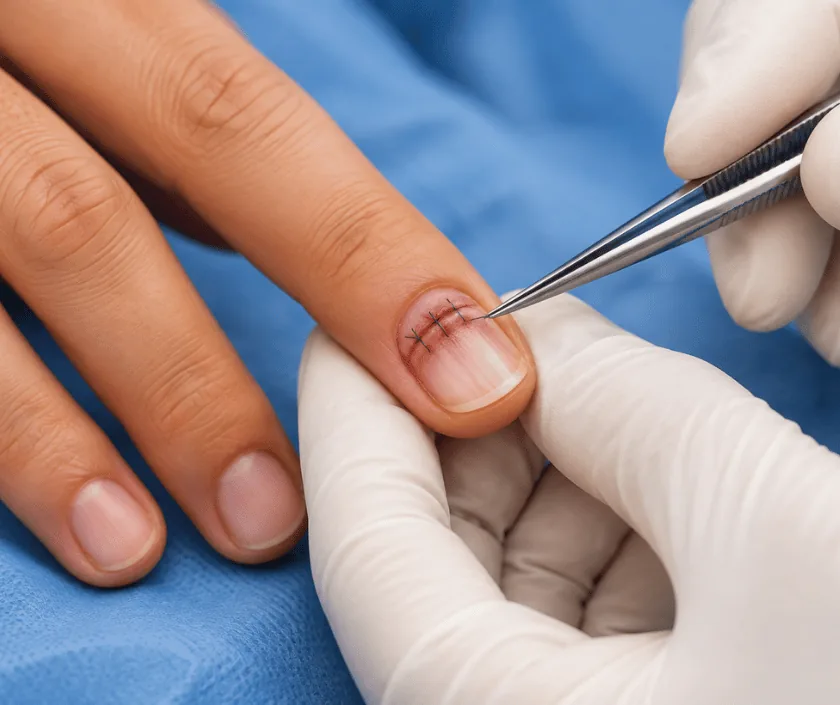
Nail bed repair is surgery to fix the soft tissue under the nail after a crush or a cut, usually from a door, a hammer or machinery. The nail plate is lifted, trapped blood is released, and the torn nail bed is stitched with very fine sutures. Careful repair gives the new nail the smoothest possible surface to grow along.
Under every nail lies the nail bed, a thin layer that produces and guides the growing nail. A crush in a door or a blow from a hammer can split this layer even when the finger looks intact from outside, and blood then collects under the nail as a dark, throbbing patch. Where that bruise covers much of the nail, the bed beneath it has usually been torn.
Repair begins by lifting or removing the nail plate so the injury can be seen properly. Torn edges are brought together with very fine absorbable stitches, because a ridge left in this layer becomes a ridge in the new nail. Any fracture of the bone at the tip is checked at the same sitting, since fractures often accompany these injuries.
The cleaned nail, or a soft spacer, is then tucked back into the fold at the base. That keeps the fold open so the new nail emerges along a smooth path instead of getting stuck. Growth is slow, and the finger looks unusual for months, which is normal.
Repair suits fingertips where the bed has genuinely been torn, which is far more common than people expect after a crush. Assessment decides it.
The fingertip is examined for the extent of the tear and sensation is tested. Imaging is usually arranged, since a fracture under the nail is common, and your surgeon explains what the nail may look like afterwards.
Local anaesthetic is injected at the base of the finger and numbs it fully within minutes. Most repairs are done this way as day care, and young children may need a short general anaesthetic instead.
The nail plate is lifted gently so the bed can be seen and trapped blood is released. Dirt and loose fragments are washed out thoroughly, because a clean bed heals with fewer ridges.
Torn edges are stitched together with very fine absorbable sutures under magnification. A fracture at the tip is stabilised if present, since the bone forms the platform on which the nail bed rests.
The cleaned nail, or a soft spacer, is tucked back under the fold at the base. This keeps the fold open so the new nail grows out along a smooth channel rather than jamming.
Keep the hand raised, since a fingertip throbs most when it hangs down. Dressings stay dry and pain relief is taken regularly through these first days.
Your dressing is changed at the wound check and any spacer is adjusted. Gentle bending of the finger joints begins, so the hand does not stiffen while the tip heals.
The old nail or spacer usually loosens as new nail pushes it forward. Tenderness at the tip settles gradually, although knocks still feel sharp for some time.
Nail growth is slow and the final appearance takes many months to show. Recovery can vary, and a ridge or split may persist where the bed was badly torn.
Many nails grow back looking good when the bed was cleanly cut and carefully repaired. Crush injuries behave less predictably, and a ridge, a split or slight thickening can persist because the bed itself was damaged. Nail growth is slow, so the finished appearance takes many months to judge. Tenderness at the tip and sensitivity to cold usually settle over time. Recovery can vary between people.
Fingertips are small, closed spaces, which shapes the problems that can follow an injury here.
A fingertip does best when it is kept high, kept clean and the joints keep moving.
The nail is only the covering. Damage to the bed underneath decides how the new nail grows, so repairing a torn bed early gives a far better surface to follow.
Draining a bruise is a sterile procedure, and the tear beneath still needs assessment. Home attempts risk infection in a small closed space that is difficult to treat.
That nail plate is useful. Replaced under the fold, it acts as a natural spacer and holds the channel open for the new nail growing behind it.
Nails grow slowly, so months pass before appearance can be judged. Early ridges often smooth out as growth continues, and patience is genuinely part of the treatment.
Elegance Clinic in Surat treats fingertip injuries with the magnification and fine sutures they deserve rather than as a quick dressing. Dr. Ashutosh Shah assesses the bone, the bed and the nail fold together at the first visit.

Nail bed repair is a small day care procedure, so cost sits at the modest end of hand surgery. What changes the figure is whether more than one finger is involved, whether a fracture also needs fixing, and whether a general anaesthetic is required, as it often is for young children. Dressing changes and review visits are listed separately in the estimate. At Elegance Clinic you receive that estimate in writing after examination.
Treatment after an injury is usually acceptable under mediclaim, although small day care claims are handled differently by each insurer. Bring your policy papers so the office can check before you proceed.
These are the questions that come up most often in consultation. If yours is not here, send it on WhatsApp and the team will reply, usually the same day.
Ask your question →Cost depends on how many fingers are injured, whether a fracture needs fixing, and whether local anaesthetic or a general anaesthetic is used. Dressing changes are listed separately. You receive a written estimate after examination, and injury related care is often acceptable under mediclaim.
It is a short day care repair, usually done with the finger numbed by local anaesthetic. Infection, ongoing tip tenderness and an irregular new nail are the main concerns. Serious complications are uncommon when the wound is cleaned and repaired early.
Nails grow slowly, and a fingernail takes many months to reach the tip. The old nail or spacer loosens first as the new one pushes forward. Judging the final appearance before that growth completes is not realistic.
Cleanly cut beds that are repaired carefully often produce a good looking nail. After a crush the bed itself is damaged, so a ridge, a split or slight thickening can remain. Early repair improves the odds without promising a particular result.
Not always. Sometimes the nail is only lifted at one edge to expose the tear, then replaced. Where the nail is badly split or loose it comes off, is cleaned, and is often put back as a spacer.
Have the finger assessed the same day, keep the hand raised and leave any dressing in place. Children heal well, though the growing nail bed still needs proper repair when torn, and imaging checks for a fracture underneath.
The fingertip is examined, sensation is tested and imaging is arranged where a fracture is suspected. The likely repair, the dressing schedule and how the nail may look afterwards are explained, and a written estimate follows.
Often, but not always. Bruising, staining and old injury look similar. A sample is taken to confirm before treatment, because antifungal treatment is long and pointless if the cause is something else.
Often improved rather than perfected. A ridged or split nail usually comes from a scarred nail bed, and releasing that scar and grafting nail bed tissue can help. A completely normal nail is rarely achievable, and that is said plainly before surgery.
A single dark line that is widening, changing colour, or where pigment spreads onto the surrounding skin needs urgent assessment. Most streaks are harmless, but melanoma under a nail is missed far too often by waiting.
Seeing patients from across the city and beyond: read about the practice on the plastic surgeon in Surat page, or check what a written estimate covers on the costs and insurance page.
