The thumb does much of the work of the whole hand, so losing it changes everyday life very quickly. Reconstruction aims to rebuild a stable thumb with feeling, one that can meet the fingers again for pinch and grip.
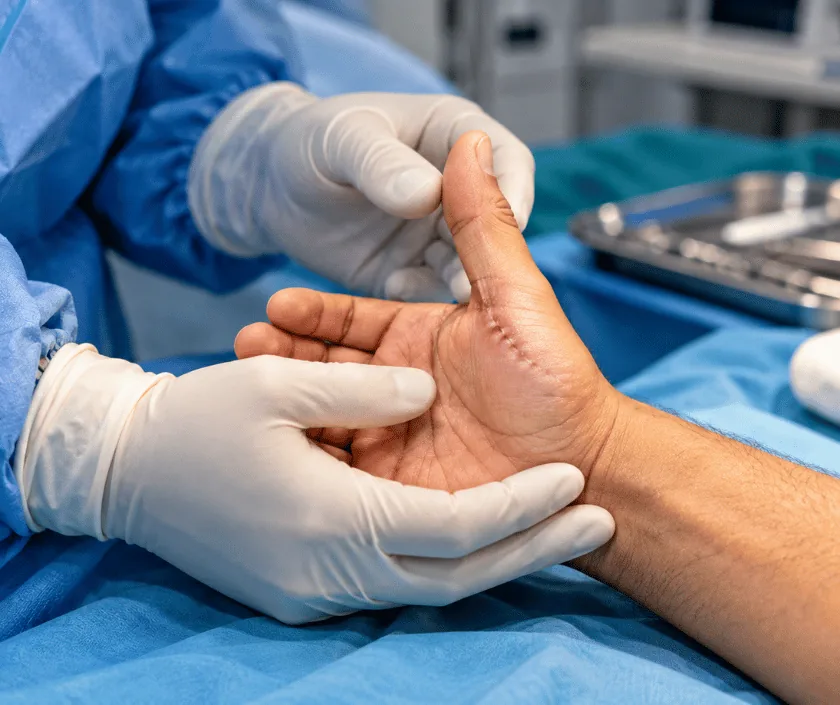
Thumb reconstruction rebuilds a missing or badly damaged thumb so the hand can pinch and grip again. Surgeons may deepen the web space, lengthen the remaining bone, move a finger into the thumb position, or transfer a toe with its own vessels. Which route suits you depends on how much thumb is left, the original injury and your daily needs.
The thumb sits apart from the fingers and swings across to meet them. That single movement, called opposition, is what lets you hold a pen, turn a key or lift a cup. When the thumb is lost or badly crushed, the hand can still form a hook grip, but fine pinch becomes very difficult and most daily tasks slow down.
Reconstruction is not one operation. It is a group of techniques chosen to suit what remains. Where most of the thumb is present, deepening the space between thumb and index finger can free up movement. Where length is short, bone may be gradually lengthened with a small frame, or bone graft added. If the thumb is missing near its base, a finger can be moved across into the thumb position. In selected cases a toe is transferred with its artery, vein and nerve so the new thumb can feel and move.
Your surgeon examines the whole hand, checks circulation and sensation, then discusses which route fits your work and your goals before anything is planned.
Reconstruction suits people whose hand function is limited by a missing or unusable thumb and who can commit to a long rehabilitation. A careful assessment always comes first.
You are examined in clinic, with imaging of the bones and a check of circulation and sensation. The plan, the likely number of stages and the recovery timeline are explained before you decide anything.
Most procedures use a regional block that numbs the arm, sometimes combined with general anaesthesia. The limb is cleaned, a tourniquet applied, and the team confirms the plan again in theatre.
Depending on what was agreed, the web space is deepened, bone is lengthened or grafted, a finger is moved into position, or a toe is transferred with its vessels joined under a microscope.
Skin is closed or resurfaced with a graft or flap. Plaster or a splint holds the new thumb in a safe position, and a small drain is sometimes left for a day.
Where tissue was transferred with its blood supply, nurses check colour, warmth and refill regularly through the first days so any circulation problem is picked up quickly.
The hand stays elevated and the dressing is left undisturbed. Pain relief is given regularly. After a flap or toe transfer, circulation is checked around the clock.
Dressings are changed and stitches reviewed. Gentle therapy often begins for the uninjured joints, while the reconstructed part stays protected in its splint.
Bone healing is reviewed and the splint is usually adjusted or removed. Active movement and light pinch exercises begin under guidance from a hand therapist.
Strength and sensation keep improving slowly. Nerve recovery in particular takes many months, and small secondary procedures are sometimes planned around this stage.
A reconstructed thumb is a working thumb, not a copy of the one you lost. Movement is often less than the other side, and sensation returns slowly and only in part. Many people regain enough pinch and grip to go back to their job, although heavy manual work may need adjusting. Appearance improves but stays different, particularly after a toe transfer. Outcome depends heavily on the original injury and on therapy.
Every reconstruction carries risk, and the more complex the transfer the more there is to talk through. These points are covered in detail before consent.
Most healing happens at home, and a few simple habits protect the result that a long operation has bought you.
A prosthesis helps appearance and some tasks, but it cannot feel. Reconstruction aims to give a thumb that senses whatever it touches.
Late reconstruction is common. Lengthening, finger transfer and toe transfer can all be carried out months or years after the original injury.
Walking is usually unaffected. Balance can feel different at first and some people change footwear, all of which is discussed before surgery.
Reconstruction is often staged. Bone, soft tissue and tendon work may happen at separate sittings, with therapy running through all of it.
Elegance Clinic in Surat handles reconstructive hand work with a plan that is explained in plain language before anything is booked. Hand therapy is treated as part of the operation rather than an afterthought.

The right operation for a thumb varies widely, so a single figure would be misleading. After examining the hand and reviewing imaging, the team prepares a written estimate that sets out surgeon fees, anaesthesia, any frames or implants, hospital stay and the expected therapy sessions.
Where the injury followed an accident at work or on the road, insurance or employer cover may apply. Bring your policy documents and any accident paperwork to the consultation so the team can help with pre authorisation.
These are the questions that come up most often in consultation. If yours is not here, send it on WhatsApp and the team will reply, usually the same day.
Ask your question →Cost depends on which technique is used, whether microsurgery is involved and how long you stay in hospital. A written estimate is prepared after your assessment, so you can see surgeon, anaesthesia, hospital and therapy charges before committing.
It is well established surgery performed under anaesthesia with monitoring throughout. Risks include infection, stiffness and failure of a tissue transfer. Careful patient selection, stopping tobacco and close observation of circulation in the first days all reduce them.
Early healing takes a few weeks, but useful function builds over months. Splints protect the repair at first, then therapy gradually restores movement and strength. Nerve recovery is slowest, so feeling in the thumb keeps improving well into the first year.
It will look different from the thumb you had, particularly if a toe was transferred. The aim is a thumb that works: sensible length, stable joints and useful feeling. Most people find appearance matters less once function returns.
Yes. Many reconstructions happen long after the original accident, once scars have settled and the rest of the hand has been assessed. Waiting does not close the door, although stiff joints may need treating before a thumb is rebuilt.
Immediate care focuses on saving tissue and closing wounds. Formal reconstruction usually follows once swelling settles and the wound is healthy. Same day review is still needed if the hand turns cold or pale, or feeling is being lost.
Your hand is examined for movement, feeling and circulation, and imaging is reviewed. Realistic options are explained with their trade offs, along with recovery time and therapy needs. You leave with a written plan and estimate rather than a decision on the spot.
Each technique below has its own page explaining how it works and when it is chosen.
Seeing patients from across the city and beyond: read about the practice on the plastic surgeon in Surat page, or check what a written estimate covers on the costs and insurance page.
