Loss of the ulnar nerve leaves the small hand muscles silent, so the little and ring fingers curl into a claw. Correction rebalances the finger using a working tendon, restoring position and grip rather than repairing the nerve.
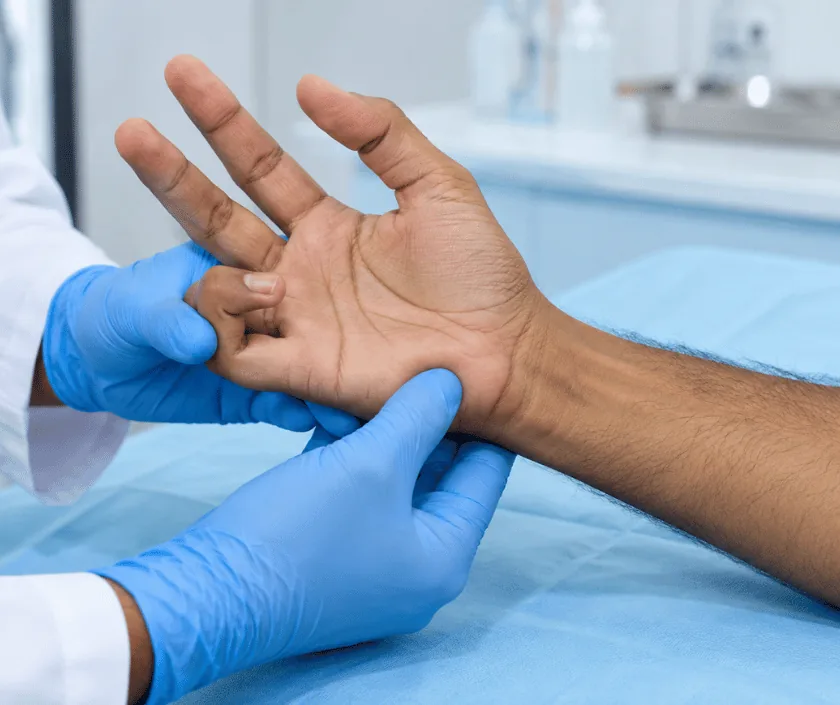
Claw hand follows ulnar nerve palsy, when the small muscles inside the hand stop working and the long tendons pull the fingers into a hook. Correction uses a tendon transfer to rebalance the finger so it straightens and grips properly again. The operation restores movement and position, and it does not repair the damaged nerve.
Fingers move through a partnership. Long muscles in the forearm bend and straighten them, while small muscles inside the palm control the knuckles and keep the movement smooth and sequential. When the ulnar nerve stops supplying those small muscles, the partnership breaks. Knuckles drift backwards, the joints beyond them curl, and the little and ring fingers take on a hooked, clawed shape.
Function suffers in a particular way. Opening the hand flat becomes difficult, so reaching around a cup or picking up a plate turns awkward. Grip loses power because the fingers close out of order, catching the object with the tips before the palm ever meets it.
Correction restores balance rather than nerve supply. A working tendon is redirected so that it holds the knuckle in the right position while the finger straightens, which lets the long tendons work in the correct sequence again. Because the transferred muscle already has its own healthy nerve, movement returns within months instead of waiting on nerve regrowth.
Correction suits people whose clawed fingers can still be straightened passively and who have a strong donor tendon available.
Each finger is checked for passive straightening, donor tendons are tested for strength and the pattern of clawing recorded. That assessment decides which transfer is chosen.
A block numbs the arm, and sedation is offered. Small incisions are made in the palm and forearm to reach the donor tendon and the fingers being corrected.
The chosen tendon is detached and divided into slips, one for each clawed finger, then passed along the correct path towards the knuckle.
Every slip is fixed so that it holds the knuckle slightly bent while allowing the finger to straighten fully. Judging tension across all fingers is the delicate part.
Wounds are closed and a splint holds the knuckles bent to protect the transfers. Therapy is planned before you leave the hospital.
The hand rests raised in its splint and discomfort settles with simple medication. Movement of the corrected fingers is not started yet.
Wounds and sutures are reviewed. Splinting stays in place, while the therapist explains the exercises that will begin once protection is reduced.
Support is usually relaxed and active retraining starts. Fingers begin moving in the correct order, though the pattern feels unfamiliar at first.
Most patients grip and open the hand far more comfortably. Strength and control keep improving as the movement becomes automatic.
Correction usually improves finger position and grip noticeably, particularly when the joints were supple beforehand. Full strength and the fine independent finger control provided by the small muscles are not restored, since a single transferred tendon cannot replicate several muscles. Feeling on the little finger side stays as it was, because the nerve is untouched. How much benefit you gain depends greatly on therapy and on how consistently the exercises are done.
Balancing a hand is delicate work, and a few problems are worth knowing about before surgery.
The first weeks are about protection, and the months after that are about retraining.
Sensation depends on the nerve, which is not repaired here. Only the position and movement of the fingers are changed.
Without the small muscles, clawing generally persists or worsens. Passive stretching keeps joints supple but does not correct the balance.
The transfer improves position and grip, though fine independent finger movement does not come back with it.
A splint holds the fingers while worn and helps prevent stiffness, yet the moment it is removed the imbalance returns.
Claw hand at Elegance Clinic in Surat is treated as a balance problem, so assessment focuses on joint suppleness and donor strength before any operation is offered.

Charges for claw hand correction depend on how many fingers are being rebalanced, which transfer is chosen and how long the operation takes. Splints and the retraining sessions afterwards are genuine parts of the treatment and are counted in the discussion rather than left out. A written estimate is given after your assessment, covering surgery, anaesthesia, hospital charges and the reviews planned. Where clawing followed an injury at work, employer or insurance cover may be available.
These are the questions that come up most often in consultation. If yours is not here, send it on WhatsApp and the team will reply, usually the same day.
Ask your question →The figure depends on how many fingers need rebalancing, which tendon is transferred and the theatre time involved. Splints and therapy also count towards the total. A written estimate is given once your hand has been assessed.
Correction is a routine reconstructive procedure carried out under a block that numbs the arm. Infection, adhesions and a transfer that needs adjusting are the recognised concerns, and each is discussed with you before consent is taken.
Splinting continues for several weeks while the transfers heal, then active retraining begins. Most people manage daily tasks comfortably within a few months, and strength keeps improving for a good while after that.
Position usually improves a great deal, so the hand opens flat and grips in the right sequence. Fine independent finger movement does not come back, because one tendon cannot replace several small muscles.
Not from this operation. Correction changes tendon balance rather than nerve supply, so numbness on the little finger side stays the same and that skin still needs protecting from heat and sharp edges.
Usually once nerve recovery is no longer expected and while the finger joints can still be straightened passively. Delaying until the joints stiffen reduces what correction can deliver, so timing is reviewed at each visit.
Passive straightening is tested finger by finger, donor tendon strength is measured and the clawing pattern is recorded. Options are then explained, along with what will and will not change, and a written estimate.
Seeing patients from across the city and beyond: read about the practice on the plastic surgeon in Surat page, or check what a written estimate covers on the costs and insurance page.
