A cross leg flap borrows tissue from the healthy leg to cover a wound on the injured one. Because the two legs stay joined for several weeks, this is an operation you need to understand fully before agreeing to it.
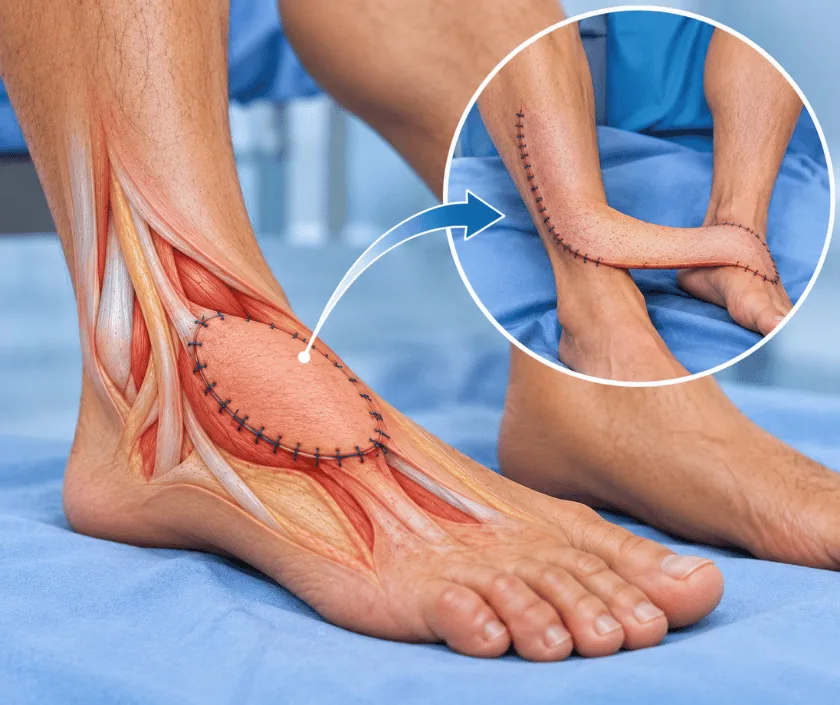
A cross leg flap is a staged reconstruction. Skin and fat from the healthy leg are lifted and stitched onto the wound of the injured leg, while the two limbs are held together in a frame or cast. After roughly three to four weeks the flap grows a new blood supply and the connection is divided in a second operation.
Most modern reconstruction uses tissue joined to blood vessels at the wound itself. Sometimes that is not possible, because the vessels in the injured leg have been damaged or blocked. A cross leg flap offers an alternative. Tissue is raised from the healthy calf, kept attached to it, and stitched across onto the wound of the other leg.
Both legs are then held in position with a frame, plaster or external fixator so the flap cannot pull away. Over the following weeks the flap develops fresh blood vessels from the wound bed it is sitting on. Once that supply is reliable, usually after about three to four weeks, a second operation divides the bridge of tissue and returns the healthy leg to its normal position.
This period of immobility is the part patients underestimate. Sitting up, turning in bed and using a bedpan all become difficult, and the knees and ankles stiffen. Physiotherapy starts as soon as the legs are separated, and it continues for months afterwards.
This method suits people who genuinely need it and who feel able to cope with weeks of restricted movement.
The staged plan is explained in detail, including how the legs will be positioned and for how long. Photographs and diagrams are used, and family members are encouraged to be present.
Dead and infected tissue is removed from the injured leg so the flap will sit on a clean, healthy bed capable of growing new vessels.
A flap of skin and fat is lifted from the healthy calf, kept attached at its base, and stitched onto the wound. The donor area is closed or covered with a graft.
Both legs are secured with plaster, a frame or an external fixator. Comfort, pressure areas and skin care are checked daily during this period.
After around three to four weeks the bridge of tissue is divided under anaesthetic, the flap is shaped into the wound and the healthy leg is released.
Both legs are fixed in position and rest is essential. Flap colour is checked frequently. Nursing help is needed for almost everything, and pain relief is given regularly.
Life continues in the joined position. Skin care, chest exercises and upper body movement matter, since pressure sores and stiffness are the main hazards.
The flap is divided in a second operation. Both legs are freed, dressings are changed and physiotherapy begins in earnest within days.
Knee and ankle movement continues to improve with therapy. The flap softens, and any procedure to reduce bulk is considered only after this point.
The flap usually gives solid, healed cover, which is the main aim. Appearance is a secondary consideration, and the tissue often looks bulky and different in colour. Stiffness in the knees and ankles is common after the weeks of immobility and needs sustained therapy. Recovery can vary widely, and the whole process from first operation to steady walking takes months.
The staged nature of this operation brings risks beyond those of flap surgery alone, so read these carefully.
Comfort and skin protection matter most during the joined period, then movement work takes over once the legs are separated.
The connection usually stays for around three to four weeks. Knowing that in advance is part of giving proper consent.
It is used less often than before, but it remains valuable when the injured leg has no vessels for microsurgery.
Joints stiffen during immobility. Regaining movement takes months of steady therapy rather than days.
The donor area leaves a scar and needs its own healing, so both legs require care afterwards.
Because this operation asks so much of the patient, consent is taken slowly and with the family present. Elegance Clinic makes sure the joined period is understood before anything is scheduled.

Because two operations and a long stay are involved, the estimate covers both stages, the frame or plaster used to hold the legs, nursing care during the joined period and the physiotherapy that follows. These items are set out separately so nothing is hidden inside a single figure.
A written estimate is prepared after assessment. If insurance or an accident claim applies, the office will explain which documents are usually needed and how approval tends to proceed.
These are the questions that come up most often in consultation. If yours is not here, send it on WhatsApp and the team will reply, usually the same day.
Ask your question →Usually around three to four weeks, though the surgeon may extend it if the flap needs more time to build its new blood supply. That waiting period is fixed by biology rather than convenience, so it cannot safely be shortened.
A free flap needs healthy vessels at the wound to connect to. When injury or earlier surgery has damaged those vessels, microsurgery is not possible. In that situation the cross leg flap brings its own blood supply from the other leg.
A written estimate is given after assessment and covers both operations, the frame or plaster, the hospital stay and physiotherapy. Because the stay is longer than for a single flap, the estimate is discussed carefully with the family beforehand.
Pain is expected after each operation and is treated with regular medication. Most people describe the joined weeks as uncomfortable and restrictive rather than severely painful. Any pain that increases instead of settling is reviewed promptly.
Movement is very limited below the waist, but you can move your arms, do breathing exercises and shift position with help. Nursing staff assist with washing and toileting. That support is planned before surgery rather than improvised.
Stiffness is common after weeks of being held still, and it affects both legs. Physiotherapy begins soon after the legs are separated and usually restores useful movement, though it takes months of consistent work.
Take time, ask questions and bring family to the consultation. The alternatives, including what happens if the wound stays open, are explained fully. Nobody should agree to this operation without understanding the joined period.
Each technique below has its own page explaining how it works and when it is chosen.
Seeing patients from across the city and beyond: read about the practice on the plastic surgeon in Surat page, or check what a written estimate covers on the costs and insurance page.
