The lower leg has very little spare tissue. Skin sits almost directly on bone along the shin, so an open fracture, a burn or a slow healing ulcer can leave bone, tendon or metalwork exposed with nothing to cover it. Those structures will not heal under a dressing, and left uncovered they become infected.
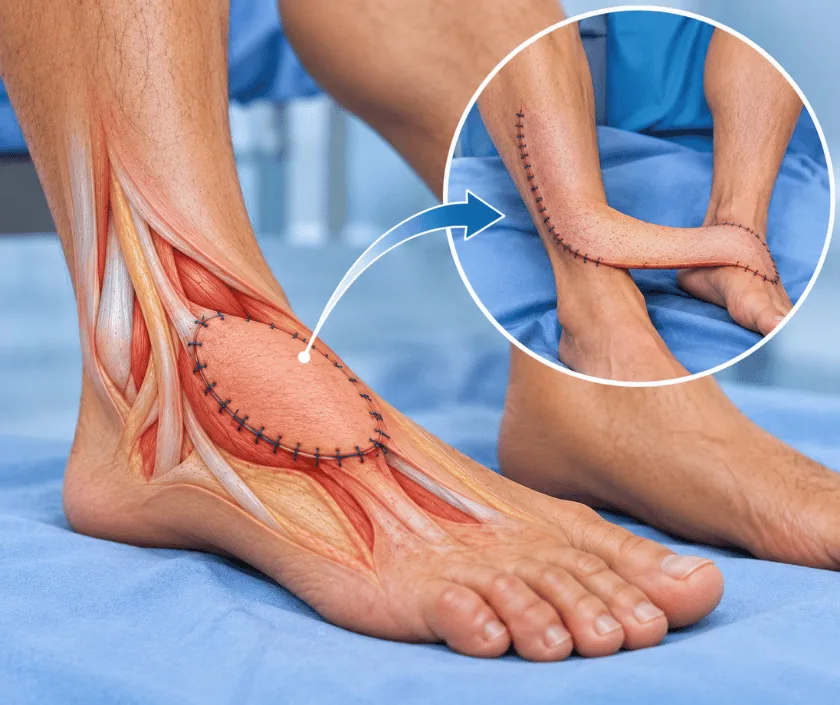
Soft tissue coverage is the surgery that puts living tissue back over them. Choices form a ladder that runs from dressings and negative pressure therapy at the simple end, through skin grafts and local flaps, up to tissue moved from elsewhere in the body and joined to leg vessels under a microscope. The lowest step that will heal the wound reliably is the one preferred, because simpler cover means a shorter operation, fewer complications and no second large wound elsewhere on the body. Which rung suits a particular leg depends on the site, the depth and how healthy the surrounding tissue is.
Each rung suits a particular kind of wound. Choosing higher up the ladder than the wound needs adds risk without adding benefit.
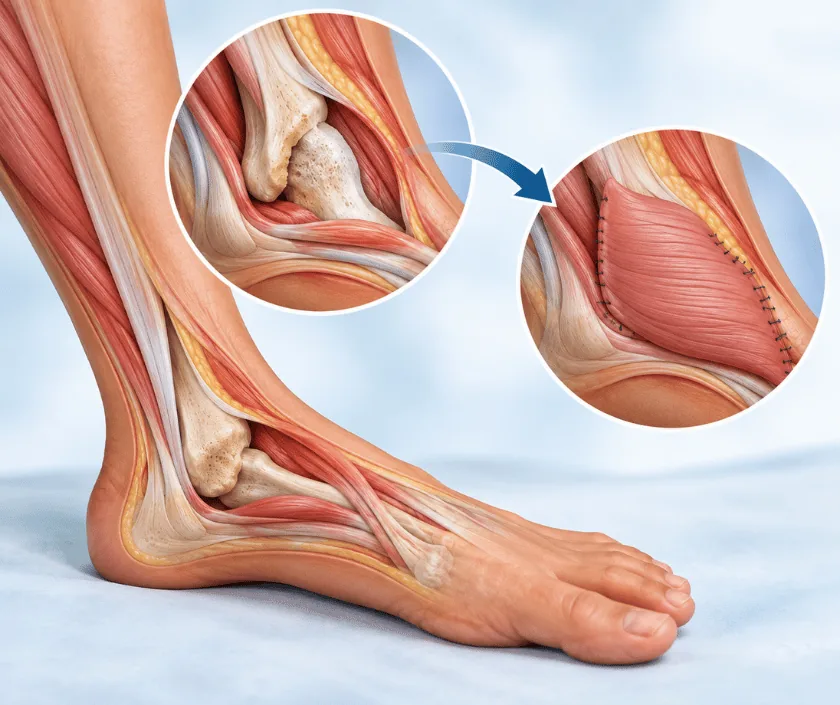
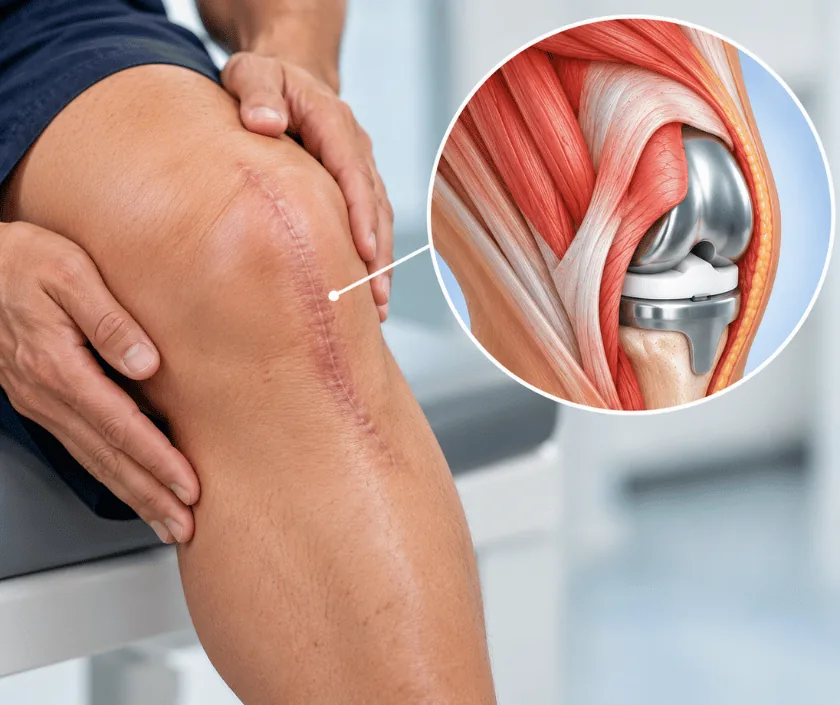
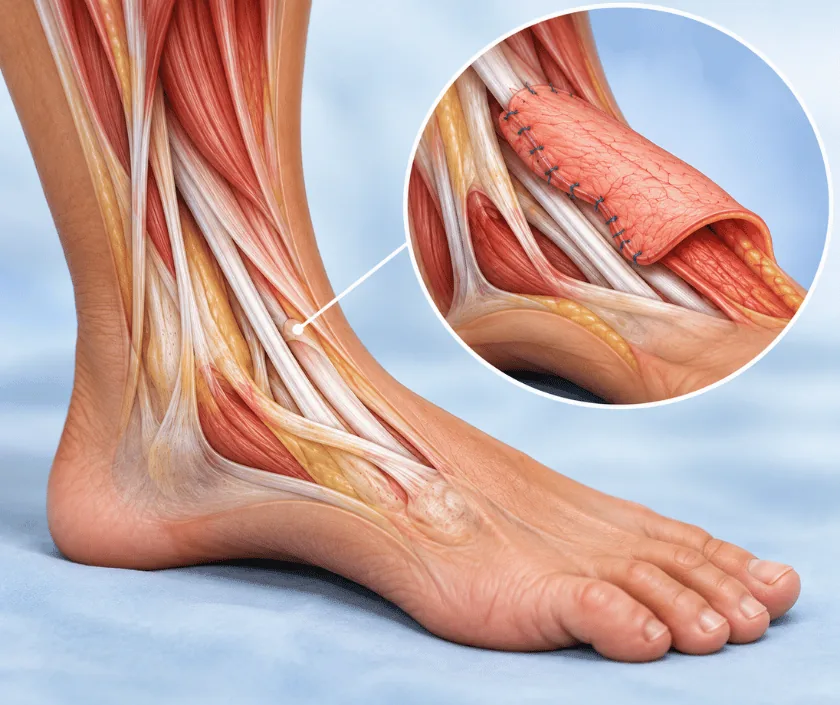
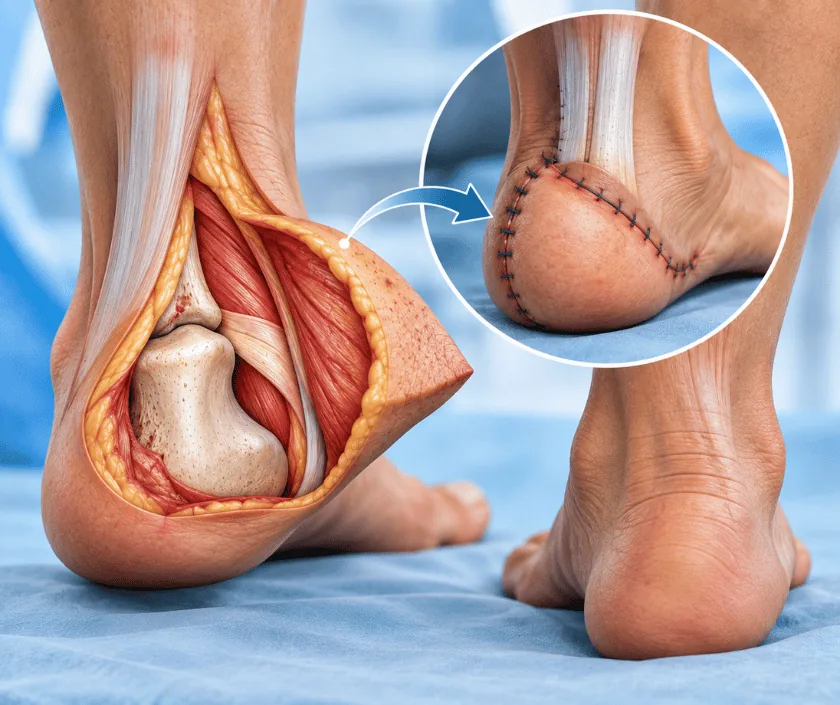
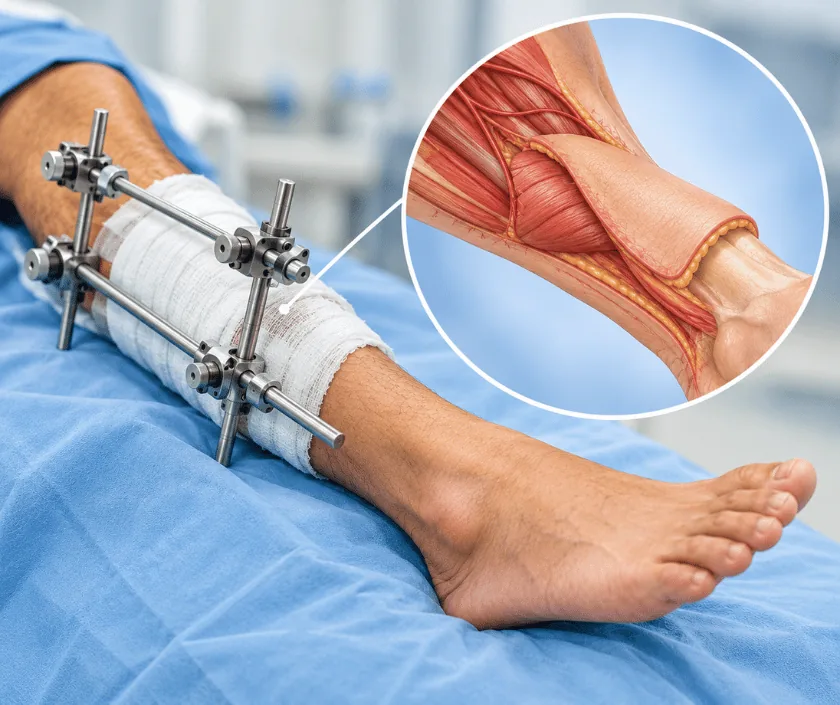
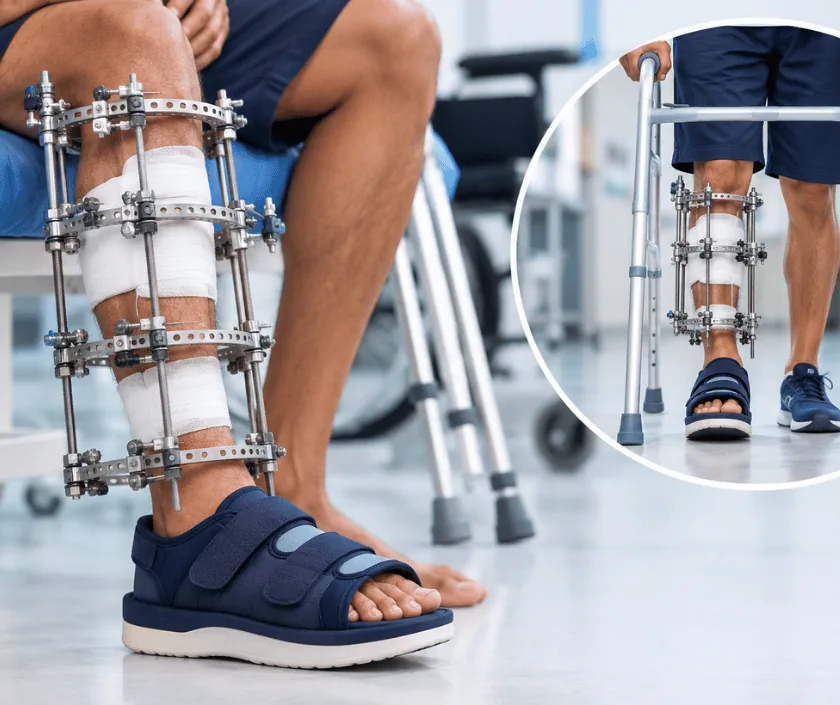
Bone exposed by a fracture does better when it is covered early, because delay lets bacteria settle into the wound. Cleaning the wound thoroughly comes first, then cover is planned within days rather than weeks wherever the patient is fit enough.
Cover alone will not settle an infection sitting in the bone beneath. Dead bone is removed, samples are sent for culture and antibiotics are guided by the results. Muscle flaps are often chosen here because they cope with infection well.
Every flap and graft leaves a second wound. Thigh grafts sting and weep for a couple of weeks before healing. Larger donors leave a scar and sometimes mild weakness. That trade off is weighed carefully before the higher rungs are chosen.
Legs are kept elevated at first while the new cover settles, then dependency is built up slowly under guidance. Swelling on standing is normal for months and improves with compression. Physiotherapy restores ankle movement and confidence on stairs.
Leg wounds can deteriorate quickly. Any of the following should be reviewed the same day.
These answers cover cost, safety, healing time and how the leg looks and works afterwards.
Ask your question →Dressings and a skin graft sit at the lower end, while a free flap with a longer hospital stay is considerably higher. Bone surgery, antibiotics and repeated theatre visits all add to the total. An itemised estimate is shared before admission.
These operations are routine in specialist units, though the lower leg is less forgiving than other sites. Infection, partial loss of the flap or graft, and clotting in joined vessels are the recognised risks. Smoking and diabetes raise all of them.
A graft usually settles within two to three weeks. Flap surgery means a hospital stay and a period of elevation, then a gradual return to walking over one to two months. Swelling and firmness improve for a year, and recovery can vary.
Covered wounds tend to look patched rather than smooth, with a visible colour and texture difference where tissue was moved. Bulk settles over months, and thinning or scar revision can improve the shape later. Function is prioritised over appearance.
Shallow wounds with a healthy base often can. Wounds with exposed bone, tendon or metal will not close that way, and waiting invites infection that costs far more to treat. This is why early assessment of a deep leg wound is worthwhile.
Occasionally, yes. When a foot has no sensation, when bone loss is extensive, or when salvage would mean many operations for a leg that stays painful, a well made amputation with a good prosthesis returns people to work sooner. The discussion is always honest.
The wound is examined and photographed, pulses in the leg are checked and imaging is reviewed. Swabs and blood tests may be arranged. Options along the ladder are explained, along with the donor site, the likely stay and the expected timeline.
