An open fracture leaves bone and deep tissue exposed to the outside world. Covering that wound early with healthy, well supplied tissue protects the bone, lowers the risk of infection and gives the fracture a fair chance to unite.
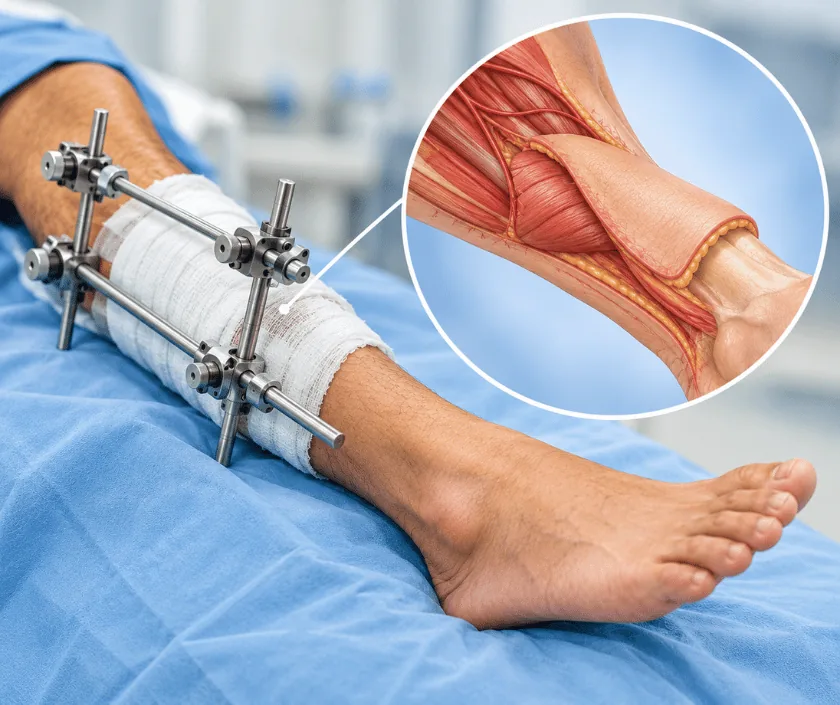
Soft tissue coverage for an open fracture means bringing healthy skin, fat or muscle over exposed bone so the wound can close. Timing matters, because the risk of infection rises the longer bone stays uncovered. Plastic surgery and orthopaedic teams plan the bone fixation and the cover together, often in the same sitting or within a few days.
An open fracture is a break where the skin over the bone has torn, so the fracture is connected to the outside. Dirt, bacteria and dead tissue can sit against bare bone, and bone without a covering does not heal well. The aim of coverage surgery is easy to describe. Clean the wound thoroughly, then place living tissue with its own blood supply over the exposed bone and any metalwork.
Cleaning usually comes first. The orthopaedic team removes contaminated and dead tissue, washes the wound and stabilises the fracture with a frame, plate or nail. Once the wound looks clean and the tissue edges bleed healthily, the plastic surgery team brings in cover. That may be a local flap of nearby muscle, a flap moved on known blood vessels, or a free flap where tissue is taken from elsewhere on the body and its vessels are joined under a microscope.
Which option suits you depends on where the defect sits, how large it is, and which vessels in the leg remain healthy. A scan of the leg vessels sometimes guides that choice.
Coverage surgery suits people whose fracture has been stabilised and whose wound can be made clean. Fitness for a longer anaesthetic also matters.
Orthopaedic and plastic surgery teams examine the wound together, review the X ray images and agree on how the bone will be held and how the wound will be covered.
Under anaesthetic, contaminated and dead tissue is removed and the wound is washed. This may be repeated once or twice until the tissue looks healthy and bleeds well.
Depending on the site and size of the defect, a local flap, a flap on named vessels or a free flap is planned. Vessel imaging is arranged when the choice is not obvious.
Tissue is raised with its blood supply, moved over the exposed bone and stitched in. For a free flap the artery and vein are joined under a microscope.
The flap is checked frequently in the first days for colour, warmth and refill, because an early problem with blood flow can often be corrected.
The leg is elevated and kept still. Nursing staff check the flap regularly. Pain relief and antibiotics are given, and you may not be allowed to sit the leg down yet.
Dressings are changed and the donor site is reviewed. Gentle movement of the hip and knee often starts. Many patients go home once the flap is settled and safe.
Bone healing is reviewed on imaging. Weight bearing is increased slowly on the orthopaedic team advice. Swelling still comes and goes through the day.
The flap softens and thins over months. Scar care and physiotherapy continue, and further small procedures are sometimes planned to refine shape.
A successful flap gives stable, healed cover over the bone. It will not match the surrounding skin exactly, and early on it often looks bulky and different in colour. Contour usually improves over months, and thinning procedures can help later. Recovery can vary a great deal, because the fracture itself, the state of the vessels and your general health all shape the pace of healing.
This is major surgery on an already injured leg, so risks are real and worth discussing openly before you consent.
Once you are home the flap still needs protection, and small habits make a noticeable difference over the following months.
Grafts need a bed with a blood supply. Bare bone rarely supports one, so a flap is usually needed.
Waiting works against you. Bone left uncovered is more likely to become infected, which then delays union.
Flap tissue is borrowed from elsewhere, so colour and thickness differ. It settles with time but stays visibly different.
A small skin opening can hide a large zone of crushed tissue underneath, which is what really decides the plan.
Open fracture wounds are managed alongside the orthopaedic team, so the bone plan and the cover plan are made in the same conversation rather than one after the other. Families are told plainly what each stage involves.

Cost depends on the type of flap, the number of cleaning operations needed before cover, the length of hospital stay and whether intensive monitoring is required. An estimate is prepared in writing after the leg has been examined and the imaging reviewed, so the family can see what is included.
Many injuries of this kind arrive through accident cover or an employer scheme. The team will tell you which documents an insurer usually asks for, and where approval is likely to take time.
These are the questions that come up most often in consultation. If yours is not here, send it on WhatsApp and the team will reply, usually the same day.
Ask your question →Earlier is generally better. Once the wound is clean and the fracture is stable, cover is planned without unnecessary delay, because bacteria settle on exposed bone quickly. The exact timing depends on how contaminated the wound was and how well the tissue looks after cleaning.
Sometimes, but often not. Many wounds need one or two cleaning operations before the tissue is healthy enough to accept a flap. Planning for more than one visit to theatre is realistic, and it usually leads to a safer result than rushing cover onto a dirty wound.
For flap cover after an open fracture the band is Rs 1.8L to Rs 4.5L, and the final figure is case based. It shifts with the type of flap, the number of theatre visits and the length of stay. A written estimate is given after assessment.
Usually several days, and sometimes longer if the flap needs close watching or the fracture plan changes. The first few days matter most, because that is when blood flow problems can be spotted and corrected. Discharge happens once the flap is settled.
It can be done, but sugar control needs attention first. Poorly controlled diabetes slows healing and raises the chance of infection. Blood sugars are usually reviewed and improved before surgery, and the physician stays involved through the admission.
Many people walk well again, though it takes time and the fracture itself often decides the outcome more than the flap does. Physiotherapy is important. Recovery can vary, and stiffness in the ankle or knee is common in the early months.
Bring all X ray images and scan reports, the discharge summary from any earlier admission, a list of your medicines and details of any insurance or accident claim. Photographs of the wound taken earlier are useful if dressings are already in place.
Each technique below has its own page explaining how it works and when it is chosen.
Seeing patients from across the city and beyond: read about the practice on the plastic surgeon in Surat page, or check what a written estimate covers on the costs and insurance page.
