A nodovenous shunt joins a lymph node directly to a nearby vein, so lymph collected in that node passes straight into the bloodstream. It has been used particularly in filarial leg swelling, where nodes remain congested behind a blocked route.
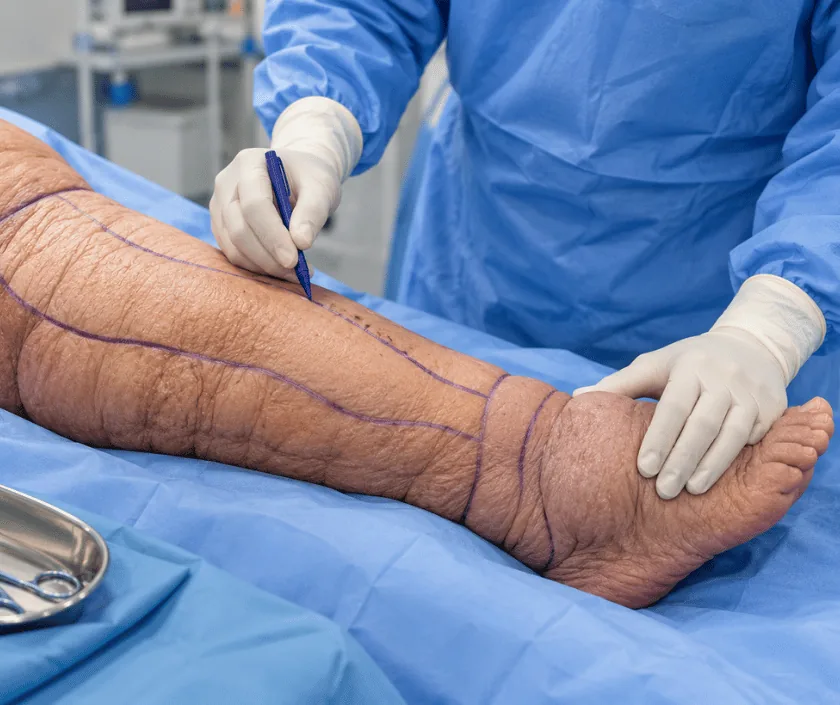
A nodovenous shunt is an operation in which a lymph node in the groin is cut across and stitched into an adjacent vein, creating a direct outlet for lymph that cannot pass upward. It is used mainly in filarial lymphedema of the leg where swelling is still fluid predominant. Compression therapy continues after the operation.
Lymph nodes in the groin collect fluid from the whole leg before passing it upward into the abdomen. When that upward route is blocked, whether by filarial damage, repeated infection or scarring, those nodes stay congested and the leg below them fills. A nodovenous shunt uses the fact that a large vein sits close by. The node is divided so its cut surface is exposed, then stitched into an opening made in the vein, and lymph drains directly into the bloodstream.
Filarial lymphedema is the setting where this operation has been used most. The infection damages lymphatic channels over years, often with repeated attacks of fever and inflammation, and the pattern of blockage tends to sit above the groin nodes. Creating an outlet at that level can relieve pressure in the limb below.
Selection follows the same rule as other drainage operations. Limbs where the swelling still pits and softens with elevation have fluid to drain. Limbs that have become firm, with thickened skin and heavy fatty tissue, have less to gain, because a drainage channel cannot remove tissue that is no longer fluid.
This operation is aimed at a specific pattern of blockage and a specific type of limb. Assessment establishes both before it is offered.
Both limbs are measured, the skin examined and the pattern of swelling recorded. Infection history is reviewed, and imaging may be used to see where the blockage sits.
Any active cellulitis is settled, fungal infection between the toes treated and filarial infection managed medically before an operation is planned.
Through an incision in the groin, a congested lymph node and a suitable nearby vein are identified. Surrounding tissue is handled gently to protect remaining channels.
The node is divided and its cut surface stitched into an opening made in the vein wall, so lymph can pass directly into the bloodstream. Flow is checked before closure.
The wound is closed and dressed, and compression is restarted in a planned way as healing allows, usually beginning within the first weeks.
You are usually in hospital for a short stay. The groin wound is sore, walking is encouraged early and the leg is elevated when resting.
Wound review takes place and sutures are managed. Many patients manage light activity at home, avoiding prolonged standing.
Compression is fully re established by now. Fresh measurements are compared with the baseline taken before surgery.
Reviews assess whether the leg is holding a smaller size, how often infections occur and whether garment strength needs changing.
Outcomes vary and the operation is not a substitute for daily care. Many patients find the leg easier to control with compression and notice fewer heavy days, while some see a clear reduction in size. Shunts can also narrow or close over time, in which case swelling returns. Limbs already firm with fat and fibrous tissue improve least, whatever the drainage created.
Risks include those of any groin operation, along with the particular possibility that the shunt itself stops working.
Wound care and a return to compression are the two priorities in the weeks after surgery.
Drainage is improved at one level while the wider lymphatic damage remains. Compression, skin care and infection control continue afterwards.
Treatment for the infection is important, yet it does not undo lymphatic damage already done. Physical therapy and sometimes surgery are needed as well.
The operation targets a particular pattern of blockage with congested groin nodes. Firm, fatty limbs are usually better served by reduction surgery.
Stopping compression is the commonest reason swelling creeps back after any lymphedema operation, including this one.
Filarial limb swelling is a familiar problem in this region, and Elegance Clinic in Surat treats it as a long term condition rather than a one time operation. Dr. Ashutosh Shah explains where surgery fits alongside therapy and infection control.

The cost of a nodovenous shunt depends on theatre time, the type of anaesthesia used, length of hospital stay and any treatment needed for infection beforehand. Compression garments and therapy afterwards are separate items, and they continue long after the wound has healed.
Insurance cover varies with the policy and with the documented cause of the swelling, so it is assessed case by case. A written estimate is provided before admission so the whole picture is clear from the start.
These are the questions that come up most often in consultation. If yours is not here, send it on WhatsApp and the team will reply, usually the same day.
Ask your question →It depends on theatre time, anaesthesia, hospital stay and any treatment needed for infection beforehand. Garments and therapy afterwards are additional and continue long term. A written estimate is provided after assessment and before admission, so the full picture is clear.
It is a groin operation carried out under spinal or general anaesthesia, with the usual risks of wound infection, bleeding and delayed healing. Those risks are higher in a limb with poor drainage, so infection is treated and skin condition improved first.
Most patients have a short hospital stay and return to light routine within about two to three weeks, avoiding prolonged standing. Compression is restarted as the wound heals. Heavier physical work waits until the team confirms it is reasonable.
Usually not. Many patients find the leg lighter and easier to control with compression, and some see a clear reduction. Longstanding legs that have become firm improve least, since a drainage channel cannot remove fatty or scarred tissue.
Not always. Shunts can narrow or close with time, and swelling then gradually returns. That possibility is discussed before surgery, and regular review with measurement is how a decline in drainage is picked up early.
Yes. Medical treatment of the infection and control of repeated cellulitis attacks come first, because operating on an inflamed limb invites wound problems. Once things have settled, surgery can be planned with a better chance of healing well.
Yes. A shunt improves drainage at one level while the wider lymphatic damage remains. Compression, skin care and treatment of any infection continue, and stopping them is the usual reason swelling creeps back.
Seeing patients from across the city and beyond: read about the practice on the plastic surgeon in Surat page, or check what a written estimate covers on the costs and insurance page.
