Surgery for lymphedema is offered when compression and therapy have been followed properly and the limb is still heavy, still swelling or still catching infections. It is not a replacement for conservative care. The operations work best when they are added to a routine that is already in place, and garments are usually continued afterwards.
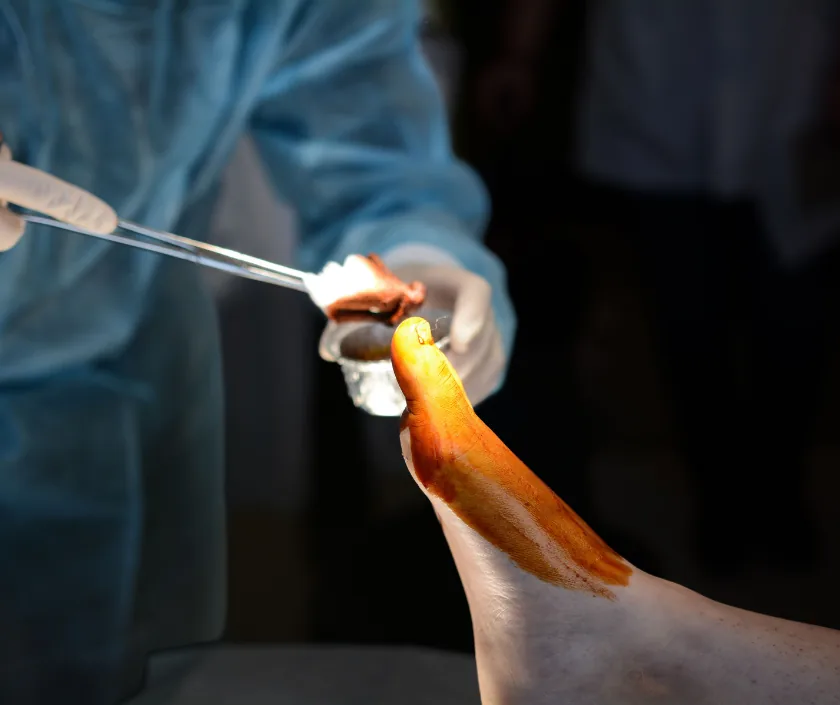
Two broad approaches exist. The first tries to restore drainage, either by joining tiny lymph channels to nearby veins or by transplanting working lymph nodes with their blood supply into the affected area. These suit limbs where the swelling is still mostly fluid. The second removes the bulk that fluid has left behind, using suction of the fatty tissue or, rarely, direct removal of skin and fat. Choosing between them depends on scans of lymphatic flow and on how soft the limb feels. Both routes ask that the swelling is already under reasonable control.
Each operation targets a different problem, so the scan findings and the feel of the limb matter more than the size of the swelling alone.
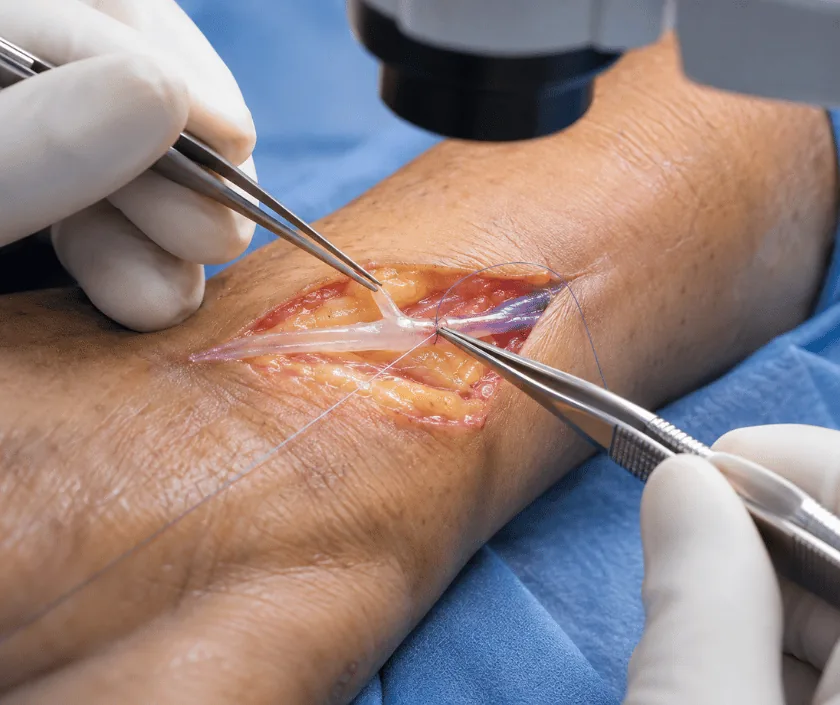
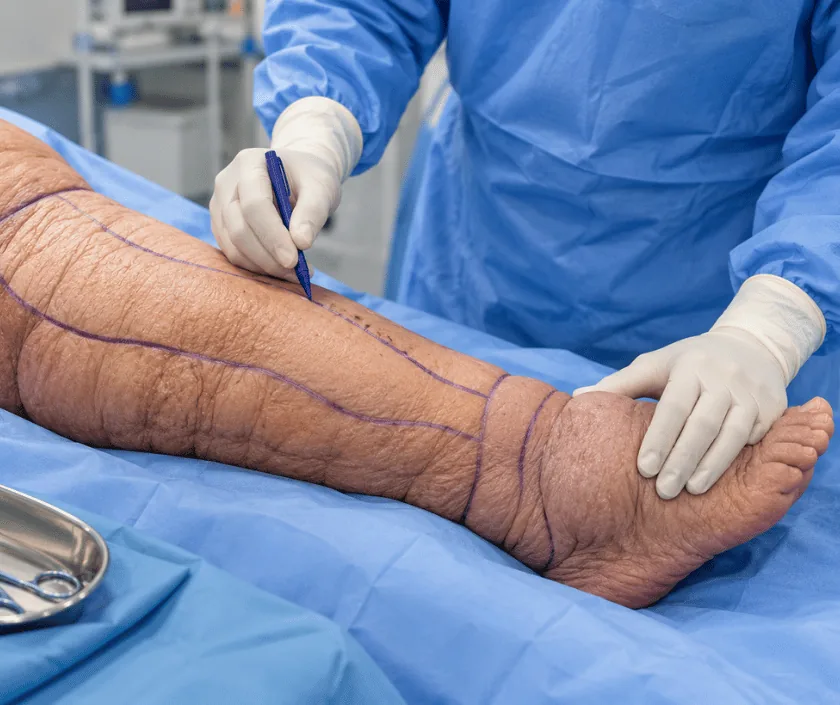
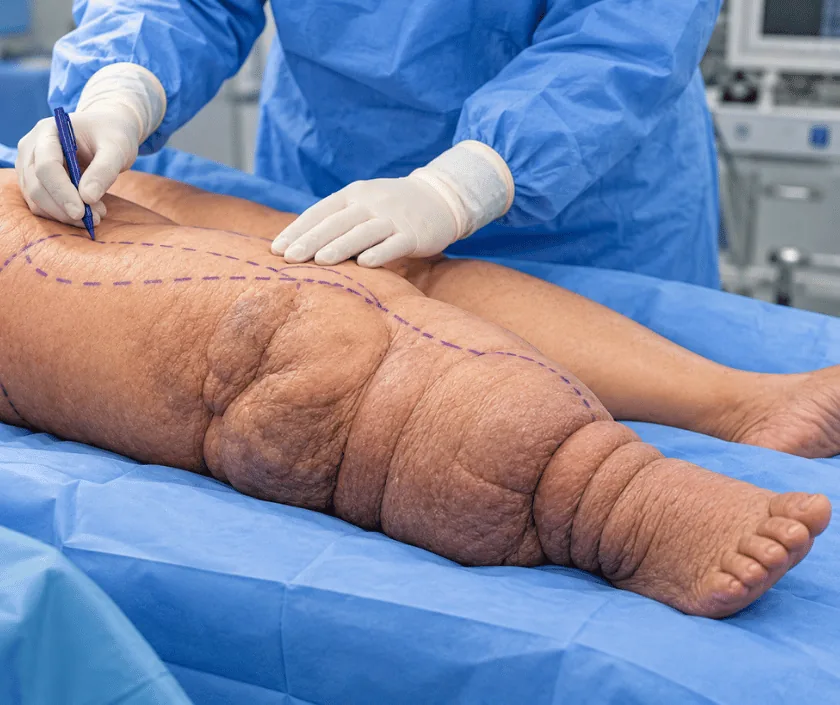
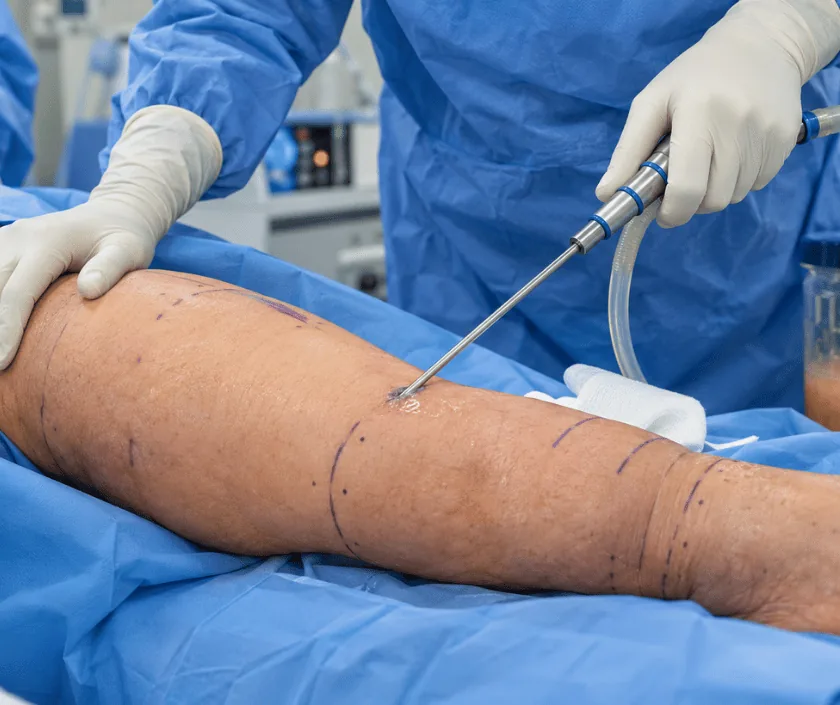
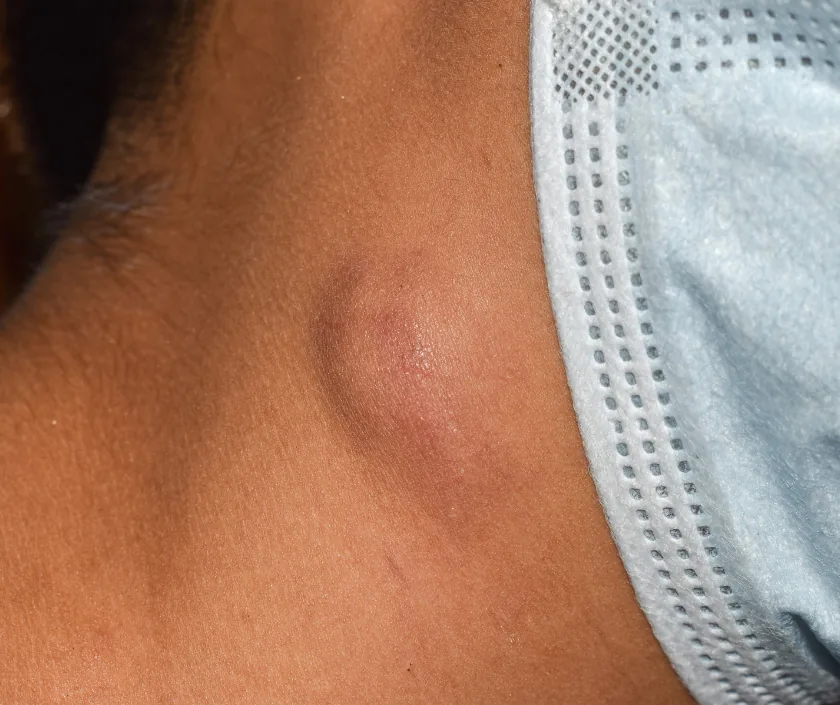
A dye study using near infrared light shows whether lymph channels still pump, while other scans map where fluid collects. These findings separate limbs that may respond to drainage surgery from those better served by removing fatty bulk.
Channels and vessels of this size are joined under a microscope with stitches finer than a hair. The operation is slow and precise, which is why it takes hours even though the incisions are small and the scars usually settle well.
Compression continues after surgery, often for many months, and measurements are repeated at each review. Therapy sessions carry on during that period. Improvement is judged on volume, heaviness, garment fit and how often skin infections occur.
When lymph nodes are moved, the site they came from is chosen and mapped carefully to protect its own drainage. That area is monitored afterwards, and you are taught the same skin care habits used for the treated limb.
After lymphedema surgery a few changes should be reported rather than watched at home.
These arise once therapy alone has stopped giving further improvement.
Ask your question →The estimate depends on which operation is planned, the length of theatre time, whether microsurgery is involved and the hospital stay. Scans are billed separately. A written breakdown is given after assessment, and insurance cover differs widely between policies.
These are established operations carried out under anaesthesia with the usual surgical risks of bleeding, infection and delayed healing. Microsurgical joins can fail to open, and donor sites need care. Your fitness and medicines are reviewed thoroughly beforehand.
Drainage operations use small incisions and many people go home within a few days, while reduction surgery needs longer. Compression restarts early under guidance. Recovery can vary, and light activity is usually resumed well before heavy work.
Reduction operations show change quickly, whereas drainage operations improve heaviness and volume gradually over months. Nobody can predict an exact figure for an individual limb, so progress is tracked with repeated measurements rather than promises.
Suitability depends on how much of the swelling is fluid, what the lymphatic scans show, whether cancer treatment is complete and how consistently conservative care has been followed. Some limbs suit one operation, some suit a combination, and some do better with therapy alone.
Earlier treatment tends to find channels that still work, so a limb assessed while it is soft has more options. That said, an infected limb is never operated on straight away, and an active infection is treated first.
Measurements and photographs are taken, the tissue is felt for firmness, and treatment history is reviewed. Lymphatic imaging is usually arranged before any decision. The realistic gains, the need for continued compression and the risks are then explained.
