A pneumatic pump inflates a sleeve around the limb in a repeating sequence, nudging fluid upward while you sit still. Used sensibly alongside garments and exercise, it can add useful control for patients who cannot attend therapy sessions often.
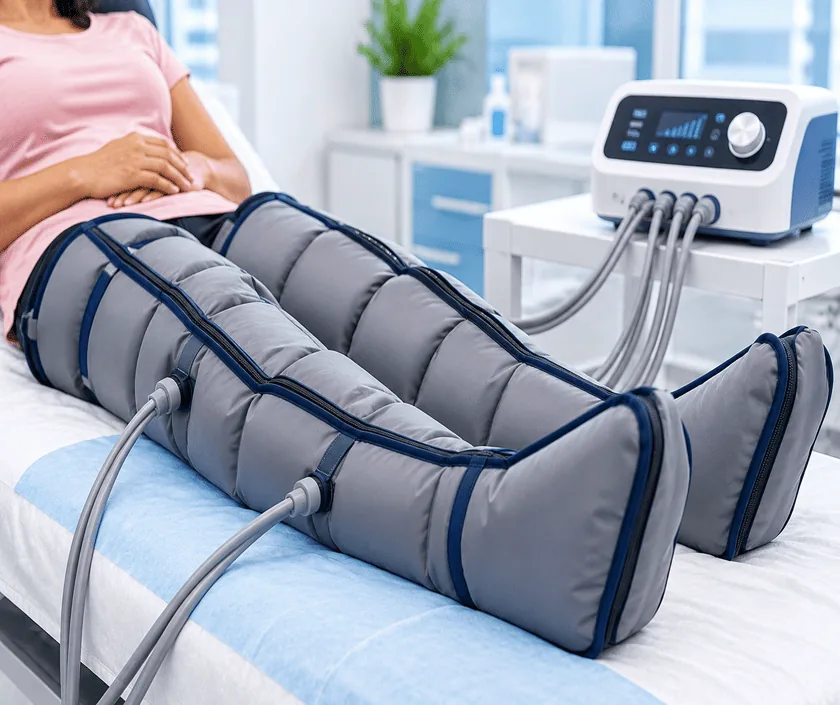
Pneumatic compression uses an electric pump and a chambered sleeve that inflates in sequence from the hand or foot upward, encouraging lymph to move towards the trunk. Sessions usually last under an hour and are done sitting or lying down. The pump supports compression garments and exercise, and is not a replacement for either.
The sleeve of a pneumatic pump contains several chambers running from the hand or foot up towards the shoulder or hip. The machine fills these chambers one after another, so a wave of gentle pressure travels along the limb in the direction lymph should be flowing. Between cycles the sleeve deflates, letting tissue refill before the next wave arrives.
What the pump offers is repetition. A therapist can deliver skilled drainage a few times a week, whereas a pump at home can be used daily, which suits patients who live far from a clinic or cannot take time off work. It also gives people something practical to do for themselves, which many find encouraging during a long treatment.
Its limits matter just as much. Pressure alone moves fluid but does nothing about fat and fibrous tissue, so late stage limbs respond less. Fluid pushed out of a limb has to go somewhere, and when the trunk or groin has not been cleared first, swelling can simply shift there. For those reasons a pump is prescribed with settings and instructions rather than bought casually.
Pumps help a particular group of patients rather than everyone, and the assessment before purchase is what separates a useful device from an expensive one gathering dust.
Circulation, skin, infection history and the stage of swelling are checked. This decides whether a pump would genuinely add anything to the garment and exercise you already use.
A therapist treats the trunk and the area above the limb before pump sessions begin, so fluid moved out of the arm or leg has somewhere to drain.
Sleeve length, chamber number, pressure and cycle time are prescribed for your limb. Higher pressure is not better, and settings are written down rather than left to guesswork.
Early sessions are done with the therapist watching, checking skin afterwards and confirming that swelling is not being pushed above the sleeve.
You use the pump at a set time each day, wear the garment between sessions, and return for review so that settings can be adjusted as the limb changes.
Sessions feel unusual at first as the chambers inflate. Many patients notice the limb is softer immediately afterwards and pass more urine during the first days.
A daily rhythm develops. The garment goes on after each session, since the softening gained tends to fade within hours without compression.
A review compares measurements with the baseline and checks the trunk for any fluid that has been displaced upward.
Settings are revisited, sleeve fit is checked and the honest question is asked of whether the pump is still adding value to your routine.
A pump assists, it does not replace the rest of the programme. Many patients report a limb that feels lighter and measures smaller after regular sessions, yet the effect fades within hours unless a garment is worn between them. Limbs heavy with fat and fibrous tissue change little, since pressure cannot move tissue that is no longer fluid. Expect steady support rather than transformation.
Pumps are safe when prescribed properly, but they cause problems when pressures are set high or the trunk has never been cleared.
These points keep pump therapy useful and stop it becoming a source of new problems.
It cannot. The limb refills within hours of a session, and the garment is what holds the gain through the rest of the day.
Excess pressure can damage skin and drive fluid into the trunk or groin. Prescribed settings are chosen for effectiveness and safety together.
Chamber design, sleeve length and pressure control differ considerably. A device chosen without assessment often fails to fit the limb it was bought for.
Fluid responds to pressure while fat and scar tissue do not, so late stage limbs gain far less from pump therapy alone.
At Elegance Clinic in Surat, a pump is recommended only when it adds something to the plan already in place. Dr. Ashutosh Shah and the therapy team assess the limb first, then set out honestly what the device will and will not do.

Pneumatic compression cost is mostly the price of the device and sleeve, which varies with the number of chambers, sleeve length and build quality. Clinic based sessions are charged per visit instead, which suits patients who want to try the therapy before committing to a purchase.
We give a written estimate after assessment that separates the assessment, any clinic sessions and the device itself, so you can see what is optional and what is essential before spending anything.
These are the questions that come up most often in consultation. If yours is not here, send it on WhatsApp and the team will reply, usually the same day.
Ask your question →Prices vary widely with chamber count, sleeve length and build quality, so the device is the largest part of the total. Clinic sessions can be charged per visit if you would rather try the therapy first. A written estimate follows assessment.
It is safe when the limb has been assessed and the settings prescribed. Infection, a suspected clot, uncontrolled heart failure and poor arterial supply all need addressing first. Sessions are supervised initially so that technique and skin response can be checked.
Sessions usually last well under an hour and are done sitting or lying comfortably. Frequency is prescribed for your limb, most often daily. Longer or more frequent sessions do not speed results and can shift fluid into the trunk.
Many patients notice a softer, lighter limb straight after sessions, with measurable reduction over weeks when combined with a garment. Soft, fluid filled limbs respond best. Where tissue has turned fatty or fibrous, the change is modest whatever the pressure used.
No. The limb refills within hours once the sleeve comes off, so the garment is what protects the gain. Patients who drop the garment and rely on the pump alone usually find the swelling returns to where it started.
Stop during any episode of redness, heat, pain or fever, and until a suspected clot has been excluded. Pause also if swelling appears in the groin, genital area or trunk, and contact the clinic so settings can be reviewed.
Both limbs are measured, circulation and skin are checked and your current routine is reviewed. We then say plainly whether a pump would add value, and if so which sleeve and settings suit, with a written estimate before purchase.
Seeing patients from across the city and beyond: read about the practice on the plastic surgeon in Surat page, or check what a written estimate covers on the costs and insurance page.
