When an injury or a tumour removal takes away the whole thickness of the eyelid, the eye loses its cover. Reconstruction rebuilds both layers of the lid so the surface of the eye stays protected and moist.
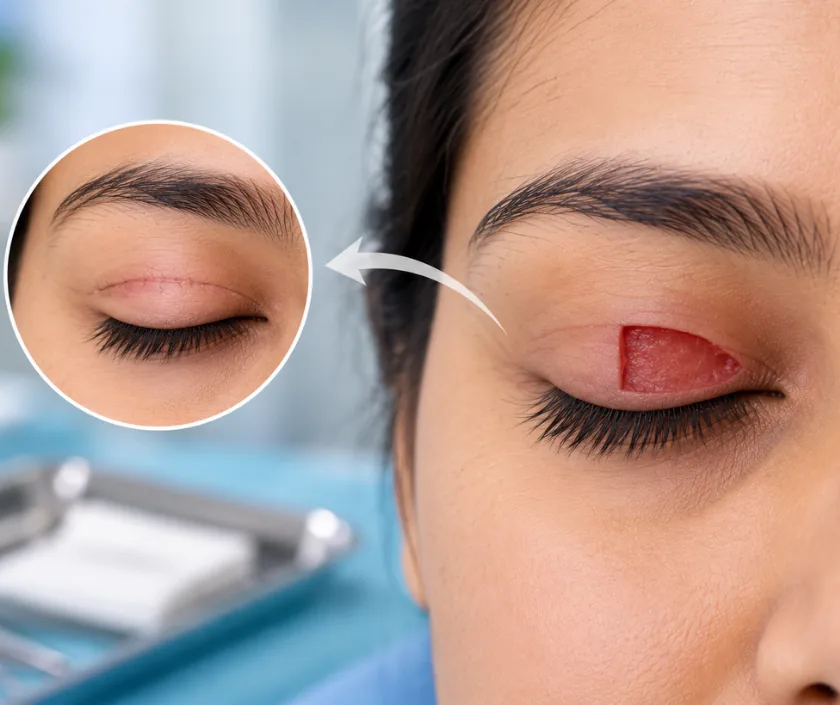
Full thickness eyelid reconstruction rebuilds an eyelid that has lost skin, muscle and its firm inner lining together. The moist lining is replaced with grafted tissue and covered by local skin or a flap, so the lid can once again close over the eye. Which method suits depends on how much of the lid is missing.
An eyelid works like a two layer curtain. The front layer is skin and muscle, and the back layer is a firm plate lined by a moist membrane that rests against the eye. When an injury or a cancer removal takes away every layer together, the result is called a full thickness defect, and both layers have to be rebuilt for the lid to work again.
Protection of the eye guides the whole plan. A cornea left uncovered dries quickly and lasting damage can follow within days, so lubrication starts immediately and reconstruction is not delayed without reason. How the gap is closed depends on its width. Narrow gaps can be brought together directly, while wider ones need a lining graft with a flap of nearby skin laid over it.
Some methods borrow tissue from the opposite lid and keep the eye closed for a few weeks before a second short operation opens it. Others rebuild the lid in a single sitting. Whichever route is chosen, the lid margin and the corners are set so the lid rests against the eyeball rather than falling away from it.
Reconstruction is advised whenever a lid can no longer cover the eye or has lost a section of its full thickness. Fitness for surgery and the ability to attend staged reviews both matter.
The gap is measured and its position noted. How much of the lid is missing decides whether the edges can be brought together or whether tissue must be borrowed from nearby.
The moist inner layer is replaced with a graft, often taken from the roof of the mouth, from cartilage or from the opposite lid, so the surface of the eye rests against smooth tissue.
Skin and muscle are then brought across as a local flap or laid on as a graft. Both layers together give the lid enough support to hold its shape.
Your surgeon aligns the margin and anchors the lid at the corners of the eye, so the rebuilt lid rests against the eyeball rather than sagging away from it and leaving the surface exposed.
Some methods keep the lid closed for a few weeks while the new tissue takes. A short second operation then opens it and refines the edge.
Swelling and bruising are marked. Ointment keeps the surface of the eye moist, and discomfort is usually manageable with simple medication.
Stitches are removed in stages and the lid begins to settle. Vision on that side may be limited if the lid is held closed as part of the plan.
The rebuilt lid usually moves with the other one. Your scar looks pink and firm, and any second stage is often planned around this time.
Shape and colour keep improving. Small refinements such as adjusting the lid edge or thinning a flap can be considered once healing has matured.
A rebuilt lid usually protects the eye well and moves in step with the other side. Even so, it rarely matches its neighbour exactly. Lashes may be missing along part of the edge, skin can differ slightly in colour and the crease may sit at a different height. Comfort and eye protection improve first, while appearance keeps refining over months and sometimes needs a small further procedure.
This is careful work in a small area, and healing does not always run smoothly. Understanding the possible problems helps you recognise them early.
Home care centres on keeping the eye moist and leaving the new tissue undisturbed while it settles.
The inner surface touching the eye must be smooth and moist. Plain skin placed there would rub the cornea, which is why a lining graft goes underneath.
Colour, lash line and crease height usually differ. What is aimed for is a lid that closes, moves and looks natural in conversation rather than an identical copy.
Protecting the surface of the eye comes first. Without a lid that closes, the cornea dries and sight itself can be affected.
Certain techniques are staged by design, and small refinements afterwards are common. Knowing this in advance makes the process much easier to follow.
Eyelid reconstruction at Elegance Clinic in Surat is planned around protecting the eye first, with lining and cover replaced together rather than skin alone being laid over the gap.

Rebuilding an eyelid can mean anything from a direct closure to a lining graft with a flap over it, sometimes across two sittings. Theatre time, anaesthesia, the graft donor site and the number of stages all move the total. A written estimate is prepared once the defect has been assessed, and it sets out what each stage covers. Reconstruction after injury or cancer removal is usually covered under mediclaim, and the team helps with the paperwork.
These are the questions that come up most often in consultation. If yours is not here, send it on WhatsApp and the team will reply, usually the same day.
Ask your question →Cost varies with how much of the lid is missing, whether a graft and a flap are both needed and whether the work is staged. A written estimate is shared after assessment. Reconstruction following trauma or cancer removal is usually covered by mediclaim.
Your eye is shielded throughout and lubrication is used from the start, since protecting the surface is the main aim. Risks such as infection, graft loss or the lid turning outwards do exist. Each is looked for at the planned reviews and treated early.
Swelling is heavy for the first few days, then settles over a couple of weeks. Stitches come out in stages. Where the method keeps the lid closed for a period, vision on that side is limited until the second stage, which is usually planned within weeks.
It should move and close well, which matters most day to day. Exact matching is unrealistic, since lashes may be missing along part of the edge and skin colour and crease height often differ. Refinements after the scar matures can improve the shape.
Anyone with an active infection is treated first. Smoking, uncontrolled diabetes and poorly managed blood pressure all reduce the chance of a flap or graft taking, so these are settled beforehand. Patients unable to attend staged reviews are also poorly suited.
When the eye cannot close, cover is arranged quickly because an exposed cornea dries within days. After cancer removal, reconstruction often follows in the same sitting or shortly afterwards. In other cases, letting swelling and infection settle gives a better result.
You will hear which layers of the lid are missing, how the lining and the outer cover will be replaced, and whether the plan needs two stages. Photographs are taken for the record, and the written estimate and review schedule are explained.
Each technique below has its own page explaining how it works and when it is chosen.
Seeing patients from across the city and beyond: read about the practice on the plastic surgeon in Surat page, or check what a written estimate covers on the costs and insurance page.
