A Karapandzic flap rebuilds a large gap in the lip by rotating the remaining lip and nearby tissue around the mouth. Nerves and vessels are carefully preserved along the way, so the rebuilt lip keeps its feeling and can still move.
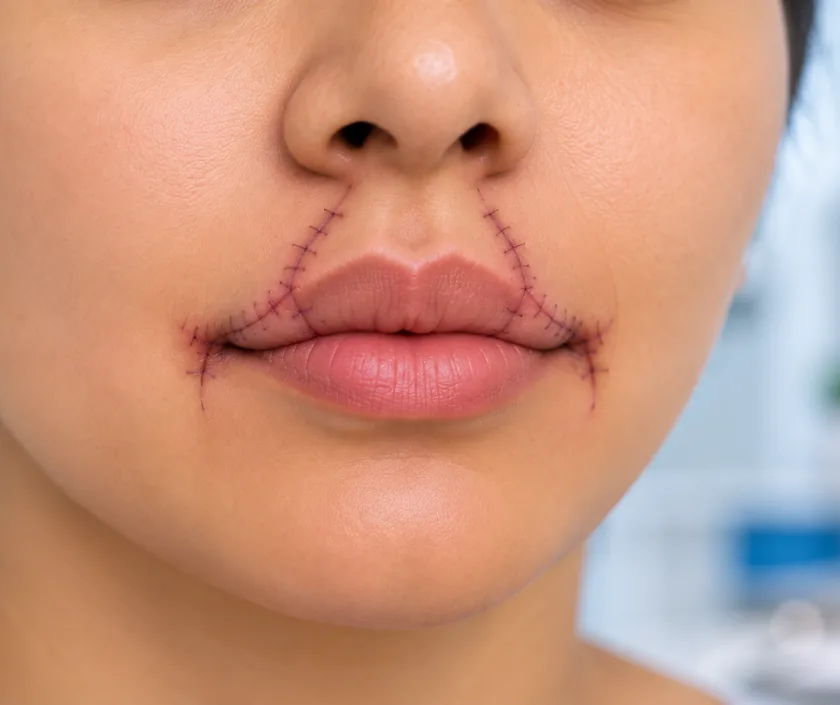
A Karapandzic flap rebuilds a lip by rotating what remains of it, along with tissue beside the mouth, into the gap. Curved cuts are made around the mouth and the dissection is done carefully, so the nerves and vessels feeding the lip muscle stay intact. Mouth opening becomes smaller, yet the lip that results still feels and moves.
Muscle around the mouth works rather like a drawstring. It tightens to close the lips, purses them for a whistle and holds liquid in while you drink. Cutting straight through it and stitching skin across the gap fills the hole, yet leaves that drawstring broken, and patients notice the loss far more than they notice a scar.
This flap sets out to keep the drawstring intact. Curved cuts follow the skin creases running around the mouth, and the tissue between them is lifted while the surgeon works around each bundle of nerves and vessels feeding the muscle. Those bundles are teased free rather than divided, so the muscle keeps its supply as the tissue is rotated inward to fill the gap.
One consequence cannot be avoided. Since tissue is borrowed from around the mouth rather than added from elsewhere, the opening becomes smaller. Most people find it loosens with exercises and time, though dentures and dental work may need to be planned around it.
Size of the gap and the value placed on movement guide this choice. Karapandzic flaps come into their own when a large part of the lip is missing.
Lines are drawn in the natural creases running from the corners of the mouth around towards the nose. Width of the gap decides how far those curves extend.
Skin is opened along the marks and the tissue beneath is separated with patience, so each bundle of nerves and vessels feeding the lip muscle is found and left intact.
Both sides are then turned inward towards the middle so the muscle ring meets again. Lining, muscle and skin are joined layer by layer.
Alignment of the colour border matters on both sides, since the eye reads any step there quickly. Fine stitches are used on the skin itself.
Before discharge the team explains stretching exercises for mouth opening, along with the timing of review visits and any dental planning.
Swelling makes the mouth feel tight and speech unclear. Liquids and soft food are taken slowly, and pain relief is given regularly rather than only when asked for.
Sutures settle and swelling reduces. Mouth opening feels restricted, and gentle exercises usually begin around this stage under guidance.
Eating improves and most people return to work. Exercises continue daily, since this is when mouth opening gains the most ground.
Scars fade into the creases around the mouth. Sensation and movement keep improving, and any residual tightness is reassessed.
Function is usually the strong point here. Many patients regain a lip that closes, feels and moves, which makes eating and speaking far easier than a stiff repair would. Mouth opening ends up smaller and improves gradually with exercises, though it may never match the original width. Scars around the mouth fade into the creases over many months, and small revisions are occasionally useful once healing settles.
This repair asks a lot of the tissue around the mouth, and honest discussion of the trade offs belongs in the consultation.
Exercises and diet do most of the work at home, and steady effort in the early months matters more than anything attempted later.
Narrowing is built into how this flap works, because tissue is borrowed from around the mouth. Exercises usually improve the opening over the following months.
Stretching a wide gap shut leaves the lip tight and distorted. Rotating tissue around the mouth shares the tension and keeps the muscle ring alive.
This particular design exists to protect the nerves supplying the lip, which is why sensation is usually retained after it.
Delaying stretching allows tightness to set. Most of the improvement in mouth opening comes from work done during the first few months.
Lip reconstruction at Elegance Clinic in Surat is judged by how the mouth works afterwards, so exercises, dental needs and review visits are built into the plan from the first consultation.

Cost depends on the size of the defect, how long the operation takes, the hospital stay and whether tumour removal happens at the same sitting. Therapy and exercise sessions afterwards are counted separately. Reconstruction following cancer, trauma or infection is usually admissible under mediclaim, since it restores the way the mouth works. A written estimate is prepared once the defect has been assessed in clinic.
These are the questions that come up most often in consultation. If yours is not here, send it on WhatsApp and the team will reply, usually the same day.
Ask your question →Cost depends on the size of the defect, the length of the operation, the hospital stay and whether a tumour is removed at the same time. Therapy sessions afterwards are counted separately. A written estimate follows examination in clinic rather than a phone call.
Reconstruction after cancer, trauma or infection is usually admissible under mediclaim, because it restores how the mouth works rather than altering appearance by choice. Approval needs operative notes, photographs and a plan. Policy waiting periods and room limits still apply.
That is the main purpose of this design. Nerves and vessels supplying the lip muscle are dissected free and kept intact, so most people retain useful sensation. Some numbness can still occur while swelling settles and the nerves recover.
Tissue used to fill the gap is borrowed from around the mouth, so the opening narrows. Daily stretching exercises usually improve it over the following months. Tell the team early if dentures no longer fit, since adjustments are easier then.
Fluids come first, then soft food across the early weeks. Many people manage a normal soft diet by around six weeks, though chewing tough items takes longer. Progress depends on swelling, mouth opening and how the stitch lines heal.
Small wedges of lip usually close directly with a neat repair, so this larger rotation is not needed. It earns its place with gaps of roughly a third to two thirds of the lip, where simple closure would distort the mouth badly.
Ask why this flap has been chosen over other options, what mouth opening to expect, when exercises begin and how many review visits are planned. Bring biopsy reports, earlier operation notes and a list of your regular medicines.
Seeing patients from across the city and beyond: read about the practice on the plastic surgeon in Surat page, or check what a written estimate covers on the costs and insurance page.
