A lip that has lost tissue affects eating, speech and appearance all at once. Reconstruction rebuilds the layers so the mouth seals again and the red border lines up with the surrounding skin.
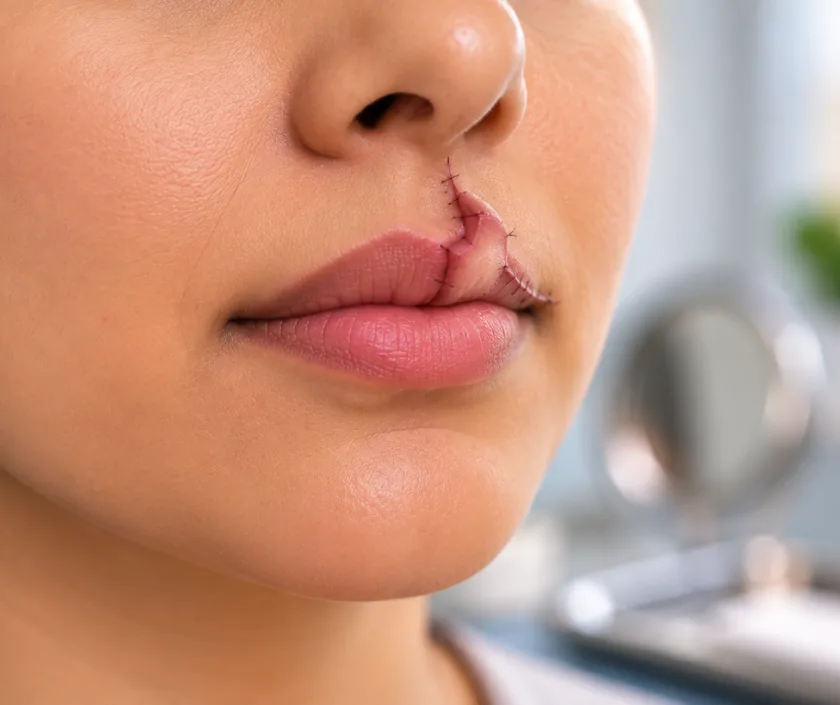
Lip reconstruction rebuilds a lip that has lost tissue after injury, a bite or removal of a cancer. What is aimed for is a lip that seals the mouth, moves with speech and eating, and keeps the red border level with the skin. Small gaps are closed directly, while larger ones need tissue borrowed from the cheek or the other lip.
A lip has to do several things at once. It seals the mouth so liquid stays in, it stretches for eating and speech, and it carries a sharp line where the red part meets the skin. Reconstruction has to answer all three, and a lip that looks reasonable but leaks or opens poorly is not a good result.
Planning starts with how much of the lip width is missing. Smaller losses can be closed directly, with the muscle joined and the red border matched. Larger ones need tissue borrowed from the cheek or from the opposite lip, brought across so that lining, muscle and skin are all replaced together. Remaining mouth opening is measured too, since a lip closed too tightly makes eating and dental care difficult.
Alignment of the red border is done before anything else is stitched, because the eye picks up a step at that line more readily than a long scar. Once healing has settled, small refinements can even out fullness, release tightness or improve the shape of the red part.
Reconstruction is offered when a lip has lost tissue or no longer works properly. Mouth hygiene, tobacco use and general healing all influence the timing.
The gap is measured against the whole width of the lip. Sensation, mouth opening and the position of the red border are all noted before a method is chosen.
Small losses are closed directly. Larger ones use tissue from the cheek or the opposite lip, brought across so that skin, muscle and lining are all replaced.
The ring of muscle around the mouth is joined wherever possible. That layer is what allows the lip to seal, whistle and hold liquid in during drinking.
Your surgeon matches the red border on both sides before the rest of the wound is closed, since even a small step at that line draws the eye far more than a longer scar.
Once healing has settled, small adjustments can even out the red border, release tightness that limits mouth opening, or improve the shape and fullness of the red part of the lip.
Swelling makes speech and eating awkward. A soft or liquid diet is used, and mouth rinses keep the suture line clean.
Stitches are removed and swelling drops noticeably. Most people manage soft food comfortably and return to desk work.
The lip moves better and your scar is pink and firm. Normal diet is usually possible, although full stretch may still feel limited.
Scars soften and the shape settles. Any refinement of the border or the red part of the lip is planned from this point.
Most people regain a lip that seals and moves well, which matters more day to day than exact symmetry. Scars around the mouth usually soften into the natural lines and creases there. Fullness may differ between the two sides, sensation can stay altered along part of the lip, and mouth opening is sometimes a little tighter than before. Refinements later can improve the border and the shape.
The mouth is a busy, moist area, which shapes both the risks and the aftercare. These are the problems most often discussed before surgery.
Diet and mouth hygiene do most of the work in the first two weeks, and both are explained in writing before discharge.
The red border and the muscle ring must be matched separately. Closing skin alone leaves a visible step and a lip that does not seal properly.
Sensation often changes along part of the lip. Movement and sealing usually return well, while feeling can stay different for a long time.
Facial creases around the mouth hide scars well. Once softened, most settle into lines that were already there.
Refinements are common and often worthwhile. Evening the border, releasing tightness or improving fullness can all be done after the scar has matured.
Lip reconstruction at Elegance Clinic in Surat is judged by sealing, movement and mouth opening as well as by appearance, and the plan is explained to you in those terms.

A small lip repair under local anaesthesia and a full flap reconstruction under general anaesthesia sit far apart in cost. What decides it is how much of the lip width is missing, whether tissue must be borrowed from the cheek or opposite lip and how long theatre time runs. A written estimate follows assessment. Repair after injury or cancer removal is usually covered under mediclaim, and help is given with claim documents.
These are the questions that come up most often in consultation. If yours is not here, send it on WhatsApp and the team will reply, usually the same day.
Ask your question →Small repairs under local anaesthesia sit well below larger flap reconstructions done under general anaesthesia. Because the difference is wide, a written estimate follows assessment. Repair after injury or cancer removal is usually covered under mediclaim, and help is given with the paperwork.
Lip surgery is common and generally well tolerated. Because the mouth carries plenty of bacteria, infection is the main concern and rinses form part of the plan. Altered sensation, tightness and a step at the red border are the other risks worth knowing.
A soft or liquid diet is usual for about two weeks, with mouth rinses after every meal. Swelling drops noticeably once stitches are removed. Most people return to a normal diet by around six weeks, although wide opening may still feel tight.
Movement and sealing usually return well, which is what people notice in conversation. Fullness may differ between the sides and sensation can stay altered along part of the lip. Scars settle into the natural creases around the mouth over several months.
An infected wound is treated before any careful rebuilding. Continued tobacco use, uncontrolled diabetes and poor mouth hygiene all reduce healing and are addressed first. Expectations matter too, since the rebuilt lip will not match the other side exactly.
Clean cuts are best repaired within about a day, while the edges still line up easily. Bites and dirty wounds are washed and sometimes allowed to settle before formal reconstruction. After cancer removal, the rebuild often follows in the same sitting.
Your gap is measured against the width of the lip, mouth opening and sensation are checked and photographs are taken. You will be told which method suits, whether tissue must be borrowed from nearby and what the written estimate includes.
Each technique below has its own page explaining how it works and when it is chosen.
Seeing patients from across the city and beyond: read about the practice on the plastic surgeon in Surat page, or check what a written estimate covers on the costs and insurance page.
