Losing part of the nose to injury, a bite or cancer surgery changes both the face and the airway. Reconstruction rebuilds the lining, the support and the skin so the nose looks natural and still breathes.
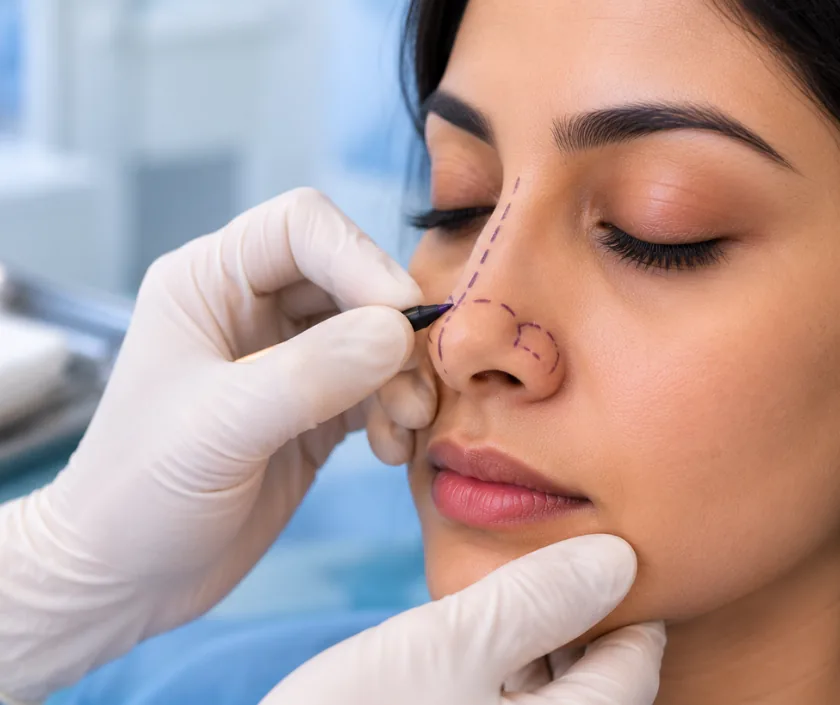
Nasal reconstruction rebuilds a nose that has lost tissue after injury, a bite, infection or removal of a skin cancer. The nose is restored in three layers, the inner lining, the cartilage and bone that hold it open, and the outer skin. Which method suits depends on how deep the loss goes and where on the nose it sits.
A nose is not simply skin. Behind the surface lies a moist lining, and between them sits a framework of cartilage and bone that holds the nostrils open. Rebuilding only what can be seen leaves the other layers missing, and the reconstruction slowly sinks and blocks. Surgery therefore treats lining, support and cover as three separate problems solved in one plan.
Surgeons also think of the nose as a set of natural areas, sometimes called subunits, such as the tip, the sidewalls and the nostril rims. Placing scars along the borders of these areas hides them in shadows that already exist. Where most of a subunit is missing, replacing the whole of it often looks better than patching part of it.
Where the covering skin comes from depends on the size and site of the loss. Small defects can use nearby nasal or cheek skin, while larger ones usually need forehead skin brought down in stages. Breathing is checked throughout, since a nose that looks right but blocks the airway has solved only half the problem.
Reconstruction suits people who have lost nasal tissue and are well enough for surgery. Healing depends heavily on blood supply, so general health and smoking are discussed early.
Photographs are taken and the missing area is mapped against the natural subunits of the nose. Breathing is checked, and the plan covers lining, support and skin cover together.
The inner lining is restored first, using tissue turned in from the nose itself or a small graft. Without lining, the new nose scars inwards and the airway narrows.
Cartilage taken from the ear, the septum or a rib is shaped and fixed in place. This framework holds the nostril open and stops the shape sinking with time.
Skin is brought from the forehead, the cheek or nearby nasal skin. That choice depends on the size and site of the loss and on how well the colour matches.
A later sitting thins the flap, sharpens the borders and adjusts the nostril rim. Small revisions of this kind are part of the plan rather than a sign of failure.
Swelling and bruising are at their worst. Dressings stay in place, and breathing through the nose may be limited for a few days.
Most stitches are removed and bruising fades. Desk work is often possible, although the reconstruction still looks obvious at this stage.
Shape begins to settle and swelling has largely gone. Sport and heavy lifting can usually restart around this time if healing is on track.
Skin colour blends and scars soften. Refinement procedures are considered from here, and the final shape becomes clear.
Reconstruction can restore a nose that looks natural in conversation and works well for breathing. Close inspection usually shows differences in skin colour, texture and how fine the tip appears. Larger rebuilds need more than one sitting, and swelling can take many months to settle before the shape is truly final. Being clear about this at the start makes the staged nature of the work far easier to accept.
Nasal reconstruction is well established work, though it depends on blood supply and on how cartilage behaves over time. These are the problems most worth knowing about.
Most of the early aftercare protects the blood supply of the new tissue and keeps swelling under control.
A graft alone tends to sink and pull. Without lining and cartilage underneath, the nostril narrows and the shape flattens within months.
Rebuilding after cancer removal or injury restores cover, support and breathing. Most policies treat it as reconstructive work rather than cosmetic.
Small defects sometimes can be. Larger ones are staged on purpose, because dividing the work gives a better shape than rushing it in a single sitting.
Fresh scars look pink and firm, then soften over many months. Placing them along natural borders is what makes them hard to pick out later.
Nasal reconstruction at Elegance Clinic in Surat is approached in layers, so lining, support and skin cover are each planned rather than the surface alone being patched over.

Nasal reconstruction covers a wide range of work, from a small local flap to a staged rebuild with cartilage grafts. Cost follows the number of stages, the theatre time and whether grafts are taken from the ear, the septum or a rib. A written estimate is prepared after assessment, with each planned stage listed separately. Reconstruction after trauma, infection or cancer removal is usually covered under mediclaim, and the team assists with claim documents.
These are the questions that come up most often in consultation. If yours is not here, send it on WhatsApp and the team will reply, usually the same day.
Ask your question →The figure depends on how deep the loss goes, whether cartilage grafts are needed and how many stages are planned. A written estimate is prepared after assessment rather than quoted in advance. Reconstruction after cancer removal or injury is usually covered under mediclaim.
It is well established work, done under general anaesthesia with routine fitness checks beforehand. Risks include infection, partial loss of a flap or graft and changes in cartilage shape over time. Smoking raises those risks sharply, which is why stopping is insisted upon.
Swelling and bruising peak in the first three days and fade over a couple of weeks, by which time most stitches are out. Desk work is often possible within two weeks. Sport and heavy lifting usually wait until around six weeks, depending on healing.
At conversational distance a well planned reconstruction usually looks natural. Closer inspection tends to show differences in skin colour, texture and tip definition. Swelling can take many months to settle, and a refinement sitting often brings the shape to its final state.
Anyone with an untreated infection or an open wound is settled first. Continued smoking, uncontrolled diabetes and bleeding problems all work against flap healing. Patients hoping for a nose identical to the original are counselled carefully before any plan is agreed.
That depends on the wound. Clean injuries with tissue loss are often reconstructed early, while contaminated or infected wounds are cleaned and dressed until they settle. After cancer removal, margins are confirmed before the rebuild is completed.
Your defect is examined and mapped against the natural areas of the nose, breathing is assessed and photographs are taken. You will be told which layers need rebuilding, how many stages to expect and what the written estimate covers.
Each technique below has its own page explaining how it works and when it is chosen.
Seeing patients from across the city and beyond: read about the practice on the plastic surgeon in Surat page, or check what a written estimate covers on the costs and insurance page.
