A paramedian forehead flap borrows skin from the forehead to rebuild the nose, keeping it attached to its blood supply for a few weeks. That bridge of tissue stays visible on the face between the two operations, so it needs to be understood in advance.
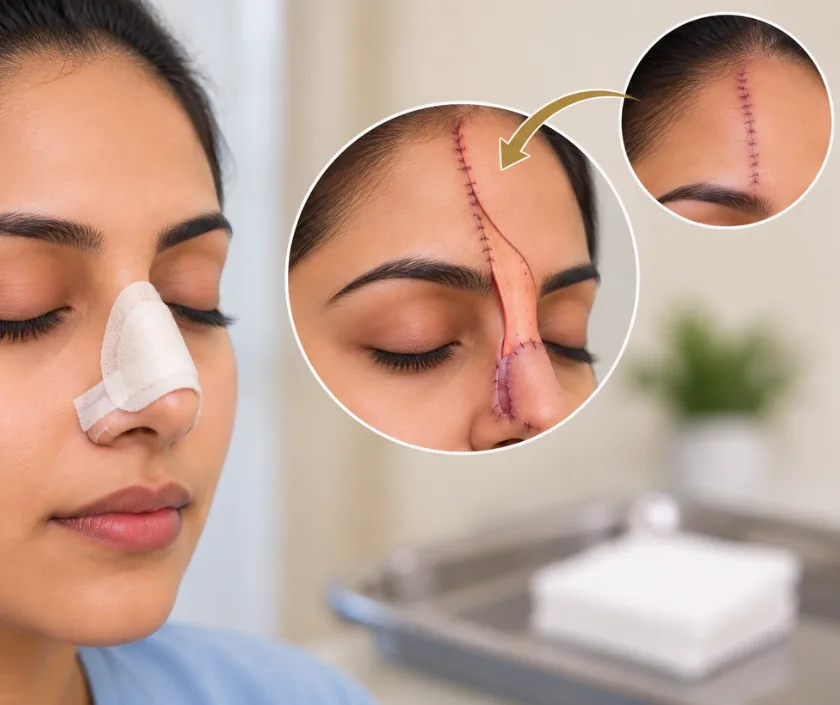
A paramedian forehead flap is a staged operation that moves skin from the forehead down to the nose while it stays connected to a narrow strip carrying its blood supply. That strip crosses the bridge of the nose and remains visible for a few weeks. A second operation then divides it and shapes the new nasal skin.
Forehead skin is the closest match the body has for the nose. It sits at a similar thickness, carries similar colour and supports cartilage grafts well, which is why it has been used for nasal cover for a very long time. The flap is raised on a narrow strip of tissue running up from beside the inner eyebrow, and that strip carries the blood supply the new skin depends on.
What patients most need to understand comes next. The flap is turned down onto the nose while it stays attached to that strip, so a visible bridge of tissue crosses the bridge of the nose for a few weeks. It is dressed but not hidden. Many people prefer to plan leave from work and limit social outings during this period, and knowing about it before consenting makes the wait far easier to manage.
A second operation divides the strip once the flap has built its own blood supply in the nose. The upper end is returned to the forehead and the nasal edge is tidied. Later, a further sitting is often used to thin the flap and sharpen the borders.
This flap suits people who need good quality skin on the nose and are prepared for a staged process. Understanding the waiting period is as important as the surgery itself.
The defect is measured and a template is made. Your surgeon explains the staged nature in detail, including how the pedicle will look on the face and how long it stays.
Skin is raised from the forehead on its narrow blood supply, turned down and stitched into the nasal defect. Lining and cartilage support are placed at this sitting where needed.
The flap stays connected across the bridge of the nose for a few weeks. Dressings are changed in clinic and the forehead wound heals during this time.
The pedicle is divided once the flap has taken on its own blood supply in the nose. Its upper end is returned to the forehead and the nasal edge is trimmed and inset neatly.
A later sitting thins the flap, sharpens the borders and adjusts the rim of the nostril. Most patients need this step to reach the shape they want, and it is planned from the outset.
Swelling is marked across the forehead and around the eyes. Dressings stay on, and the flap is checked for colour and warmth.
Bruising fades and stitches begin to come out. Your pedicle is still in place, so many people prefer to stay away from work and social settings.
The second stage is usually done in this period. Once the pedicle is divided the face looks far more normal, although the flap remains bulky.
Skin colour blends and the flap softens. Refinement of the shape is planned around this time, and the forehead scar keeps fading.
The rebuilt area usually looks natural at conversational distance once refinement is done. Up close, the flap can stay a little thicker than surrounding nasal skin, and the borders may be faintly visible. Forehead scars fade but do not disappear. Because this work is staged, judging the result before the refinement sitting is misleading, and patience through the middle period is a real part of the treatment.
Every flap depends on its blood supply, and this one is no exception. The waiting period also carries its own difficulties, which are worth naming openly.
The weeks between the two stages need a little planning at home, mainly around the flap and the dressings.
This flap needs at least two sittings by design. The first brings the skin down, the second divides the bridge once the flap has settled into its new home.
Dividing it too soon starves the flap. That waiting period exists so the new skin can build its own blood supply in the nose.
Most of the donor area is closed directly and heals as a fine vertical line. A small upper part is sometimes left to heal on its own and settles well.
Grafts on the nose often look patchy and sink. Forehead skin matches better and carries its own blood supply, which matters over cartilage.
Staged flap work at Elegance Clinic in Surat begins with an honest conversation about the waiting period, because knowing what the pedicle looks like matters as much as the surgery itself.

This operation is staged by design, so the estimate covers the first stage, the division of the pedicle and any refinement planned afterwards. Theatre time, anaesthesia, cartilage grafts and hospital stay all contribute. Because the size of the defect decides much of this, a written estimate is prepared once the nose has been examined. Reconstruction after cancer removal or injury is usually covered under mediclaim, and the team helps with the claim.
These are the questions that come up most often in consultation. If yours is not here, send it on WhatsApp and the team will reply, usually the same day.
Ask your question →Because the work is staged, the estimate covers more than one operation along with any refinement planned afterwards. The exact figure depends on the size of the defect and whether cartilage grafts are needed. A written estimate is shared after assessment.
It is a reliable technique with a good blood supply, which is part of why it suits difficult defects. Flap loss is uncommon but serious, and infection or bleeding can occur. Smoking remains the single factor most likely to cause trouble.
Swelling across the forehead and around the eyes settles over a couple of weeks, and stitches come out in that period. Your bridge of tissue stays on the face until the second operation, so many people arrange leave or work from home during those weeks.
Once refinement is done, the rebuilt area usually blends well at normal distance. Flaps can stay slightly thicker than surrounding skin and the borders may show faintly. Forehead scars fade into a fine vertical line but do not vanish altogether.
Smokers who will not stop are the clearest example, since the flap depends on blood flow. Untreated infection, uncontrolled diabetes and bleeding disorders also need settling first. Anyone unable to accept the visible bridge of tissue should discuss other options.
Plan for at least two operations spaced a few weeks apart, with a refinement sitting later. Trying to shorten the wait risks the flap, because the new skin needs that period to build its own blood supply in the nose.
You will see what the pedicle looks like during the waiting period, hear how long it stays and learn what each stage involves. Work, travel and family plans are discussed too, since the middle phase affects daily life more than the surgery.
Each technique below has its own page explaining how it works and when it is chosen.
Seeing patients from across the city and beyond: read about the practice on the plastic surgeon in Surat page, or check what a written estimate covers on the costs and insurance page.
