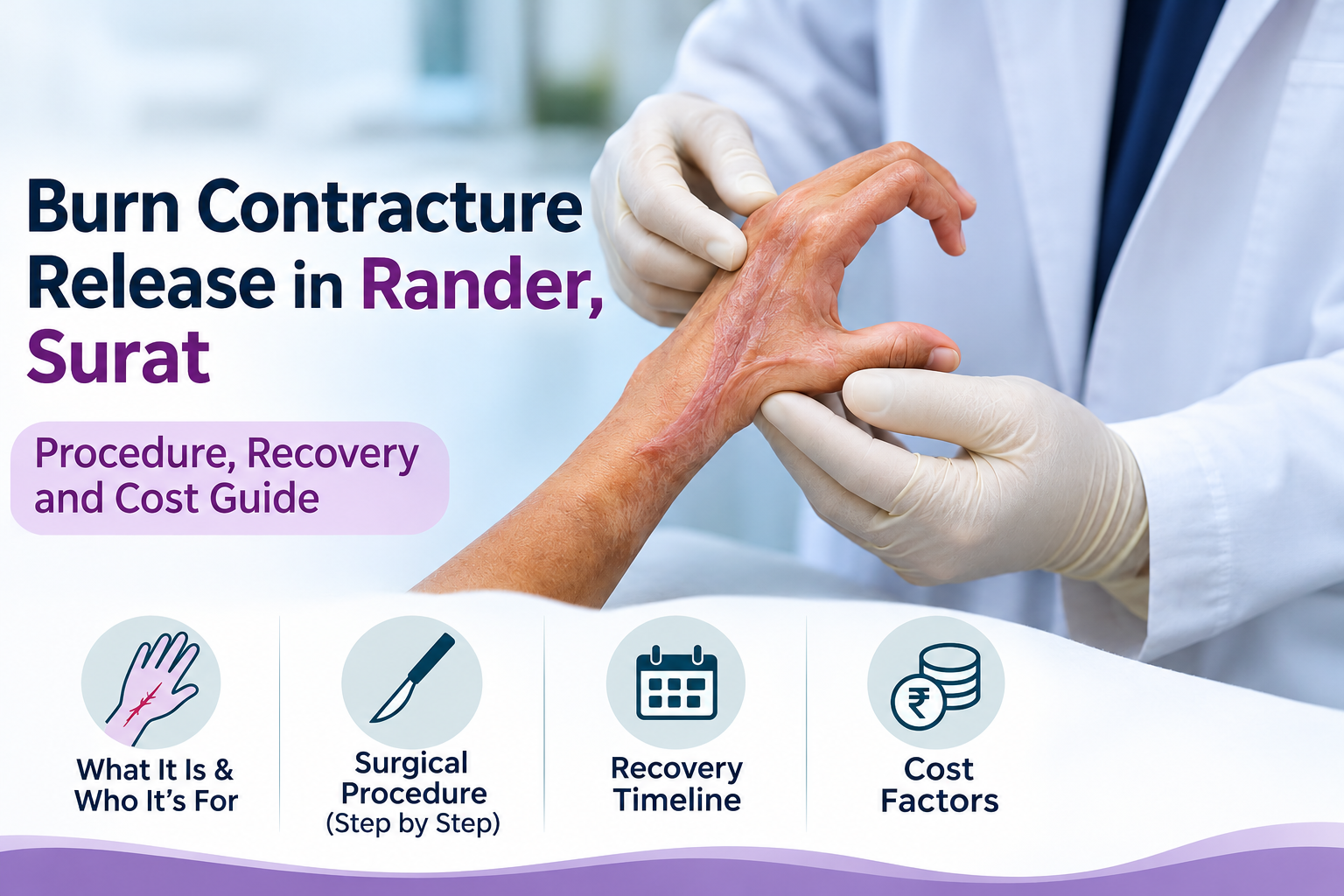
Burn contracture release is a reconstructive procedure that loosens tight scar tissue after a burn and helps restore movement. Patients travelling for treatment need to understand the consultation process, surgical planning, hospital stay, recovery and follow-up requirements before arranging their visit. Dr. Ashutosh Shah at Elegance Clinic evaluates burn-related contractures and discusses suitable reconstructive options based on the affected area and severity.
A well-planned visit helps patients organise medical records, investigations, accommodation and postoperative care. However, the exact treatment schedule depends on the clinical examination and the reconstruction required.
What Is Burn Contracture Release and Who Is It For?
A burn contracture develops when healing skin and scar tissue become tight and restrict movement. This commonly happens after deeper burns, particularly when scars cross joints or affect areas that need flexibility.
For example, a tight scar around the neck may restrict head movement, while a scar across the elbow or fingers may interfere with everyday activities.
Common problems caused by burn contractures
-
Difficulty bending or straightening fingers.
-
Restricted elbow or shoulder movement.
-
Tightness that pulls the neck towards the chest.
-
Difficulty performing household or work-related activities.
-
Discomfort when stretching the affected skin.
-
Changes in posture due to restrictive scars.
Not every contracture requires surgery. Depending on the severity, treatment may include physiotherapy, splinting, pressure garments and scar management.
Surgery may be recommended when conservative treatment does not provide sufficient functional improvement.
Who may benefit from surgery?
Patients with healed burn scars that significantly restrict movement may benefit from reconstructive assessment.
The surgeon evaluates scar thickness, skin availability, joint mobility, circulation and the condition of underlying tendons and nerves.
The treatment plan also considers the patient's general health, previous operations and expectations.
How the Procedure Is Done, Step by Step
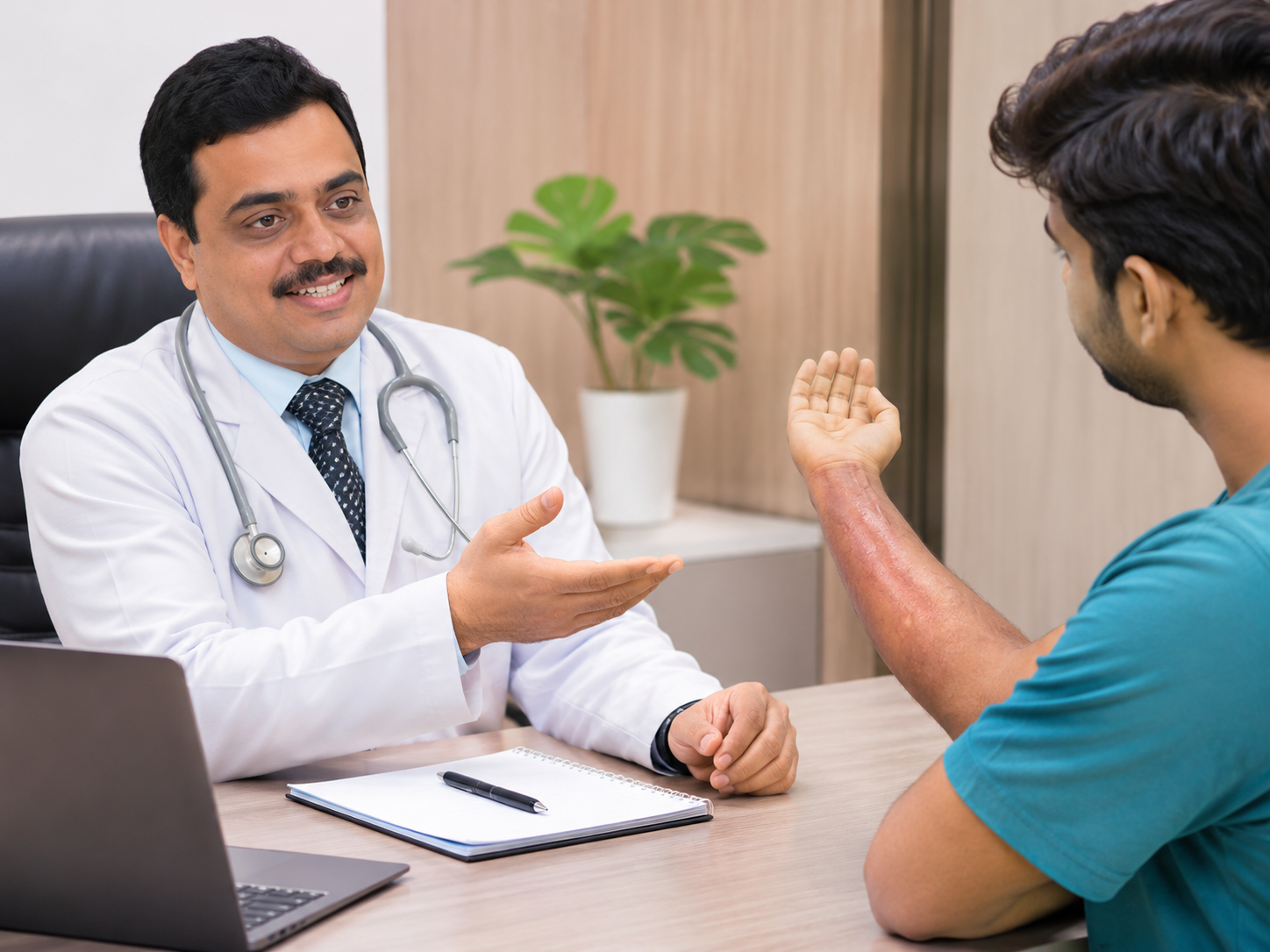
The surgical technique depends on the location and severity of the contracture. During consultation, Dr. Ashutosh Shah examines the affected area and explains the possible reconstruction.
Step 1: Initial consultation and examination
The surgeon reviews the original burn injury, previous treatment and current functional difficulties.
The examination may include:
-
Measuring joint movement.
-
Assessing scar tightness and thickness.
-
Checking surrounding skin quality.
-
Evaluating sensation and circulation.
-
Reviewing previous surgical records.
-
Identifying areas that require reconstruction.
Patients should bring previous discharge summaries, investigation reports and photographs of the original injury, if available.
Step 2: Selecting the surgical technique
The surgeon chooses the reconstruction according to the amount of skin release required and the availability of healthy surrounding tissue.
Common techniques include:
Z-plasty: This technique rearranges nearby skin to lengthen selected tight scars. It may be suitable for certain linear contractures.
Skin grafting: After releasing the tight scar, the surgeon may use skin taken from another body area to cover the resulting defect.
Flap reconstruction: Nearby tissue with its own blood supply may be moved to cover a deeper or more complex defect.
Staged reconstruction: Severe contractures involving several areas may require more than one operation.
Patients can read about specific procedures, including neck contracture release, elbow contracture release and finger contracture release.
Step 3: Preoperative investigations
The surgical team recommends investigations according to the patient's medical history and planned procedure.
These may include blood tests, anaesthesia assessment and other investigations when clinically necessary.
The team also reviews medicines and medical conditions that could affect wound healing.
Step 4: Surgery and hospital observation
The procedure may involve local, regional or general anaesthesia, depending on the reconstruction.
The surgeon releases the restrictive scar and reconstructs the resulting area using the selected technique.
After surgery, the team monitors wound healing, circulation, pain and the condition of any skin graft or flap.
Step 5: Discharge and rehabilitation planning
Before discharge, patients receive instructions about dressings, medicines, movement restrictions and follow-up appointments.
A splint may be prescribed to maintain the corrected position. Physiotherapy may also be required to preserve movement.
Recovery: What the First Weeks Look Like
Recovery after burn contracture release varies according to the surgical technique, wound size, graft or flap requirements and the patient's healing response.
The following timeline is a general guide rather than a guaranteed recovery schedule.
| Recovery stage | What patients can expect |
|---|---|
| First 1–3 days | Wound protection, pain management and postoperative monitoring. |
| First week | Dressing review and assessment of the operated area. |
| Week 2 | Continued wound healing and graft or flap assessment where applicable. |
| Weeks 3–4 | Gradual rehabilitation when approved by the surgeon. |
| Weeks 5–6 | Continued movement exercises and scar management as advised. |
| Beyond 6 weeks | Further rehabilitation and monitoring of scar maturation. |
When can normal activities resume?
Return to work depends on the operated area, the type of reconstruction and the physical demands of the patient's occupation.
A person with a desk-based job may resume activities at a different stage from someone whose work involves lifting, driving or repetitive hand movements.
Patients should obtain individual clearance before returning to work, travelling independently or resuming strenuous activities.
Why follow-up appointments matter
Follow-ups help the surgeon assess wound healing, identify complications and adjust splinting or rehabilitation.
Scar tissue may continue tightening during maturation. Therefore, completing the prescribed rehabilitation programme is important.
Which Factors Change the Cost?
The cost of burn contracture release depends on the extent of reconstruction and the facilities required.
An accurate estimate requires examination and a clear surgical plan.
The main factors include:
1. Severity and location: A small finger contracture may require a different procedure from a severe neck or elbow contracture.
2. Surgical technique: Z-plasty, skin grafting and flap reconstruction have different surgical requirements.
3. Anaesthesia: The type of anaesthesia and anaesthesia-team charges influence the total expense.
4. Hospital stay: Day-care treatment and longer inpatient admission have different costs.
5. Rehabilitation: Splints, physiotherapy, dressings and follow-up visits may contribute to the overall budget.
What should a written estimate include?
Ask the clinic to specify:
-
Surgeon and anaesthesia fees.
-
Operating theatre charges.
-
Hospital accommodation.
-
Skin graft or flap reconstruction charges.
-
Medicines and dressings.
-
Splinting and physiotherapy.
-
Follow-up consultations.
-
Possible additional procedures.
Do not rely on a general online price as a personalised quotation. Request an itemised estimate after the examination.
How Patients From Ahmedabad Plan the Visit
Planning burn contracture release in Ahmedabad searches often leads patients to consider specialist consultation and treatment outside their home area. When treatment is planned at Elegance Clinic in Surat, arranging the initial assessment and follow-up schedule in advance can make the process easier.
1. Share reports before travelling
Patients can send previous medical records, discharge summaries, photographs and relevant investigation reports through the clinic's official WhatsApp channel.
The clinic team can review the available information and advise whether an initial appointment is appropriate.
This preliminary discussion does not replace a physical examination or confirm that surgery is necessary.
2. Arrange the consultation
An appointment allows the surgeon to review the history, examine the contracture and discuss possible treatment options.
Patients should bring original reports and a list of current medicines.
3. Plan investigations and surgery
If surgery is recommended, the team can explain the required tests, preoperative assessment and likely admission arrangements.
Where possible, investigations can be coordinated around the planned consultation and treatment schedule.
4. Arrange accommodation and assistance
Patients undergoing reconstruction may need help with transportation and daily activities immediately after surgery.
The clinic team can provide directions and information about nearby accommodation options.
Patients should avoid booking a return journey until the surgeon confirms that travel is appropriate.
5. Plan follow-up appointments
Before returning home, patients should understand when the first wound review is due and how subsequent consultations will be arranged.
Some assessments may be coordinated remotely when appropriate, but wound examination and physical assessment may require an in-person visit.
Quick Facts: What to Confirm Before Booking
| Treatment detail | Information |
|---|---|
| Surgery duration | [Surgeon to confirm according to procedure] |
| Anaesthesia | [Local/regional / general, as applicable] |
| Hospital stay | [Surgeon to confirm] |
| Return to work | [Surgeon to confirm according to occupation] |
| Follow-ups | [Clinic to confirm schedule] |
These details must be personalised because different contractures require different reconstruction and recovery plans.
Questions to Ask Before You Decide
Before travelling and proceeding with treatment, patients should discuss the following:
-
Is surgery necessary, or can physiotherapy help?
-
Which reconstructive technique is appropriate?
-
Will skin grafting or flap reconstruction be required?
-
How long should I remain near the clinic?
-
When can I travel home safely?
-
How many follow-up visits will I need?
-
Will I require splinting or physiotherapy?
-
What expenses are included in the written estimate?
Conclusion
Burn contracture release can improve movement and daily function when tight burn scars restrict the skin and underlying joints. However, successful treatment involves more than surgery. Careful assessment, appropriate reconstruction, wound care, splinting, and rehabilitation all contribute to recovery.
Dr. Ashutosh Shah at Elegance Clinic can assess the contracture and discuss an individual treatment plan, including the expected hospital stay, recovery requirements, and follow-up schedule.
Have questions about your situation? Book a consultation with Dr. Ashutosh Shah (Monday to Saturday) or send your reports on WhatsApp through the clinic's official contact channel. Contact Elegance Clinic