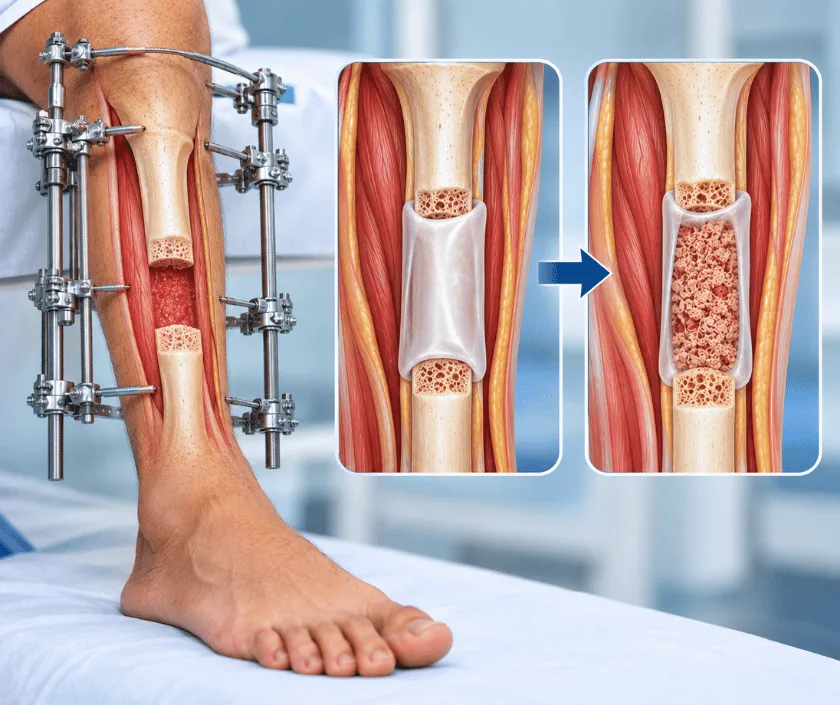
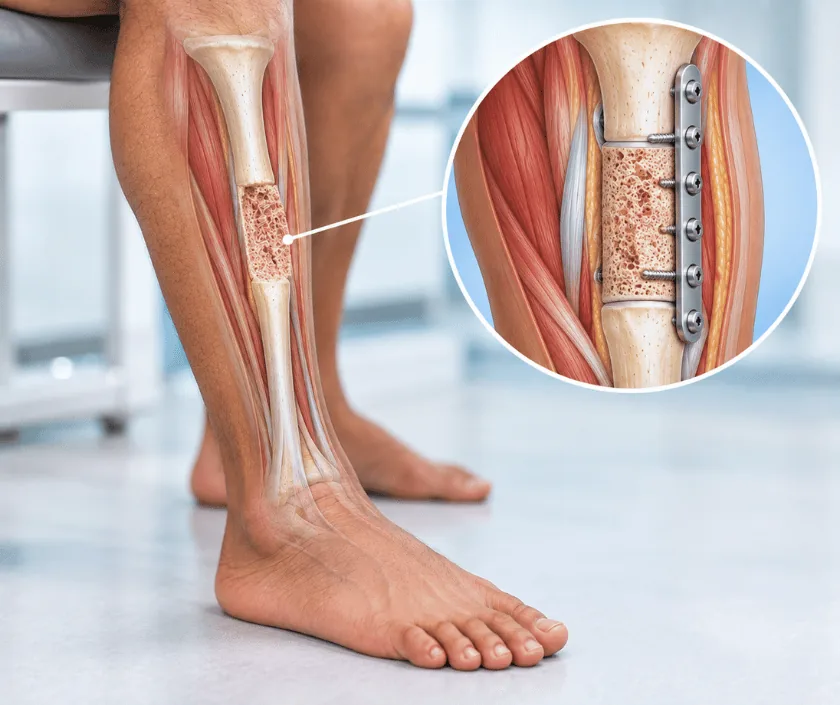
Bone in the leg can be lost in several ways. A high energy road accident may shatter a segment and leave a gap. Infection can eat into bone slowly over months. Removing a tumour may take a length of healthy bone with it. Whatever the cause, the limb cannot carry weight until the missing bone is replaced and the two ends join again.
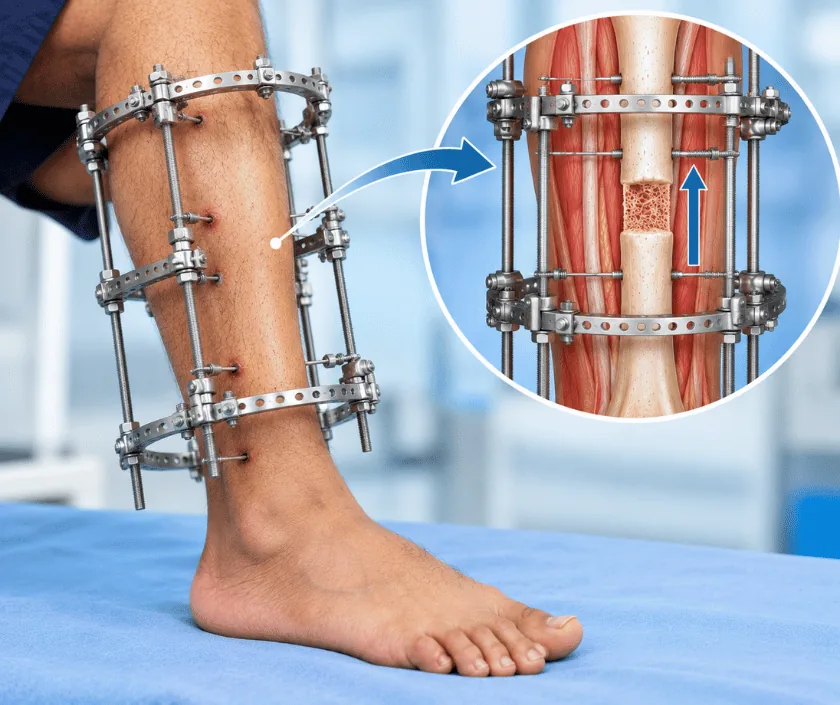
Rebuilding bone in the lower limb is planned around three questions. How long is the gap, is the area infected, and is the skin and muscle over the bone healthy? Short gaps often accept a graft. Longer gaps may need bone moved slowly across the space, or a piece of living bone brought in with its own blood supply. Soft tissue cover is planned at the same sitting, because bare bone does not heal under a thin scar. Treatment usually runs over months and recovery can vary widely.
Surgeons sort these problems by the size of the gap, whether infection is present and how healthy the covering tissue is. That grouping decides the operation.
Graft can be taken from the rim of the hip bone, from inside the shin or thigh with a reaming device, or from the fibula. The choice depends on how much bone is needed and whether living bone with a blood supply is required.
A frame outside the limb holds the bone steady with pins and wires. It allows the leg to be adjusted after surgery, which is useful when bone is being moved across a gap or when the skin is too swollen for a plate.
When bone infection is cleared, a cement spacer loaded with antibiotic may be placed in the space for some weeks. It keeps the gap open, releases medicine locally and forms a thin lining that helps the later graft settle in.
Physiotherapy runs alongside the surgery rather than after it. Early movement of the nearby joints, careful loading advice and swelling control all protect the reconstruction while the bone builds up strength over many months. Sessions usually continue well past the last operation.
Some changes suggest that bone or fixation is in trouble and should be checked without waiting for the next routine visit.
These are the points that come up most often in the first consultation about rebuilding bone in the leg.
Ask your question →Cost depends on the operation planned, the implants or frame used, how many stages are needed and the length of hospital stay. A written estimate is given after examination and scans. Many injury and tumour cases are covered by insurance, so bring your policy papers.
Diabetes raises the chance of wound problems and infection, so sugar control is checked and improved before any planned operation. Blood supply to the foot is also tested. Surgery still goes ahead in most people, with closer monitoring and slower staging.
Bone builds strength slowly, so recovery is measured in months rather than weeks. Weight through the limb is increased gradually as scans show healing. Recovery can vary with the size of the gap, your age, smoking and how well the soft tissue settles.
The aim is a limb that carries weight, sits in good alignment and lets you walk comfortably. Scars remain, and slight differences in length or stiffness are common. Function usually improves steadily over the first year with physiotherapy.
Old injuries are often treatable. Scans show whether the bone has joined, whether infection is smouldering and how the soft tissue has settled. An older problem needs more planning, but delay by itself does not rule out reconstruction.
Open fractures with exposed bone, spreading infection with fever, and a limb losing its blood supply all need same day hospital care. Slow non union is less urgent, though waiting many months makes the reconstruction harder and longer.
Your history is taken, the limb and foot circulation are examined, and old scans and operation notes are reviewed. Fresh imaging may be ordered. The likely stages, expected timeline and risks are then explained in plain language before anything is booked.