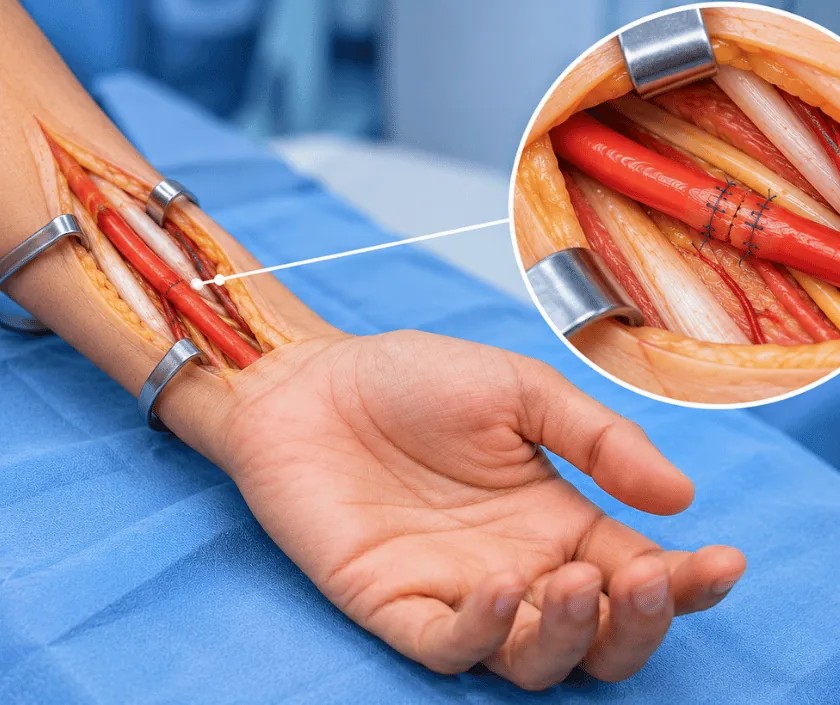
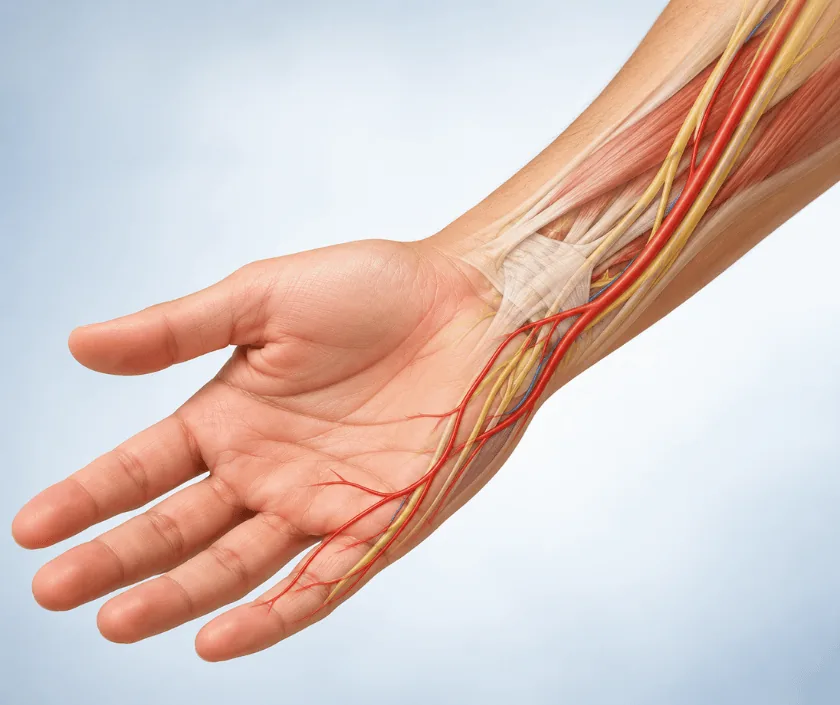
Blood reaches the hand through two main arteries at the wrist, which join in arches across the palm. That double supply is protective, so a cut to one artery may leave the hand pink and warm. Damage to both, or to the single vessel feeding a finger, quickly threatens the tissue beyond it.
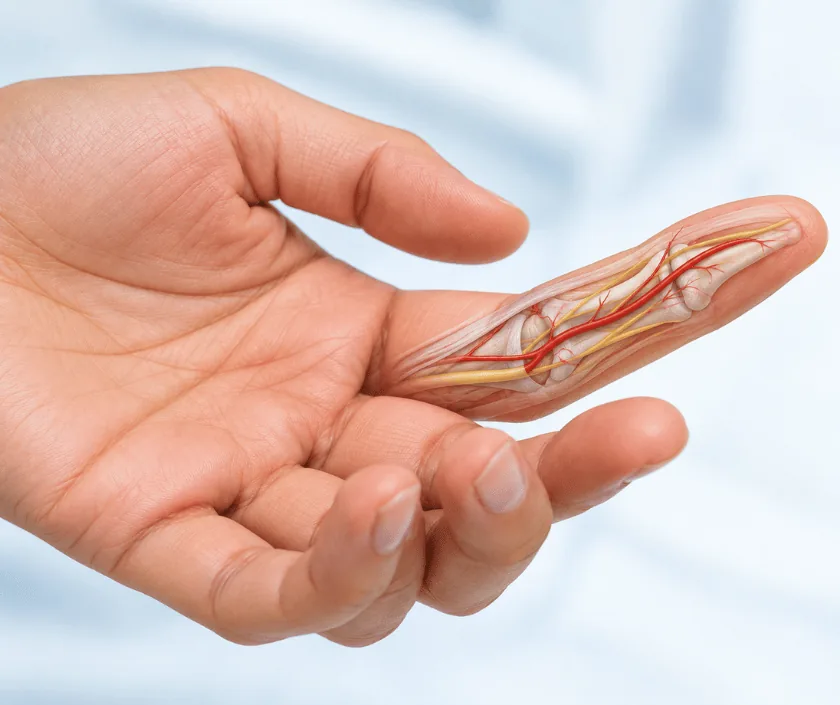
Vascular problems in the arm range from an obvious spurting wound to a hand that slowly turns cold and painful over hours after a crush. The most dangerous ones are not always the most dramatic to look at. Swelling inside a tight forearm compartment can strangle the muscle blood supply while the skin still looks normal, and rising pain that seems out of keeping with the injury is the warning sign. Anything suggesting poor blood flow to the hand is therefore treated as an emergency, and assessment is arranged the same day rather than at the next clinic.
Grouping depends on whether flow to the hand is threatened now, since that decides how many hours are available.
A simple bedside test compares flow through the two wrist arteries by watching how quickly colour returns to the hand. Ultrasound and angiography add detail when a repair or a graft is being planned. Both hands are usually compared side by side.
Nicotine narrows small vessels and works directly against every vascular repair. Stopping is the single most useful step a patient can take. Cold sensitivity after any vascular injury is common and usually improves slowly over a year or two.
Pressure building inside the forearm can cut off muscle blood supply while pulses at the wrist are still present. Severe and rising pain, pain on stretching the fingers and a tense forearm are the warning signs that need immediate assessment.
When a damaged segment cannot be joined directly, a piece of vein taken from the forearm or leg bridges the gap. The donor leaves a small scar and rarely causes trouble, since neighbouring veins take over the drainage.
These findings mean the blood supply to the hand may be failing and cannot wait for a routine appointment.
These answers cover urgency, safety, recovery and the longer term effects on the hand.
Ask your question →Very urgent when the hand or a finger is pale and cold, since muscle and nerve suffer within a few hours. A pink, warm hand allows more time for assessment. Any doubt about circulation should be treated as an emergency.
Emergency repair involves theatre time, microsurgical instruments and a hospital stay, so it is not a minor expense. Vein grafts and compartment release add to the figure. Accident cover and government schemes apply in many cases, and an estimate is given.
Vessel repair is well established, though these are urgent operations in people who may have other injuries. Bleeding, clotting of the repair, infection and the need for a further operation are the main risks. Fitness is assessed as far as time allows.
Wounds heal over a few weeks, while feeling, strength and cold tolerance improve for many months. Where compartments were released, skin closure or a graft is often needed later. Therapy usually continues well after the wounds themselves have healed.
Many hands recover good function once flow is restored early. Stiffness, altered feeling and sensitivity to cold are the usual lingering effects. Results are much better when treatment happened quickly and when nerve and muscle had not already been damaged.
Repair is still often possible, though healing is slower and results less predictable when small vessels are already diseased. Blood sugar control, stopping tobacco and treating infection all improve the odds. Each case is judged on its own findings.
Pulses and finger colour are checked, sometimes with ultrasound, and the wound is inspected. Sensation, grip and cold tolerance are recorded. Therapy is adjusted, and any need for further surgery such as delayed skin closure is discussed openly.